#u.s. senate
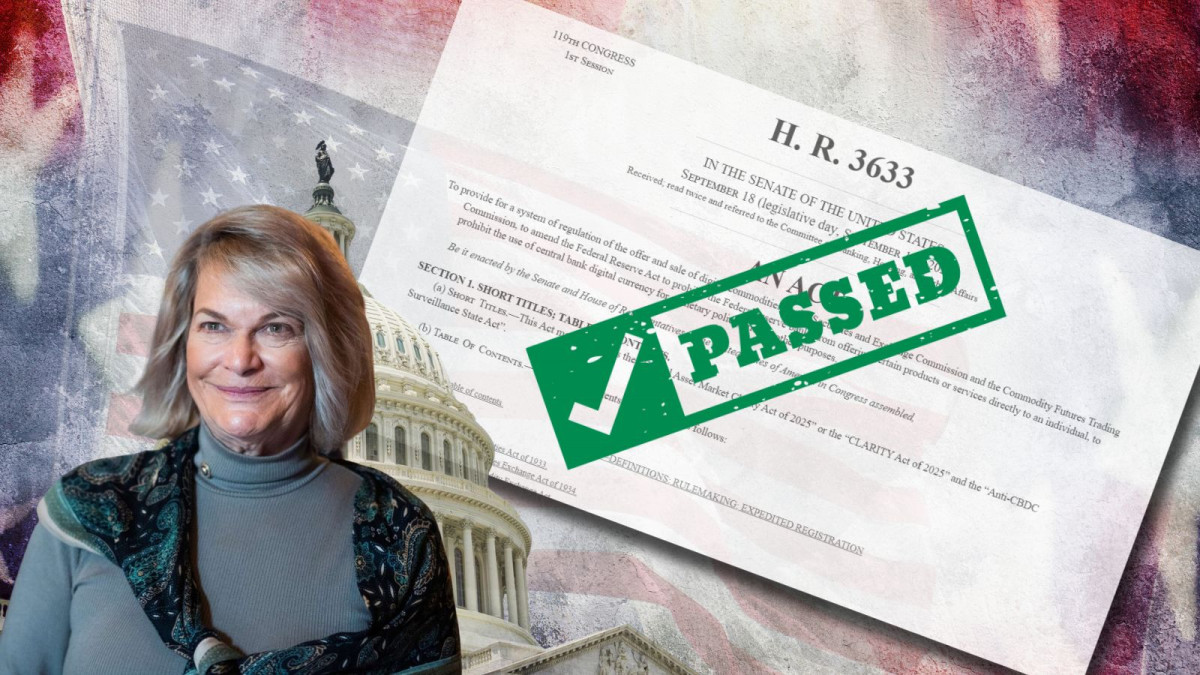
Clarity Act Advances, Massive Optimism for Digital Assets

After months of gridlock and four hours of pointed debate, the Senate Banking Committee voted 15-9 to advance the Clarity Act, sending one of the most consequential pieces of financial legislation in recent memory toward a full Senate floor vote. Two Democrats joined all Republicans on the panel in support, a small but symbolically meaningful show of bipartisan backing that industry advocates say could prove decisive when the bill eventually needs 60 votes to pass the full chamber.
For the digital asset industry, the vote felt like a long time coming. The bill, formally titled the Digital Asset Market Clarity Act of 2025, has been kicking around Capitol Hill for well over a year. The fact that it cleared committee at all, given the partisan atmosphere that dominated much of Thursday's hearing, was seen by many in the space as a genuine win.
Rules of the Road, Finally
At its core, the Clarity Act tries to solve a problem that has dogged the crypto industry since its earliest days: nobody could quite agree on who was in charge. The SEC and the CFTC have spent years in an uneasy standoff over which agency has jurisdiction over which digital assets, leaving companies in legal limbo and pushing some development offshore. The bill would draw a cleaner line, classifying digital assets as either securities or commodities and assigning oversight accordingly.
The market responded before the committee even finished voting. Coinbase surged more than 8% on the session, as investors bet that regulatory clarity could finally unlock the broader institutional participation that has been sitting on the sidelines. Galaxy Digital climbed over 6%. Strategy, the largest corporate bitcoin holder, was up 7%. Bitcoin itself ground higher, hitting session highs near $81,500.
"For too long, regulatory uncertainty has sent talent, investment, and innovation overseas, strengthening foreign competitors while leaving American builders without the certainty they need to compete," said Blockchain Association CEO Summer Mersinger, who called the committee vote a "defining moment." Ripple CEO Brad Garlinghouse was blunter: "If the largest economy in the world is going to lead on crypto, and it must, this is the moment."
Still Some Runway Ahead
Thursday's vote was a milestone, but it is not the finish line. The bill still needs to be reconciled with a separate version approved by the Senate Agriculture Committee, and the full Senate will require 60 votes to pass it, meaning a significant number of Democrats will have to come on board. The House passed its own version of the legislation last year, so the two chambers will also need to hammer out a unified text before anything heads to President Trump's desk.
The largest outstanding issue is an ethics provision intended to limit government officials, including the president, from profiting off crypto. Democrats have made clear they will not move forward without some version of it, while White House crypto adviser Patrick Witt has said the administration will not tolerate language targeting a specific officeholder. Both sides appeared at least open to finding common ground, with Cody Carbone of the Digital Chamber telling reporters that a deal on the ethics provision is likely a prerequisite for getting the bill to a floor vote at all. The window, several lawmakers noted, is probably August.
A Framework Built to Last
What makes the Clarity Act different from the patchwork of guidance and enforcement actions that have defined crypto policy for the past decade is its ambition. It does not try to pigeonhole digital assets into frameworks designed for equities or futures contracts decades ago. It builds something new, with defined registration pathways for digital commodity exchanges, brokers, and dealers, as well as clear definitions covering blockchain applications, protocols, and smart contracts.
Ji Hun Kim, CEO of the Crypto Council for Innovation, put it plainly after the vote: "Clear durable rules will help drive greater institutional and retail adoption, support innovation, create more high quality jobs in the U.S., protect Americans, and ensure that our country leads when it comes to digital assets policy and innovation."
The GENIUS Act, which passed the full Senate 68-30 last year, showed that comprehensive crypto legislation can attract broad support once the details are sorted. The Clarity Act is a harder lift, covering more ground and touching more competing interests. But Thursday's committee vote suggests the political will is there, and the industry is watching closely.
"Durable, lasting digital asset policy must be built on a bipartisan foundation," Mersinger added. By that measure, the Clarity Act is not finished yet. But for the first time in a long while, it looks like it might actually get there.
Why This Matters for the Future of Digital Assets
Let's be clear about all of this: Thursday was a great day for anyone who believes that digital assets have a meaningful role to play in the future of finance. I am certainly one of those. Not because the Clarity Act is perfect, and not because it's done, but because it signals something important that has been missing for years: the U.S. government is starting to treat this industry like it's here to stay.
The case for optimism goes beyond this single vote. The GENIUS Act passing 68-30 last year proved that stablecoin legislation could attract real bipartisan support. Institutional investment in Bitcoin ETFs has steadily matured. Major financial players who once dismissed crypto as a fringe asset are now building infrastructure around it. The underlying technology, particularly in DeFi and tokenization, keeps advancing regardless of what Washington does. What regulation does is create the conditions for all of that to compound. It clears the path for pension funds, endowments, and large asset managers who have been sitting on the sidelines waiting for legal certainty before committing serious capital.
That said, the Senate still has to close the deal, and that is not a given. The remaining sticking points on the ethics provision and law enforcement concerns are real, not just noise. Lawmakers like Senator Kirsten Gillibrand have been consistent that they will not deliver Democratic votes without meaningful conflict-of-interest guardrails, and that is a fair position. The 60-vote threshold means the bill needs to be genuinely bipartisan, not just technically so.
On timing, the realistic window is narrower than it might appear. Industry insiders, including Cody Carbone of the Digital Chamber, have pointed to August as a likely deadline if the bill is to move this year. Congress typically slows through the fall ahead of elections, and the legislative calendar fills up fast. That gives negotiators roughly ten to twelve weeks to reconcile the two committee versions, finalize the ethics language, and lock down the 60 votes needed for a floor vote. It is achievable, but it requires both parties to decide they want a deal more than they want a talking point.
If it does pass, the long-term impact will be substantial. Clear rules attract capital. Capital attracts builders. Builders create products that bring in users. That cycle, running inside a legitimate regulatory framework and anchored in the world's largest economy, is how digital assets stop being a niche and become infrastructure. You know...that "mass adoption" that people have been talking about for years? Well, this could be it. It might not look like how we all imagined, but what ever really does? Thursday was one huge step in that direction. The Senate now needs to finish what it started and we need to come together to make sure they all know that they need to do just that. Let's get it done.

Senate Crypto Market Structure Bill Faces Divisions Over Stablecoins and DeFi
Washington’s long-running effort to write clear rules for crypto is moving forward, but not cleanly.
The U.S. Senate has released updated language for a long-anticipated crypto market structure bill, yet deep disagreements remain between lawmakers, committees, and the industry itself. Two separate Senate committees are now pushing different versions of the legislation, and the gaps between them are proving harder to close than many expected.
At stake is nothing less than who regulates crypto in the United States, how stablecoins are allowed to operate, and whether decentralized finance can exist without being squeezed into a framework built for Wall Street.
A Bill That Is Really Two Bills
The market structure effort is split between the Senate Agriculture Committee and the Senate Banking Committee, each advancing its own vision of how digital assets should be governed.
The Agriculture Committee’s draft leans heavily toward expanding the authority of the Commodity Futures Trading Commission. Under this approach, most major cryptocurrencies would be treated as digital commodities, placing them largely outside the Securities and Exchange Commission’s reach.
The Banking Committee’s version, often referred to as the CLARITY Act, takes a more cautious and detailed approach. It attempts to draw clearer legal lines between what counts as a security and what does not, while preserving a significant role for the SEC in overseeing parts of the crypto market.
Both sides say they want regulatory certainty. The problem is they disagree on what that certainty should look like.
The CFTC Versus SEC Fight Is Still the Core Issue
At the heart of the debate is a familiar Washington turf war.
Supporters of the Agriculture Committee draft argue that the CFTC is better suited to oversee crypto markets, particularly spot trading for assets like Bitcoin and Ethereum. They point to the agency’s lighter touch, its experience with commodities, and its closer alignment with how crypto markets actually function.
The Banking Committee sees things differently. Its members are more focused on investor protection and worry that shifting too much power to the CFTC could weaken oversight. Their draft tries to preserve the SEC’s role, especially when tokens are issued in ways that resemble traditional securities offerings.
Neither side appears ready to fully back down, which is why the Senate still has not settled on a single unified bill.
Stablecoins Become a Flashpoint
Stablecoins, once seen as the least controversial corner of crypto, are now one of the most contentious parts of the bill.
One major sticking point is a proposed restriction on stablecoin rewards or yield. Under the Banking Committee’s draft, issuers would face limits on paying users simply for holding stablecoins.
Crypto companies argue this would kneecap a core feature of digital dollars and make them less competitive with traditional financial products. Some in the industry say the provision feels less like consumer protection and more like an attempt to shield banks from competition.
Lawmakers defending the restriction say they are trying to prevent stablecoins from morphing into unregulated interest-bearing products that could pose risks to consumers and the broader financial system.
The disagreement has become symbolic of a larger divide over how much freedom crypto should have to innovate inside a regulated framework.
DeFi Still Does Not Fit Neatly Anywhere
Decentralized finance remains one of the hardest issues for lawmakers to solve.
Both Senate drafts struggle with how to treat protocols that do not have a central company, executive team, or traditional governance structure. Some lawmakers want stronger rules to prevent DeFi platforms from being used for illicit activity. Others worry that applying centralized compliance models to decentralized systems will effectively ban them.
For now, DeFi remains an unresolved problem in the bill, with language that critics say is either too vague or too aggressive, depending on who you ask.
Coinbase Draws a Line in the Sand
Industry frustration boiled over when Coinbase publicly withdrew its support for the Banking Committee’s draft.
The exchange called the proposal worse than the status quo, pointing to its treatment of DeFi, stablecoin yield restrictions, and limits on tokenized equities. Coinbase’s criticism carried weight in Washington and contributed to the Banking Committee delaying its planned markup hearing.
That delay rippled through the market, briefly weighing on crypto prices before sentiment stabilized.
Timing Gets Complicated
The Agriculture Committee is moving ahead more quickly, scheduling a markup hearing to debate amendments and advance its version of the bill.
The Banking Committee, meanwhile, has pushed its timeline back as lawmakers juggle other priorities, including housing legislation. That has pushed any meaningful progress into late winter or early spring at the earliest.
The longer the process drags on, the more uncertain the path becomes. Election season is approaching, and legislative calendars tend to tighten as political pressure increases.
A Broader Regulatory Backdrop Is Already in Place
The market structure debate is happening against a backdrop of recent regulatory action.
Congress has already passed stablecoin legislation that sets rules around reserves, disclosures, and audits. Earlier House efforts, including last year’s market structure bill, also laid groundwork by outlining how digital assets might be classified under federal law.
What the Senate is trying to do now is connect those pieces into a comprehensive framework. That has proven easier said than done.
The Next Test
The next major test will be whether the Agriculture and Banking Committees can reconcile their differences or whether one version gains enough momentum to dominate the process.
Expect heavy lobbying from crypto companies, financial institutions, and trade groups, particularly around stablecoin yield, DeFi protections, and agency jurisdiction.
For now, the Senate’s crypto market structure bill remains a work in progress, ambitious in scope, politically fragile, and still very much unsettled.
One thing is clear. The era of regulatory ambiguity is ending, even if the final shape of crypto regulation in the U.S. is still being fought over line by line.

New Bipartisan Senate Crypto Bill Targets Developer Liability

As the U.S. Senate pushes towards markup for the CLARITY Act, a new bipartisan push in the U.S. Senate is trying to answer another question that has come up again and again in crypto.
When does writing software turn into running a financial business?
At the center of the debate is a bill reintroduced by Senators Cynthia Lummis (R-WY) and Ron Wyden (D-OR) that aims to clarify when crypto developers, open-source maintainers, and infrastructure providers should, and should not, be treated as money transmitters under federal law. The proposal does not try to deregulate crypto wholesale. Instead, it tries to draw a hard line between publishing code and controlling user funds.
That distinction might sound obvious to engineers. To prosecutors, it has been anything but.
Why this suddenly matters so much
For years, the idea of “developer liability” lived mostly in white papers, legal panels, and late-night conference debates. That changed when U.S. authorities began testing aggressive theories that treat certain privacy tools and non-custodial software as unlicensed financial businesses.
Cases involving Tornado Cash and Samourai Wallet turned a theoretical concern into a real one. The message many developers heard was simple and chilling: if people use your software to move money, you might be responsible for how they use it, even if you never touched the funds yourself.
That fear has started to shape behavior. Some teams have shut down. Others have avoided building in the U.S. entirely. Many have quietly redesigned products to remove any feature that could be interpreted as “control.”
This Senate bill is a direct response to that climate.
The core idea: code is not custody
The proposal, often referred to as the Blockchain Regulatory Certainty Act, rests on a single principle. Developers and infrastructure providers should not be treated as money transmitters if they do not have custody of user assets and do not have the unilateral ability to move or control those assets.
In other words, liability should follow control, not authorship.
If you run an exchange, a broker, or a custodial wallet, this bill does nothing for you. You are still squarely in regulated territory. But if you publish open-source software, operate a node, maintain a wallet interface, or provide routing infrastructure without custody, the bill aims to put you outside money transmitter rules.
That matters because money transmitter classification is not a small thing. It can trigger state-by-state licensing, federal registration, AML obligations, and in some cases criminal exposure if regulators decide you crossed the line without permission.
Even if a developer ultimately wins in court, the cost and risk of getting there can be enough to stop innovation cold.
Why “control” is the battlefield
The word that does all the work in this bill is “control,” and that is exactly where the fight will be.
In clean cases, the distinction is easy. Exchanges custody funds. Non-custodial wallets do not. But crypto is full of gray areas.
Upgradeable smart contracts with admin keys. Front ends that can block addresses. Protocols with pause buttons. Governance structures that look decentralized on paper but concentrated in practice.
Regulators may argue that these forms of influence amount to control. Developers will argue they do not.
The Senate bill tries to anchor the definition to something narrow and concrete: the legal right or unilateral technical ability to move someone else’s assets. Whether that language survives negotiations intact is an open question.
How this fits into the broader crypto regulation fight
This developer liability push is happening alongside a much bigger legislative effort to overhaul U.S. crypto market structure more broadly. That larger framework aims to clarify which assets are securities, which are commodities, and which agencies oversee what.
What is becoming clear is that developer liability has become a quiet pressure point in those negotiations. Many lawmakers may be willing to compromise on market structure details, but fewer are comfortable backing a system that could criminalize software developers for publishing neutral tools.
In that sense, developer protections are no longer a niche issue. They are a prerequisite for passing broader crypto legislation at all.
What would change if this becomes law
If enacted, the bill would not end debates about crypto and compliance. But it would shift them.
First, it would give open-source developers and infrastructure providers a clearer legal lane, especially those building non-custodial systems.
Second, it would encourage business models that minimize custody by design. Expect more architectures that deliberately strip out admin powers, key control, and unilateral intervention.
Third, it would push regulators to focus enforcement elsewhere. Centralized onramps, custodians, stablecoin issuers, and brokers would remain the primary choke points for AML and sanctions policy.
That shift may frustrate some policymakers. It will reassure many builders.
The bigger question Congress is really answering
Strip away the legal language and the crypto politics, and this debate boils down to something fundamental.
Is publishing financial software more like writing code, or more like running a bank?
The Lummis-Wyden approach says it depends on whether you control the money. That principle is simple, intuitive, and easy to explain. The hard part will be writing it into law tightly enough to protect neutral builders without giving cover to businesses that function as intermediaries in everything but name.
That fight is just getting started.
Stay Connected
You can stay up to date on all News, Events, and Marketing of Rare Network, including Rare Evo: America’s Premier Blockchain Conference, happening July 28th-31st, 2026 at The ARIA Resort & Casino, by following our socials on X, LinkedIn, and YouTube.