#Tags
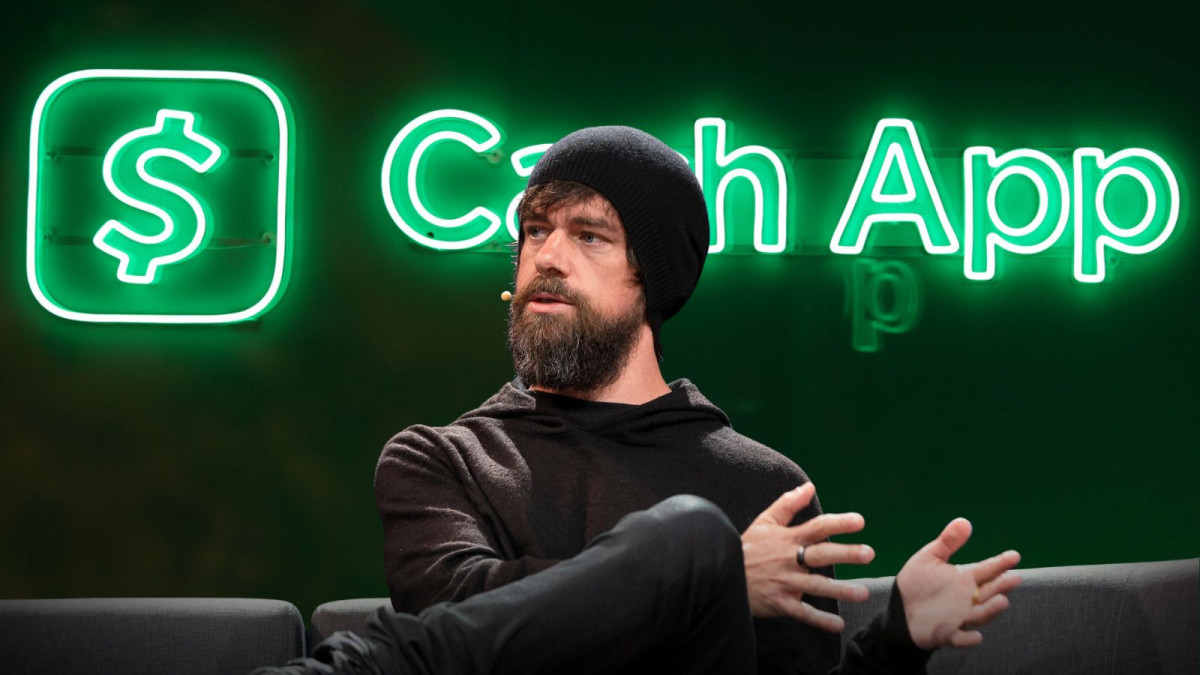
Cash App Goes Live With USDC For 60M Users

Block's Cash App has officially begun rolling out USDC stablecoin payments to its nearly 60 million monthly users. The feature went live today for roughly 25% of the platform's user base, with full availability expected by the end of the week.
The rollout covers four blockchain networks: Solana, Ethereum, Polygon, and Arbitrum. Users can now send USDC from their Cash App wallet to external wallets on any of the supported chains, and incoming USDC is automatically converted into a dollar balance within the app. No separate transfer fee applies, at least for now.
A Reluctant Pivot, Years in the Making
The launch carries some ideological weight. Jack Dorsey, Block's CEO and longtime Bitcoin maximalist, spent years positioning Cash App as a Bitcoin-first platform. He built out Bitcoin trading, backed mining hardware development, and integrated Lightning Network support for Square merchants globally. Stablecoins were not part of that vision.
That changed, grudgingly. In March, Dorsey publicly acknowledged the shift. "I don't like that we're going to support stablecoins but our customers want to use them," he said. "I don't think it's wise to go from one gatekeeper to another." The comment was candid in a way that's rare for major fintech announcements, and it framed the product addition less as strategic enthusiasm and more as a concession to market demand.
Block first hinted at the feature on the Cash App website late last year, describing stablecoins strictly as a payments mechanism rather than an investment tool. But that early hint has carried through to the live product.
Why Solana (and Why Not Just Solana)
Solana started as the sole chain involved with Cash App. Back in November 2025, Solana confirmed its involvement after sharing a demo by Circle's Jeremy Allaire showcasing a USDC transfer on the network. The choice made sense: Solana transactions typically cost under a cent and settle in under a second, conditions well-suited for the kind of peer-to-peer and remittance use cases Cash App serves.
But Block's Miles Suter framed the company's stance as "chain- and coin-agnostic" from the beginning. Solana was a starting point, not a commitment. The live rollout now includes Ethereum, Polygon, and Arbitrum alongside Solana, giving users flexibility across networks with different cost and speed profiles. Ethereum's gas fees can still spike during congestion, which is precisely why Layer 2 options like Arbitrum and Polygon matter.
The multi-chain approach also future-proofs the integration somewhat. If one network faces congestion or reliability issues at scale, users and the platform aren't locked in.
The Guardrails Are Real
Cash App is not positioning this as a DeFi on-ramp. The feature comes with meaningful restrictions. Sending is capped at $2,000 per day and $5,000 per week; receiving tops out at $10,000 weekly. The service is currently unavailable in New York and on sponsored accounts. Identity verification is required.
Perhaps most importantly, the app warns users that blockchain transactions are irreversible. Funds sent to a wrong address or unsupported network are gone permanently. That's a steep hill to climb for a consumer platform serving tens of millions of people who may be encountering on-chain transfers for the first time.
Stablecoins Are Here To Stay...and Thrive
Cash App's move lands against a backdrop of surging stablecoin adoption. As of this week, the total market value of stablecoins has hit a record $322 billion, exceeding the foreign exchange reserves of 95 nations, including the UK and Canada. USDC, issued by Circle, is the second-largest stablecoin and already sees over $14 billion in liquidity on Solana alone.
Western Union launched Solana-based remittances in the first half of 2026. Stripe has added USDC support across multiple chains. Visa has integrated Solana for stablecoin settlements. The regulatory picture has also clarified somewhat, with the GENIUS Act signed in July 2025 establishing a clearer federal framework for stablecoin issuance.
Taken together, this feels less like a novelty launch and more like a platform making its peace with where consumer payments are heading. Dorsey may not love it, but the product is live, the networks are there, and 60 million people now have a relatively frictionless path to on-chain dollar transfers whether they know what a blockchain is or not.