#Washington

Washington Court Orders Kalshi to Halt Operations

A court in the state of Washington has ordered Kalshi to halt all operations within the state, following a supposed violation of the state’s Gambling and Consumer Protection Act.
Based on a memo from the office of the Washington Attorney General, Kalshi is thereby required to immediately stop the offering, accepting, and facilitating wagers on sports, elections, politics, entertainment, tech and science within the state.
“Kalshi has gotten rich promoting wagers on sports, elections, natural disasters, events related to the Iran War, and more. Under this order, Kalshi is banned from offering wagers on most of those topics in Washington,” said Attorney General Nick Brown.
“As this case moves forward, we will continue to enforce Washington law and hold Kalshi accountable for misleading consumers.”
The court has also mandated Kalshi implement an IP address and residency based geofence by August 19 and a multi-source geofencing solution by Sept. 2.
According to the Washington State Law, Gambling refers to any activity that involves the staking of or risking something valuable upon the outcome of a contest of chance or any future or contingent event, and going by this, all Kalshi activities completely violate the state’s law.
As part of its restrictive orders, the court has also banned Kalshi from advertising any sort of wagers to Washington residents, as doing so, the attorney general memo said, constitutes an unfair or deceptive act or practice.
The halt order from the Washington court also comes at a time when Baltimore, the largest city in the state of Maryland also sued Kalshi, Polymarket, for violating the state’s Consumer Protection Ordinance by offering unlicensed sport contracts while also naming Coinbase, Robinhood, and Webull as defendants in the lawsuit.
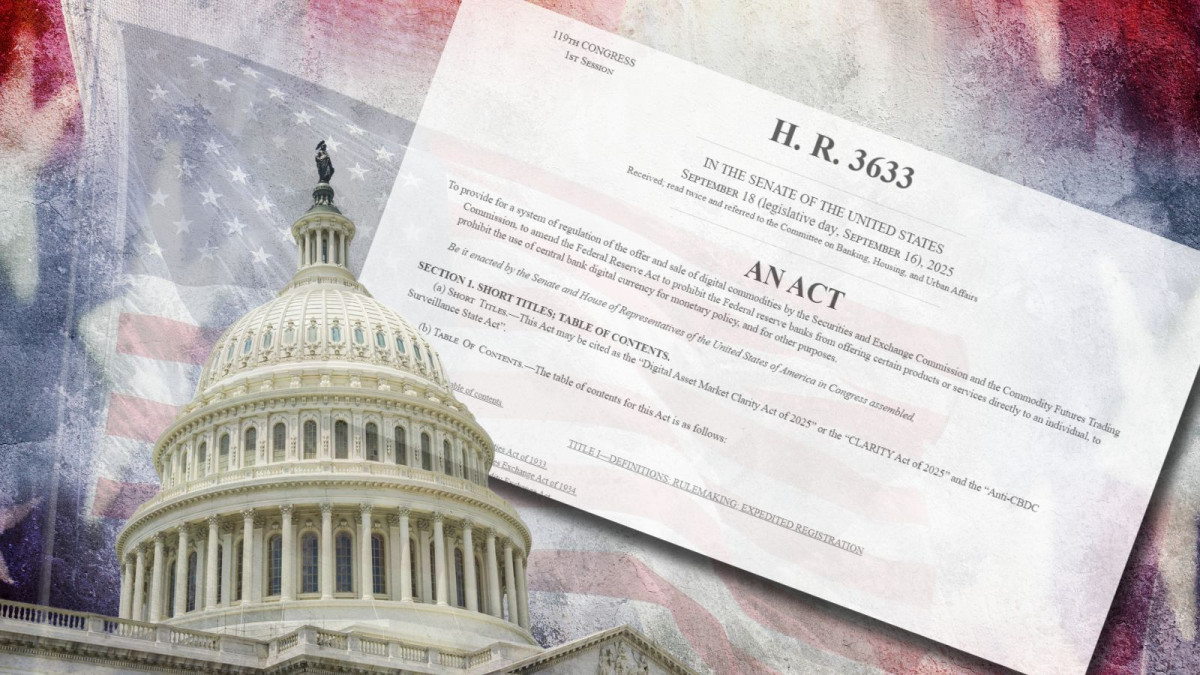
Senate Strikes Stablecoin Yield Deal, Clearing Path for the CLARITY Act

Something shifted in Washington on Friday, and the people who have been watching the CLARITY Act back and forth for months could feel it. Two key lawmakers, Republican Thom Tillis of North Carolina and Democrat Angela Alsobrooks of Maryland, reached an agreement in principle on one of the most stubbornly contested provisions in the bill: stablecoin yield. It is the kind of deal that, when the details finally shake out, may well be remembered as the moment the United States stopped kicking the crypto regulatory can down the road.
The news broke late Friday and was first reported by Politico. Senator Alsobrooks confirmed it plainly. "Sen. Tillis and I do have an agreement in principle," she said. "We've come a long way. And I think what it will do is to allow us to protect innovation, but also gives us the opportunity to prevent widespread deposit flight." The White House's crypto executive director, Patrick Witt, called it a "major milestone" and added that more work remains, but that progress toward passing the CLARITY Act was now real and tangible.
Senator Cynthia Lummis, the Wyoming Republican who chairs the Senate Banking Committee's crypto subcommittee and has been one of the most tireless advocates for this legislation, marked the occasion in her own way. She posted a photo on X of a "yield" sign. No caption needed.
The Stablecoin Yield Standoff, Explained
For months, the stablecoin yield question was the immovable object blocking the CLARITY Act from getting its Senate Banking Committee hearing.
The GENIUS Act, signed into law by President Trump in July 2025, prohibits stablecoin issuers from paying interest directly to holders. The intent was to prevent stablecoins from functioning as de facto bank deposit accounts, which would put them in direct competition with traditional savings products and, as the American Bankers Association argued loudly, threaten deposit flows into community banks. The concern: if Coinbase or another platform could offer users 4% on their dollar-pegged tokens simply for holding them, why would anyone keep money in a checking account?
The problem is that the GENIUS Act only covered issuers. It left a gap for third-party platforms that might offer rewards to customers who hold stablecoins on their systems. The ABA saw this as a loophole and spent months in Washington lobbying to close it. Crypto companies, for their part, said those rewards programs were fundamentally different from deposit interest and should be allowed.
Section 404 of the Senate Banking Committee's draft tried to thread this needle. It prohibits digital asset service providers from paying interest or yield "solely in connection with the holding of a payment stablecoin," while explicitly allowing "activity-based" rewards tied to transactions, payments, platform use, loyalty programs, liquidity provision, and other behaviors. The distinction is real: a reward for moving money through a system is not the same thing as interest paid for parking money in one.
Senator Mike Rounds, a South Dakota Republican on the Banking Committee, captured the nuance at an ABA summit earlier this month: rewards cannot be simply about how much money sits in an account, but they might reasonably be tied to how active that account is. "We're trying to reflect that in the discussions," he said.
Lummis had suggested the final compromise would disallow anything that "sounds like banking product terminology" and bar rewards tied to the size of a user's balance. Coinbase CEO Brian Armstrong, whose withdrawal of support in January helped torpedo a scheduled markup hearing, has been described by Lummis as "really pretty good about being willing to give on this issue."
From 99% to Done
The past week has been a rapid acceleration. As recently as Thursday, sources familiar with the situation described the stablecoin yield issue as being on the verge of resolution. A closed Senate Republican meeting on Wednesday, attended by White House crypto council director Patrick Witt, produced what Lummis told reporters afterward were significant breakthroughs, with "major light bulbs" switched on among the participants.
FinTech Weekly, which has closely tracked the legislative calendar, reported that stablecoin yield negotiations were "99% of the way to resolution" coming out of that meeting. The digital asset provisions of the bill more broadly were described as being in a "good place." The remaining friction, sources said, was not technical but political, specifically around whether community bank deregulation provisions might be attached to the CLARITY Act as part of a broader legislative trade.
Then came Friday's agreement. "We've come a long way," Alsobrooks told Politico, with a formality that understated just how much ground has been covered since January, when the scheduled markup hearing collapsed under the weight of over 100 proposed amendments and an industry revolt over the yield language.
What Comes Next and Why the Timeline Matters
An agreement on yield does not mean the CLARITY Act is done. Several other issues need resolution, decentralized finance remains a live debate, and the bill still needs to clear the Senate Banking Committee before it can go to a full Senate vote. After that, it must be reconciled with the version that passed the Senate Agriculture Committee in January. And before the President can sign it, that combined Senate text has to be reconciled with the House-passed version from July 2025.
But the clock is ticking here. Senate Majority Leader John Thune controls the floor calendar, and it is crowded. Unrelated fights, including the Republican voter-ID bill and ongoing debate over the situation in Iran, are competing for limited floor time. Haun Ventures CEO Katie Haun, in a CNBC interview Friday, put it directly: "The big question on the Clarity Act is, is Congress going to get a bill to the floor on time to vote?"
Lummis has said she expects a Banking Committee hearing in the latter half of April, after the Easter recess. Advocates have been hoping for a May resolution. Prediction markets are currently pricing the odds of the CLARITY Act being signed in 2026 at around 72%, according to FinTech Weekly. Treasury Secretary Scott Bessent has described passage as a spring 2026 target. Ripple CEO Brad Garlinghouse has put the odds at 80 to 90%.
JPMorgan analysts have described CLARITY Act passage by midyear as a positive catalyst for digital assets, pointing to regulatory clarity, institutional scaling, and tokenization growth as the key drivers. The crypto industry committed nearly $150 million to the Fairshake political action committee in the current cycle and announced a $193 million war chest around the Agriculture Committee markup in January. The companies behind that spending are waiting.
What This All Means
The stakes of the CLARITY Act extend well beyond Senate procedure. Markets are waiting. Institutions that have been slowly building out crypto infrastructure, custody solutions, tokenized asset offerings, trading desks, need to know what the rules are before they can fully commit capital and resources. The SEC's interpretation helps, but as Atkins himself acknowledged, it is not a substitute for law.
The CLARITY Act, if signed, would give the CFTC clear jurisdiction over most digital asset spot markets, create a path to register exchanges and brokers, establish consumer protections with real enforcement teeth, and provide the kind of statutory framework that companies can build businesses around. It would, in the language of its Senate Banking Committee sponsors, establish the United States as the crypto capital of the world, not just by rhetoric but by law.
If the bill fails this year, the status quo continues. Crypto companies operate under regulatory uncertainty. The SEC retains broad discretion to treat digital assets as securities. Institutional adoption continues but without a clear statutory framework. And the crypto lobby, which has made clear it will treat failure as a political liability, turns its $193 million war chest into something that looks a lot more like electoral pressure.
Friday's agreement does not guarantee passage. It does something important though. It removes the single biggest substantive obstacle to moving forward. The stablecoin yield question, which derailed a January markup hearing and has consumed months of negotiations, now has a resolution in principle. The path ahead still has obstacles, but for the first time in a while, it looks like an actual path.
Senators Tillis and Alsobrooks just handed the crypto industry something it has been asking for since the last bull market: a credible signal that Washington is finally going to do its job. The deal is in principle, the details are not yet public, and there is still legislative work ahead. But after years of false starts, shelved bills, collapsed markup hearings, and agency standoffs, this is the moment the trajectory changed.
Senators Race to Save the CLARITY Act With Stablecoin Yield Compromise
The room at the Marriott Marquis in Washington was full of community bankers on Tuesday, and Senator Angela Alsobrooks walked straight into the lion's den. Speaking at the American Bankers Association's annual Washington Summit, the Maryland Democrat delivered a message neither side particularly wanted to hear: everyone involved in the Digital Asset Market Clarity Act is going to have to walk away a little bit unhappy.
It was a remarkably candid thing to say in front of 1,400 people who have spent the better part of three months trying to kill the very provision that's been holding up the bill. But Alsobrooks, along with Republican Senator Thom Tillis of North Carolina, is now the central figure in a late-stage push to get the Clarity Act off the Senate Banking Committee floor and into an actual markup hearing before the legislative window closes for good.
The two senators confirmed Tuesday they're actively working on compromise language around stablecoin yield which keeps coming up as the main issue that has stalled what was supposed to be a landmark piece of crypto regulation.
A Bill In Limbo
The Digital Asset Market Clarity Act, or CLARITY Act, was supposed to have its Senate Banking Committee markup in January. That session got pulled at the last minute. The reason was stablecoin yield, specifically, amendments co-sponsored by Alsobrooks and Tillis that would restrict crypto firms from offering interest-like returns to customers who simply hold dollar-pegged digital tokens like USDC or USDT.
Banks had been lobbying hard against any provision that allowed that kind of reward. Their argument, which they've pushed loudly and repeatedly, is that stablecoins offering yield would function like bank accounts without the regulatory obligations of bank accounts. Executives at JPMorgan and Bank of America have cited Treasury Department modeling that suggested banks could lose up to $6.6 trillion in deposits if stablecoin yield programs went mainstream. Their argument is that it would starve the lending market and ultimately destabilize smaller regional banks that are particularly dependent on deposit funding.
The crypto industry dismisses most of that as fearmongering. Coinbase CEO Brian Armstrong called out the banking lobby publicly for what he characterized as anticompetitive blocking tactics and has pulled his support for the bill. In January at Davos, JPMorgan's Jamie Dimon reportedly told Armstrong he was, in quite colorful terms, wrong. The anecdote leaked out and became something of a symbol for just how personal this fight had gotten.
"We absolutely have to have these protections to prevent the deposit flight, but we're going to probably have to make some compromises." — Senator Angela Alsobrooks, D-Md.
The White House Steps In, Then Gets Rejected
By late February, the White House had grown impatient. Administration officials spent weeks brokering what they hoped would be an acceptable middle ground: allow stablecoin yield in limited contexts, particularly for activity tied to payments and transactions, while banning rewards on idle balances that look more like savings accounts. Crypto firms signed off on the framework. The banks did not.
On March 3rd, President Trump went public with his frustration. In a Truth Social post, he wrote that banks should not be trying to undercut the GENIUS Act or hold the CLARITY Act hostage, a shot across the bow that was notable both for its directness and for the fact that it did essentially nothing to move the American Bankers Association. Two days later, the ABA formally rejected the White House compromise anyway.
The March 1st deadline the White House had set for a resolution passed without published compromise text. Prediction markets, which had briefly priced Clarity Act passage at around 80% odds, fell back toward 55% as the stalemate hardened.
What the ABA rejection didn't do, however, is kill the legislation outright. Congress has passed bills over banking lobby opposition before. The question, as analysts and lobbyists have been pointing out all week, is whether there are enough Senate votes to do it again — and whether the calendar allows the time to find out.
Can We Get A Compromise?
The emerging deal that Alsobrooks and Tillis are proposing is a slimmed-down version of what the White House tried. Under the framework being discussed, yield on stablecoin holdings that closely resemble bank deposits would remain prohibited. But rewards tied to specific activities, like using stablecoins for payments or transactions on a given platform, could remain eligible for some form of customer incentive.
Both senators and many crypto advocates actually agree on the premise that pure holding rewards that look and function like savings account interest are a problem. The dispute is over where exactly to draw the line and how to define the categories well enough that neither side can game them after the fact.
Cody Carbone, the CEO of the Digital Chamber, said this week that Tillis has been very receptive to discussions about stablecoin yield and that he's optimistic the industry can get to yes on the bill. Summer Mersinger, the CEO of the Blockchain Association, noted that the White House weighing in on the negotiations and pushing banks to engage in good faith adds important momentum as talks continue.
The banks have maintained, publicly at least, that those assurances aren't enough. Their representatives at the ABA summit this week underlined again what they see as the risks of any yield loophole to their business model. The question of whether a markup hearing happens in late March or gets delayed again, depends entirely on whether Alsobrooks and Tillis can produce language the committee will actually vote on.
Timing Is An Issue
Behind every conversation about the Clarity Act this week is an unspoken anxiety about time. The Senate calendar is tight. Midterm elections are in November, and lawmakers will start dispersing from meaningful legislating sometime around May or June as campaign season accelerates. Unfortunately it seems, Congress prefers to stop working as they try to convince voters to keep them in their jobs. I know, makes perfect sense. If a markup isn't held and a floor vote isn't scheduled by sometime in April, realistically the bill is looking at the next Congress which could be a completely different party in power. And complicating things even more. Despite which party ends up winning the midterms, this could mean another 12 to 18 months of regulatory uncertainty for an industry that has been waiting years for a clear legal framework.
That timeline matters not just for the crypto industry's domestic ambitions, but for its competitive positioning globally. Under the European Union's MiCA framework, stablecoin yield products that are restricted or banned in the U.S. are already legal in European jurisdictions. Coinbase and others have been explicit about the risk that continued regulatory ambiguity in the U.S. will push capital, talent, and product development offshore. Trump made a version of the same argument in his Truth Social post last week, warning that failure would drive the industry to China.
There's also a strategic Bitcoin Reserve angle sitting quietly in the background. According to people familiar with the situation, the Trump administration has determined it needs congressional action to operationalize the planned Strategic Bitcoin Reserve that the president signed an executive order for over a year ago. That creates at least some White House motivation to see the broader Clarity Act process succeed.
What Happens Next
The Senate Banking Committee is targeting a late-March markup. Whether that happens depends on whether the Alsobrooks-Tillis compromise language satisfies enough members to call the vote. If it does, the bill would then need to be merged with a version that already passed the Senate Agriculture Committee on a party-line vote in late 2025. The combined text would require significant Democratic support to clear a full Senate vote, always a tall ask in the current politcal environment and the fact that seven Democratic senators have separately raised concerns about potential conflicts of interest involving senior government officials, including the president himself, who have financial ties to the crypto industry.
Even if the Senate acts, the bill still needs the House, where an earlier version of the CLARITY Act passed committee last year but has yet to reach the floor. The path to a signed law before November is narrow but not impossible. It requires the Senate Banking Committee to move in the next few weeks, the combined bill to hold together politically, and a Senate floor schedule that is packed with little wiggle room.
For the moment, all of it hinges on two senators and a room full of bankers in Washington D.C., trying to decide how much compromise is actually compromise and if they can all agree to leave a bit unhappy about the results for the greater good. Typically the best compromises do make both sides a bit unhappy. In Washington, that usually means the deal is closer than it looks. It also usually means it's harder than it sounds.
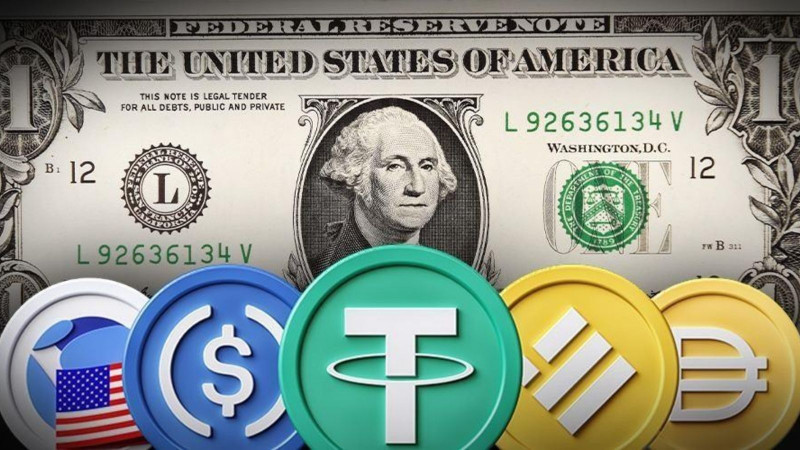
Banks Are Drawing a Hard Line on Stablecoin Yield

Washington has spent the past several months talking about crypto clarity. What it got this week was something closer to a standoff.
At the center of the latest White House meeting between crypto executives and banking lobbyists was a surprisingly narrow issue that has turned into a major fault line: stablecoin yield.
On paper, the CLARITY Act is supposed to settle jurisdictional turf wars between regulators and create a workable framework for digital assets in the United States. In practice, negotiations have slowed to a crawl over whether stablecoin holders should be allowed to earn rewards.
Crypto companies came to the table expecting to negotiate. Bank representatives arrived with something closer to a red line.
The Yield Problem
Stablecoin yield sounds simple. Platforms offer incentives, rewards, or returns to users who hold dollar-backed tokens. Sometimes that comes from lending activity. Sometimes it comes from promotional programs. Structurally, it does not always look like a bank deposit.
Banks are not buying that distinction.
From their perspective, if consumers can hold tokenized dollars and earn a return without stepping inside the banking system, that looks a lot like deposit competition. And not just competition, but competition without the same regulatory burden.
Banks operate under capital requirements, liquidity ratios, deposit insurance rules, stress testing frameworks, and layers of federal oversight. Stablecoin issuers, even under proposed legislation, would not be subject to the same regime.
So the banking lobby’s position has been blunt. No yield. Not from issuers, not indirectly through affiliated programs, not in ways that replicate interest-bearing accounts.
The crypto side sees that as overreach.
Is This About Risk or About Control?
Publicly, banks frame their opposition as a financial stability issue. If large amounts of capital flow out of insured deposits and into stablecoins offering yield, that could shrink the deposit base that supports lending. In a stress scenario, they argue, the dynamic could amplify volatility.
There is logic there. Deposits are the backbone of bank balance sheets. Disintermediation is not a trivial concern.
But crypto executives are asking a quieter question. If the issue is really about safety, why push for a blanket prohibition rather than tighter guardrails? Why not cap yield structures, restrict how they are funded, or impose disclosure standards?
Why eliminate them entirely?
Some in the industry suspect the answer is competitive pressure. Stablecoins have already become critical plumbing for crypto markets, facilitating trading, settlement, and cross-border transfers. Add yield into the equation and they start to look even more like digital savings instruments.
That begins to encroach on traditional banking territory.
The Competitive Threat
Banks have historically tolerated crypto in its speculative corners. Trading tokens is volatile, niche, and largely outside the core consumer banking relationship.
Stablecoins are different. They are dollar-denominated. They are increasingly integrated into payment systems. They can move across borders faster than traditional rails. And they are programmable.
Now imagine those same tokens offering yield, even modest incentives. The psychological shift for consumers could be meaningful. Why leave idle cash in a checking account earning almost nothing if a tokenized version offers some return and similar liquidity?
To bankers, that is not innovation. That is deposit leakage.
And in a higher rate environment, where funding costs matter, deposit competition becomes more acute.
The Legislative Bottleneck
The CLARITY Act was supposed to resolve long-running disputes between regulators and provide certainty for digital asset firms operating in the United States. Instead, stablecoin yield has turned into the sticking point holding up broader progress.
White House officials have reportedly pressed both sides to find compromise language. So far, that compromise remains elusive.
Crypto firms argue that banning yield outright could push innovation offshore. Jurisdictions in Asia and parts of Europe are moving ahead with stablecoin frameworks that do not automatically prohibit reward structures. The fear in Washington’s crypto circles is that overcorrection could hollow out domestic competitiveness.
Banking groups counter that allowing yield would create a parallel banking system without equivalent safeguards.
The tension is not just technical. It is philosophical.
A Larger Question About Money
At its core, this debate is about who gets to intermediate digital dollars.
If stablecoins become widely used and allowed to offer returns, they could evolve beyond trading tools into mainstream financial instruments. That challenges the traditional hierarchy where banks sit at the center of deposit-taking and credit creation.
Banks are not opposed to digital dollars in theory. Many are experimenting with tokenization and blockchain infrastructure themselves. But they want those innovations inside the regulated banking perimeter, not outside of it.
Crypto companies, on the other hand, see decentralization and alternative rails as the point.
So when banks push to ban stablecoin yield entirely, the crypto industry reads it as more than prudence. It looks like an attempt to protect market share.
The Bottom Line
For now, negotiations continue. There is still political appetite in Washington to pass comprehensive crypto legislation, especially as digital asset markets remain a significant part of the financial system.
But unless lawmakers can thread the needle between stability concerns and competitive fairness, stablecoin yield could remain the issue that stalls everything else.
And that leaves an uncomfortable reality.
If the United States cannot decide whether digital dollars are allowed to earn a return, the market may decide elsewhere.