#France
Revolut Receives French Banking License

Revolut Bank S.A., an entity of global fintech company Revolut, has received a full banking license from the European Central Bank (ECB), following an assessment conducted jointly by the ECB and the French Prudential Supervision and Resolution Authority (ACPR).

Announcing the receipt of the license in a press release on Monday, Revolut said the approval creates a foundation for the company to better serve its clients in Western Europe while maintaining the highest regulatory and operational standards. The company added that the license supports its goal of becoming one of Europe’s largest and most trusted banks.
Commenting on the license, Nik Storonsky, Revolut’s founder and CEO, said, “This licence gives us the foundation to build the next generation of banking for more than 30 million customers across Western Europe.”
“France has become a leading financial hub, supported by a dynamic financial ecosystem and a robust regulatory framework. It is the ideal platform to accelerate Revolut's next phase of growth, bringing us one step closer to our ambition of becoming one of Europe's largest and most trusted banks.”
With the approval, Revolut, through its French entity Revolut Bank S.A., can now operate as a fully authorized local bank in France and provide a full range of banking services.
Revolut currently serves more than 75 million customers across more than 40 countries globally, with Western Europe representing one of its largest and fastest growing markets.
The company plans to reach 100 million customers across 100 countries by mid 2027. According to the company, Revolut Bank S.A. will progressively expand its operations across Europe, starting with France.
Keyrock Secures MiCA License to Expand Across EU

Keyrock, a leading crypto investment company and digital asset liquidity provider, has secured a Markets in Crypto Assets Regulation (MiCA) license, advancing its efforts to expand its presence across the European Union (EU).

The company announced the authorization in a Monday blog post, stating that it was granted through its French subsidiary, Keyrock FR SAS. According to Reza Ghadiri Zare, Keyrock’s general counsel, the MiCA license provides regulatory certainty as the firm scales its operations across EU member states, thereby strengthening investor confidence.
“Achieving a MiCA license not only demonstrates our uncompromising market integrity, but also signals our intent for the future,” commented Kevin de Patoul, CEO of Keyrock. “We’ll continue to drive progress in digital assets, but never at the expense of security or transparency. As we grow, we’ll provide clients with the stability and confidence required in a regulated market.”
With MiCA licensing secured and regulatory hurdles cleared, Keyrock aims to enhance its cross-border operations across the EU. Coupled with its liquidity and risk management infrastructure, the company plans to further scale its digital asset initiatives.
With a valuation of $1.1 billion, Keyrock operates a liquidity infrastructure that spans more than 85 centralized and decentralized exchanges and over 1,400 markets.
About Keyrock
Founded in 2017, Keyrock is a leading global digital asset market maker that aims to make crypto markets more accessible and scalable. Leveraging its high-frequency trading technologies, risk management capabilities, and deep liquidity, Keyrock offers a range of services, including market making, OTC trading, and digital asset and wealth management.
As one of the earliest crypto market makers, Keyrock has achieved several significant milestones, including raising more than $170 million and achieving unicorn valuation. The company has also secured the necessary licenses, reducing regulatory uncertainty as it expands across the EU. Keyrock serves institutional clients, including hedge funds, asset managers, and traditional finance companies entering the digital asset market.
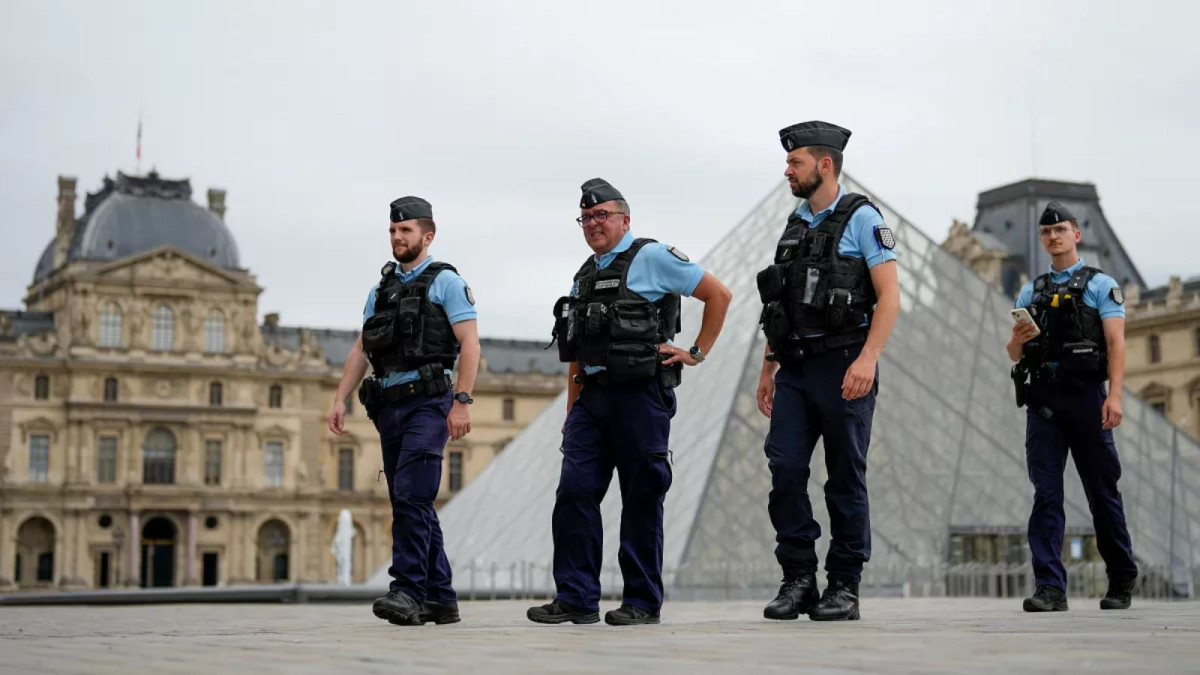
Attempted Kidnapping Targets Sandbox Co-Founder’s Wife

The wife of Sébastien Borget, co-founder and chief operating officer of The Sandbox, an Ethereum-based virtual world platform, reportedly narrowly escaped being kidnapped at the couple’s home in Villenoy, Seine-et-Marne, France, this week.
According to Le Journal du Dimanche, a local French newspaper, one of the kidnappers disguised as a deliveryman wearing a branded vest, knocked on the couple’s home.
On opening the gate, five other hooded accomplices charged at Borget’s wife in an attempt to forcefully drag her into a vehicle. However, her cries alerted neighbors, forcing the group to scatter and leave the victim behind.
Four suspects escaped in the vehicle, while two others fled on foot and hid nearby. The two suspects attempted to book a ride-hailing car but were later captured by officers from the Meaux Anti-Crime Brigade.
The two suspects arrested were identified as Mateo V. and Walid H., reportedly born in 2010 and 2009, respectively, and are both residents of Pantin in Seine-Saint-Denis. They were found carrying a fake handgun, zip tie restraints, and balaclavas.
While investigations are ongoing, local news reports have linked the attempted kidnapping to cryptocurrencies, citing an increase in crypto-related wrench attacks and kidnapping incidents reported this year.
France Remains a Hotspot for Crypto Wrench Attacks
There has been an increase in attacks on crypto holders, with France leading and becoming the global epicenter.
In just the first four months of this year, between 41 and 47 incidents were reported in France, an average of one incident every 2.5 days. The French authorities have also charged 88 suspects, including more than 10 minors, across 12 major investigations, with 75 in pretrial detention.
Jameson Lopp, cofounder and chief security officer of Casa, a well-known blockchain security company, has long been tracking these crypto-wrench attacks in a GitHub repository named "physical bitcoin attacks." According to the repository, there have been about 35 recorded incidents this year, with France accounting for 74 percent of those, or 26 incidents in total.
To help combat the increasing number of wrench attacks, Binance recently added a withdrawal protection feature to the Binance wallet that activates a lockdown period, preventing withdrawals from the wallet, especially by intruders.