#Crypto.com

Crypto.com Lands First UAE Crypto Payments License

Foris DAX Middle East FZE, the UAE entity of the cryptocurrency exchange Crypto.com, has received the Stored Value Facilities (SVF) license from the Central Bank of the UAE.
The announcement, made on Monday, marks a notable milestone for the crypto exchange, as it is the first Virtual Asset Service Provider (VASP) in the Emirates to receive the license.

With the Stored Value Facilities license now secured, Crypto.com can partner with the Dubai Department of Finance, allowing UAE residents to pay government fees with virtual assets, with all transactions settled in UAE dirhams or other stablecoins approved by the UAE central bank.
As the only virtual asset provider holding the SVF license in the Emirates, any other entity seeking to offer virtual asset payment services in the region will first need to be onboarded by Crypto.com.
“To be the first VASP to receive this license is an incredible achievement and proves our strong commitment to compliance and to advancing the regulated digital assets ecosystem in the UAE,” said Eric Anziani, President and COO of Crypto.com.
“We are continuing to expand our presence in this forward-thinking, digitally savvy market and remain committed to offering innovative products and services that are convenient and seamless for digital asset holders,” he added.
The new SVF license comes about a year after Crypto.com received a full VASP license from Dubai’s Virtual Assets Regulatory Authority (VARA), allowing it to offer crypto derivatives products, including futures, perpetual swap contracts, and contracts for difference (CFDs).
Derivatives trading continues to grow, accounting for about 70-75% of total crypto trading volume. In 2025, global crypto derivatives trading volume reached approximately $85.7 trillion, with analysts projecting the market to continue expanding significantly.
The State of Crypto in the United Arab Emirates
The UAE, over the last few years, has emerged as one of the foremost crypto jurisdictions. According to the World Crypto Rankings 2025 report by Bybit and DL Research, the UAE leads the entire Middle East and North Africa region in crypto adoption, ranking fifth globally behind Singapore, the United States, Lithuania, and Switzerland.
To position itself as a major crypto hub, the UAE has introduced several crypto-friendly policies, including exemptions from VAT and personal income tax on virtual assets and crypto trading.
The country has also passed legislation that brings all virtual asset entities, including DeFi protocols, stablecoins, tokenized real-world assets, decentralized exchanges, wallets, bridges, and supporting blockchain infrastructure, under the authority of the Central Bank. The move effectively gives the digital asset ecosystem a recognized legal framework under federal law.

Crypto.com Launches OG as Prediction Markets Grow

Crypto.com is leaning harder into prediction markets, and it is doing so with a clear message: this is no longer a side experiment.
The exchange has launched OG, a standalone prediction markets app that pulls event trading out of the main Crypto.com platform and gives it its own dedicated product. The move comes at a moment when prediction markets are not just growing, but accelerating, driven by sports, politics, and a broader appetite for trading real-world outcomes.
For Crypto.com, spinning prediction markets into their own app is a signal that this category is starting to matter in a way it did not before.
Why Crypto.com Is Breaking Prediction Markets Out on Their Own
OG focuses on event contracts that allow users to trade on the outcome of future events, starting with high-profile sports like the Super Bowl. Over time, the company says it plans to expand into financial events, politics, entertainment, and culture.
What sets OG apart from many crypto-native prediction platforms is its regulatory structure. The contracts are offered through Crypto.com’s U.S. derivatives arm, which operates under federal oversight. That positioning allows Crypto.com to frame prediction markets as regulated financial products rather than gambling, a distinction that has become increasingly important in the U.S.
There is also a product reason for the separation. Prediction markets behave differently than spot crypto trading. They move faster, they are driven by opinion and information flow, and they tend to be more social by nature. OG leans into that with features like leaderboards and community-style engagement, along with aggressive incentives aimed at onboarding early users.
Crypto.com has used that playbook before, and it is betting it works again here.
Prediction Markets Are Booming
Prediction markets are seeing record activity across the industry. Recent data shows combined monthly trading volume on leading platforms Kalshi and Polymarket has climbed for six straight months, rising from roughly $2 billion last August to nearly $17.5 billion in January.
That growth has been fueled by a mix of major sports events, political cycles, and growing interest in markets that reflect real-world probabilities rather than token price action. For many users, trading on whether something will happen feels more intuitive than trading whether a coin will go up or down.
Sports, in particular, have become an entry point. They are familiar, emotionally charged, and easy to understand. From there, users often branch into macroeconomic events, policy decisions, and cultural moments that attract attention well beyond crypto.
How Event Trading Actually Works
At its core, prediction markets allow users to buy and sell positions tied to whether an event happens or not. Prices move based on collective belief. A contract trading at 65 cents implies the market sees about a 65 percent chance of that outcome occurring.
As new information enters the market, whether it is an injury report, polling data, or an economic release, prices adjust in real time.
In regulated environments, these contracts are treated as derivatives. That classification is what allows companies like Crypto.com to operate nationally, rather than navigating a patchwork of state-level gambling rules. It is also what opens the door, at least in theory, to more advanced features like leverage and margin trading on event outcomes.
Crypto.com has signaled interest in going down that path, pending regulatory approval.
Regulation Is Becoming the Real Battleground
As prediction markets grow, regulation has become the defining line between platforms.
Some operate entirely outside the U.S. framework, relying on crypto-native liquidity and offshore structures. Others are betting that long-term scale depends on regulatory clarity, even if that means slower iteration and tighter constraints.
Crypto.com has clearly chosen the second route. By anchoring OG to a federally regulated derivatives entity, the company gains credibility with regulators and institutions, and potentially access to a much larger user base.
That does not eliminate risk. Legal interpretations continue to evolve, and prediction markets still sit in an uncomfortable gray area between finance and betting. But for now, regulation looks less like a constraint and more like a competitive advantage.
Kalshi and Polymarket have established themselves as leaders, particularly around political and macro events. Other major exchanges are watching closely, and in some cases preparing their own entries. Prediction markets offer something many crypto products struggle with: relevance to people who do not care about crypto prices.
Crypto.com’s advantage is distribution. The company already knows how to onboard millions of users through mobile-first products, and OG is clearly designed to plug into that existing funnel.
Whether that is enough to stand out in this crowded field remains an open question.
The Bottom Line
Prediction markets have moved out of the margins and into the center of the crypto conversation.
Crypto.com’s launch of OG reflects a broader shift in how exchanges are thinking about growth. Not everything needs to revolve around tokens. Not every product needs to look like a traditional exchange. The fact that Crypto.com has a huge user base as an traditional exchange definitely makes this latest move smart, and it is certainly following the trend of exchanges becoming more than just a place to buy and sell. They are beginning to offer a full suite of products for an ever-growing customer base.
By turning real-world events into tradable markets, prediction platforms tap directly into attention, opinion, and information flow. If OG succeeds, it could help push prediction markets...and Crypto.com even more in to the mainstream.
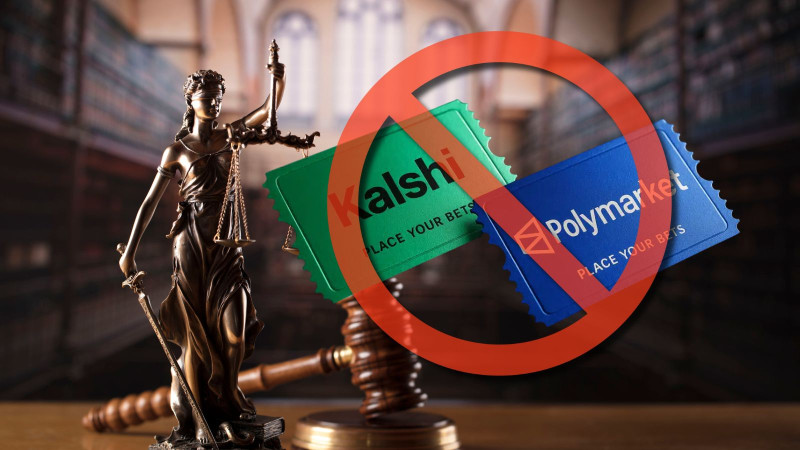
Tennessee Orders Kalshi, Polymarket, and Crypto.com to Halt Sports Contracts

Tennessee regulators have ordered Kalshi, Polymarket, and Crypto.com to immediately stop offering sports-related prediction contracts to residents of the state, escalating a growing conflict between state gambling authorities and federally regulated prediction markets.
The Tennessee Sports Wagering Council issued cease-and-desist orders on January 9, demanding that the three platforms halt all sports event contracts, void any open positions tied to Tennessee users, and refund customer funds by the end of the month.
State officials argue the products function as unlicensed sports betting under Tennessee law, regardless of how the companies describe them.
The move places Tennessee alongside a growing list of states pushing back against prediction markets that allow users to trade contracts based on the outcomes of sporting events, elections, or real-world events. While the platforms frame these products as financial instruments, state regulators increasingly see them as gambling by another name.
What Tennessee Is Demanding
According to the orders, Kalshi, Polymarket, and Crypto.com must immediately cease offering sports contracts to Tennessee residents. Any existing sports-related contracts must be canceled, and all funds deposited by users in the state must be returned by January 31.
Failure to comply could expose the companies to civil penalties, injunctions, and possible criminal enforcement under Tennessee’s sports gaming laws.
The council’s position is straightforward. If money is being risked on the outcome of a sporting event, the state considers it sports wagering, which requires a license, tax payments, and adherence to consumer protection rules.
The Regulatory Fault Line
At the heart of the dispute is a long-running jurisdictional battle between state gambling regulators and the federal framework governing derivatives and commodities trading.
Kalshi and Polymarket operate under federal oversight tied to commodities regulation, and Crypto.com has positioned its event contracts as a similar financial product. The companies argue that their platforms fall outside traditional sports betting laws and should be regulated at the federal level.
Tennessee, like several other states, rejects that argument. State officials maintain that federal oversight does not override state authority when it comes to gambling conducted within state borders.
This disagreement has become one of the most contentious regulatory issues facing crypto-adjacent markets in the U.S.
A Pattern Across the States
Tennessee’s action is not an isolated case. Over the past year, multiple states have issued warnings or cease-and-desist orders targeting prediction markets tied to sports outcomes. Recently, Coinbase filed suit against Connecticut, Michigan, and Illinois. Those states argue that Coinbase's prediction markets amount to illegal gambling and are attempting to ban them there.
Gaming regulators in states such as Nevada, New Jersey, Maryland, Ohio, and Illinois have raised similar concerns, arguing that prediction markets undermine state-regulated sports betting ecosystems while avoiding licensing requirements and taxes.
In some cases, platforms have pulled back voluntarily. In others, companies have opted to fight.
Kalshi has already challenged similar enforcement actions in court, arguing that state gambling laws are being improperly applied to federally regulated markets. The outcome of those cases could shape the future of prediction markets nationwide.
Why States Are Pushing Back Now
State regulators say the issue is not just about definitions, but about consumer protection and regulatory consistency.
Licensed sportsbooks are required to meet strict standards related to age verification, responsible gambling tools, fund segregation, and auditing. States argue that prediction markets offering sports contracts operate outside those guardrails while competing for the same customers.
There is also growing concern that prediction markets blur the line between financial trading and gambling in ways existing laws were never designed to address.
For regulators, allowing these products to operate unchecked could weaken the authority of state gaming frameworks that were carefully built following the legalization of sports betting.
What Happens Next
The Tennessee order adds new pressure on Kalshi, Polymarket, and Crypto.com at a time when prediction markets are expanding rapidly and attracting increased attention from both traders and policymakers.
The companies could comply and exit the state, challenge the order in court, or push for clearer federal guidance that limits states’ ability to intervene.
Until that happens, the industry remains stuck in a regulatory gray zone, where legality depends less on federal approval and more on how individual states choose to interpret decades-old gambling laws.
For crypto-linked prediction markets, Tennessee’s action is another reminder that regulatory risk in the U.S. remains fragmented, unpredictable, and increasingly aggressive.
Trump Media and Crypto.com Launch Prediction Markets on Truth Social
Trump Media Partners with Crypto.com to Launch Prediction Markets on Truth Social
Trump Media & Technology Group (TMTG), the company behind Truth Social, has announced a partnership with Crypto.com to introduce a new feature called Truth Predict — an integrated prediction market directly within the social media platform. This marks one of the most ambitious attempts yet to merge social engagement, crypto adoption, and financial speculation into one ecosystem.
The collaboration could position Truth Social as the first mainstream social media network to enable users to trade directly on real-world events such as elections, economic data releases, and sports outcomes. For Crypto.com, it represents another step in expanding its derivatives and market-infrastructure footprint beyond traditional exchanges.
How Truth Predict Will Work
Truth Predict will allow Truth Social users to participate in event-based prediction markets using digital assets. Through the feature, users will be able to convert Truth Gems, the platform’s engagement reward points, into Cronos (CRO) tokens, Crypto.com’s native currency.
These tokens can then be used to place contracts on various outcomes, including political events, inflation trends, interest rate changes, and even entertainment or sports results. The prediction contracts will be offered through Crypto.com Derivatives North America (CDNA), a federally registered exchange and clearinghouse, ensuring compliance with U.S. regulations.
Initially, the feature will be available in beta for U.S. users before expanding internationally once regulatory clearance is achieved. Users will interact through the Truth Social interface, viewing live markets, odds, and discussions in real time, blending social conversation with speculative activity.
The experience is designed to feel like a natural extension of social engagement. A user might comment on an election post and immediately place a small wager on its outcome, combining public sentiment with actionable financial participation.
Why This Partnership Matters
Bringing Prediction Markets to the Mainstream
Prediction markets have long been viewed as one of crypto’s most promising but underdeveloped sectors. They allow users to trade based on the likelihood of future events, creating markets that aggregate crowd intelligence. By integrating this directly into Truth Social, TMTG aims to democratize financial forecasting for millions of users already engaged in political and cultural conversation.
Traditional platforms like Polymarket or Augur have experimented with similar systems, but adoption has been limited due to regulatory complexity and lack of mainstream exposure. By embedding such markets into a recognizable brand with a large user base, Truth Predict could deliver the first true mass-market experiment in decentralized prediction finance.
Deepening Crypto’s Role in Consumer Platforms
For Crypto.com, the partnership reinforces a strategic goal: embedding crypto utilities into real-world ecosystems. Instead of simply offering exchange-based products, the company is bringing blockchain settlement, token liquidity, and on-chain derivatives directly to non-crypto audiences.
The inclusion of CRO as the trading currency adds additional utility to Crypto.com’s ecosystem. If Truth Predict attracts strong participation, demand for CRO could rise, supporting both token liquidity and user adoption. It also showcases how digital assets can underpin financial activity that feels social and interactive, rather than confined to traditional trading platforms.
Expanding TMTG Beyond Social Media
For Trump Media, the move signals a pivot from being just a social network to becoming a broader financial and technology ecosystem. Truth Predict effectively transforms Truth Social from a content platform into a hybrid of social media and fintech — one that monetizes engagement through gamified market participation.
By introducing event trading, TMTG gains new revenue streams, user engagement opportunities, and access to a crypto-savvy audience. This evolution mirrors the industry trend toward “social finance,” or SoFi, where communities and markets blend.
Regulatory and Market Implications
The move will inevitably attract scrutiny from U.S. regulators. Prediction markets that allow users to speculate on real-world outcomes often fall into gray areas between gaming, commodities, and financial derivatives.
TMTG and Crypto.com are attempting to navigate this by operating through CDNA, which is already registered to handle derivatives and event contracts under federal oversight. This structure gives the project a more solid legal foundation compared to previous decentralized prediction efforts.
Still, much depends on how the Commodity Futures Trading Commission (CFTC) interprets event-based trading products. Similar platforms have previously been subject to restrictions or enforcement when their contracts were deemed speculative or unregistered. TMTG’s alignment with a compliant exchange could minimize risk, but regulatory developments will play a major role in the rollout’s success.
From a policy perspective, Truth Predict’s structure could push forward the broader debate over how event markets should be classified. If it gains traction, it may encourage regulators to update frameworks around decentralized finance and event trading.
Broader Context: Crypto Meets Politics and Pop Culture
The decision to build prediction markets into Truth Social is symbolic of crypto’s expanding role in digital culture. It represents the convergence of three powerful forces — media, politics, and blockchain finance.
Truth Social has a highly engaged user base that frequently discusses political outcomes and global events. Embedding a prediction layer gives that activity a financial dimension, effectively turning social opinion into a live marketplace. It’s an experiment in monetizing collective sentiment and could become one of the most direct integrations of finance and social media ever attempted.
The model also aligns with broader industry trends. Across the crypto landscape, there is growing interest in tokenized participation — users not just talking about events but having economic exposure to them. Platforms such as Polymarket, Kalshi, and Zeitgeist have all explored similar concepts, but none have had access to a mainstream social media audience of this scale.
If successful, Truth Predict could redefine engagement economics for social platforms. Instead of relying solely on advertising, platforms could generate revenue through transaction fees, trading volume, and token flows, while giving users financial skin in the game.
Risks and Challenges
Despite its potential, Truth Predict faces several challenges:
1. Regulatory uncertainty: The line between a prediction market and gambling remains blurry. Even with CDNA’s oversight, future rulings could restrict certain types of event contracts.
2. Liquidity and adoption: Prediction markets need active traders and diverse participation to be meaningful. Without sustained user interest, markets may suffer from thin liquidity and poor price discovery.
3. Technical reliability: Integrating real-time trading systems into a social media app at scale poses technical risks. Network latency, pricing feeds, and wallet integration all need to function seamlessly.
4. Reputation and optics: Because of Truth Social’s political association, there is a risk that regulators or critics may perceive the initiative as controversial or politicized, particularly during election cycles.
Potential Market Impact
If Truth Predict gains traction, it could have ripple effects across both the crypto and social media sectors. A successful launch would validate the concept of embedded DeFi, where users interact with financial tools inside non-financial platforms.
It could also accelerate the adoption of CRO and strengthen Crypto.com’s position as a regulatory-compliant partner for large consumer applications. For Trump Media, success could help transform Truth Social from a niche political network into a broader fintech and crypto ecosystem, expanding its commercial relevance.
In a broader sense, this move represents a new phase in crypto’s evolution — not just as an investment asset but as infrastructure for participatory, community-driven finance. By combining social expression with speculative markets, Truth Predict might demonstrate how blockchain can power new types of engagement and monetization.
Final Take
Trump Media’s partnership with Crypto.com marks a significant milestone in the intersection of social media and blockchain finance. Truth Predict has the potential to turn conversations into markets, engagement into economic participation, and opinions into actionable forecasts.
If the system functions as planned and regulatory barriers are managed, it could pioneer a new model for Web3 social platforms — one where users not only share their views but also stake value on their predictions.
For both TMTG and Crypto.com, this collaboration represents more than a product launch. It is an experiment in blending communication, finance, and crypto into a single, dynamic ecosystem. Success could redefine how the next generation of social platforms operate and how blockchain becomes part of everyday digital life.
Stay Connected
You can stay up to date on all News, Events, and Marketing of Rare Network, including Rare Evo: America’s Premier Blockchain Conference, happening July 28th-31st, 2026 at The ARIA Resort & Casino, by following our socials on X, LinkedIn, and YouTube.