#market structure bill
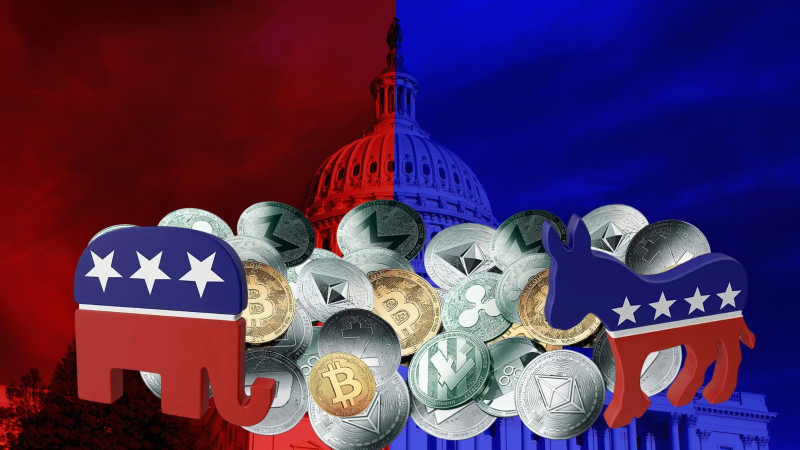
Senate Crypto Market Structure Bill Faces Divisions Over Stablecoins and DeFi

Washington’s long-running effort to write clear rules for crypto is moving forward, but not cleanly.
The U.S. Senate has released updated language for a long-anticipated crypto market structure bill, yet deep disagreements remain between lawmakers, committees, and the industry itself. Two separate Senate committees are now pushing different versions of the legislation, and the gaps between them are proving harder to close than many expected.
At stake is nothing less than who regulates crypto in the United States, how stablecoins are allowed to operate, and whether decentralized finance can exist without being squeezed into a framework built for Wall Street.
A Bill That Is Really Two Bills
The market structure effort is split between the Senate Agriculture Committee and the Senate Banking Committee, each advancing its own vision of how digital assets should be governed.
The Agriculture Committee’s draft leans heavily toward expanding the authority of the Commodity Futures Trading Commission. Under this approach, most major cryptocurrencies would be treated as digital commodities, placing them largely outside the Securities and Exchange Commission’s reach.
The Banking Committee’s version, often referred to as the CLARITY Act, takes a more cautious and detailed approach. It attempts to draw clearer legal lines between what counts as a security and what does not, while preserving a significant role for the SEC in overseeing parts of the crypto market.
Both sides say they want regulatory certainty. The problem is they disagree on what that certainty should look like.
The CFTC Versus SEC Fight Is Still the Core Issue
At the heart of the debate is a familiar Washington turf war.
Supporters of the Agriculture Committee draft argue that the CFTC is better suited to oversee crypto markets, particularly spot trading for assets like Bitcoin and Ethereum. They point to the agency’s lighter touch, its experience with commodities, and its closer alignment with how crypto markets actually function.
The Banking Committee sees things differently. Its members are more focused on investor protection and worry that shifting too much power to the CFTC could weaken oversight. Their draft tries to preserve the SEC’s role, especially when tokens are issued in ways that resemble traditional securities offerings.
Neither side appears ready to fully back down, which is why the Senate still has not settled on a single unified bill.
Stablecoins Become a Flashpoint
Stablecoins, once seen as the least controversial corner of crypto, are now one of the most contentious parts of the bill.
One major sticking point is a proposed restriction on stablecoin rewards or yield. Under the Banking Committee’s draft, issuers would face limits on paying users simply for holding stablecoins.
Crypto companies argue this would kneecap a core feature of digital dollars and make them less competitive with traditional financial products. Some in the industry say the provision feels less like consumer protection and more like an attempt to shield banks from competition.
Lawmakers defending the restriction say they are trying to prevent stablecoins from morphing into unregulated interest-bearing products that could pose risks to consumers and the broader financial system.
The disagreement has become symbolic of a larger divide over how much freedom crypto should have to innovate inside a regulated framework.
DeFi Still Does Not Fit Neatly Anywhere
Decentralized finance remains one of the hardest issues for lawmakers to solve.
Both Senate drafts struggle with how to treat protocols that do not have a central company, executive team, or traditional governance structure. Some lawmakers want stronger rules to prevent DeFi platforms from being used for illicit activity. Others worry that applying centralized compliance models to decentralized systems will effectively ban them.
For now, DeFi remains an unresolved problem in the bill, with language that critics say is either too vague or too aggressive, depending on who you ask.
Coinbase Draws a Line in the Sand
Industry frustration boiled over when Coinbase publicly withdrew its support for the Banking Committee’s draft.
The exchange called the proposal worse than the status quo, pointing to its treatment of DeFi, stablecoin yield restrictions, and limits on tokenized equities. Coinbase’s criticism carried weight in Washington and contributed to the Banking Committee delaying its planned markup hearing.
That delay rippled through the market, briefly weighing on crypto prices before sentiment stabilized.
Timing Gets Complicated
The Agriculture Committee is moving ahead more quickly, scheduling a markup hearing to debate amendments and advance its version of the bill.
The Banking Committee, meanwhile, has pushed its timeline back as lawmakers juggle other priorities, including housing legislation. That has pushed any meaningful progress into late winter or early spring at the earliest.
The longer the process drags on, the more uncertain the path becomes. Election season is approaching, and legislative calendars tend to tighten as political pressure increases.
A Broader Regulatory Backdrop Is Already in Place
The market structure debate is happening against a backdrop of recent regulatory action.
Congress has already passed stablecoin legislation that sets rules around reserves, disclosures, and audits. Earlier House efforts, including last year’s market structure bill, also laid groundwork by outlining how digital assets might be classified under federal law.
What the Senate is trying to do now is connect those pieces into a comprehensive framework. That has proven easier said than done.
The Next Test
The next major test will be whether the Agriculture and Banking Committees can reconcile their differences or whether one version gains enough momentum to dominate the process.
Expect heavy lobbying from crypto companies, financial institutions, and trade groups, particularly around stablecoin yield, DeFi protections, and agency jurisdiction.
For now, the Senate’s crypto market structure bill remains a work in progress, ambitious in scope, politically fragile, and still very much unsettled.
One thing is clear. The era of regulatory ambiguity is ending, even if the final shape of crypto regulation in the U.S. is still being fought over line by line.
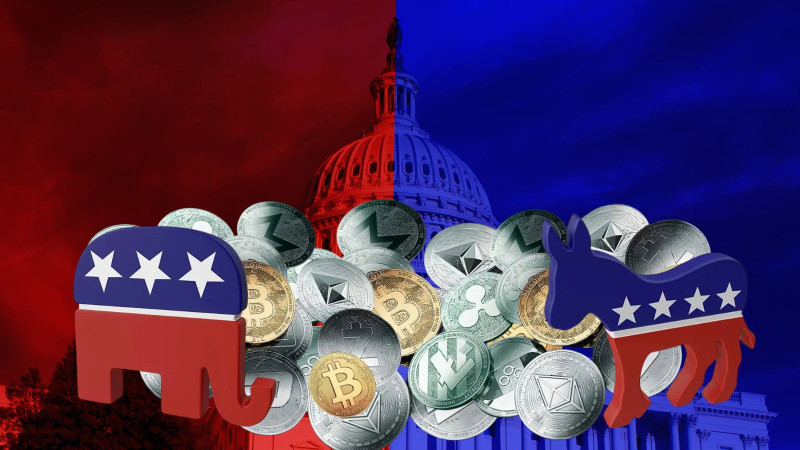
Why the Stalled Senate Crypto Bill Must Move Forward and What Is At Stake
Congress Is Holding Up Critical Crypto Legislation That Needs To Move Forward
The United States has spent years discussing the need for clear digital asset rules, yet the country still operates without a comprehensive federal framework. The latest attempt, a Senate crypto market structure bill, is the closest the country has ever come to meaningful clarity. It is a practical blueprint that defines who regulates what, how digital assets are classified, and what responsibilities exchanges, stablecoin issuers, and decentralized platforms must meet.
But despite the urgency, talks have stalled. Committees have debated the text, staff have worked through countless revisions, and lawmakers from both parties have acknowledged the need for action. Even so, the bill remains stuck. The longer this continues, the more the United States risks falling behind other global markets that have already committed to clear, adaptable digital asset rules.
This moment requires Congress to rise above politics and deliver the regulatory foundation that the industry, consumers, and the financial system have been waiting for.
What the Bill Actually Does and Why It Matters
At the center of the bill is a simple idea. The country needs consistent, predictable rules for digital assets. Right now, those rules shift depending on the regulator, the administration, or the outcome of a lawsuit. The bill attempts to fix that by establishing the first clear legal definitions for digital commodities, digital securities, stablecoins, and decentralized protocols.
A functioning regulatory system needs three things. First, clear definitions. Second, clear jurisdiction. Third, clear expectations for compliance. The bill advances all three.
It clarifies the line between the SEC and the CFTC.
Under the bill, digital commodities such as Bitcoin and other decentralized networks fall under the CFTC. Tokenized securities, fundraising activities, and investor disclosures fall under the SEC. This stops the confusing overlap that has slowed innovation and triggered years of enforcement disputes.
It creates standards for exchanges and trading platforms.
Platforms would need to meet transparency, reporting, and consumer protection requirements similar to traditional financial markets. That means better custody policies, clear listing standards, and safer trading environments.
It establishes a federal structure for stablecoin oversight.
Stablecoins have become one of the most widely used instruments in crypto, yet they exist in a patchwork of state regulations. The bill sets national reserve requirements, disclosure standards, and operational rules that protect consumers without crushing innovation.
It acknowledges that DeFi exists and needs thoughtful treatment.
Rather than forcing decentralized platforms into legacy models, the bill attempts to create guardrails that apply where appropriate while allowing innovation to continue. That is a practical approach to a fast evolving sector.
When taken together, these provisions offer a stable foundation. Builders would know how to operate. Investors would understand the risks. Consumers would gain protection. Courts would have clearer guidance. Regulators would finally have a shared roadmap.
This is the kind of clarity the United States has been missing.
Why the Talks Stalled and Why That Is Dangerous
Despite broad agreement on the need for regulation, negotiations in the Senate have hit repeated walls. Some lawmakers want adjustments to agency authority. Others want the bill tied to broader governance battles involving commissions and appointments. Still others worry that DeFi or stablecoin provisions need extra refinement.
Senator Cory Booker (D-NJ) has emerged as one of the central Democratic voices in the negotiations around the Senate’s crypto market structure bill. In recent discussions, he made it clear that unresolved concerns about the balance of power inside federal financial regulators could threaten the bill’s chances of moving forward.
Speaking at a recent policy summit, Booker said he does not feel confident that the White House will follow through on commitments to maintain Democratic representation at agencies such as the SEC and the CFTC. He argued that the issue is not a minor detail, but a structural concern that could influence how digital asset rules are interpreted and enforced.
Booker framed his concern as part of a broader pattern. He pointed to the expansion of presidential authority over independent regulators and said that previous actions have shown how easily that power can be used to benefit political allies. In his view, the crypto bill must be paired with safeguards that ensure regulators remain balanced, credible, and resistant to political pressure.
His remarks reflect the tension inside the negotiations. Lawmakers agree that the United States needs a clear regulatory framework for digital assets, but disagreements over governance and control have slowed progress. Booker’s warning adds another layer to the challenge. Unless Congress resolves questions about how regulators are structured and overseen, the bill may struggle to pass, even though both parties acknowledge the importance of moving it across the finish line.
Both sides of the aisle agree on why this bill needs to pass, but it seems that traditional political maneuvering is getting in the way of doing what needs to be done.
No serious market can thrive without predictable oversight. Instead of rules, companies face enforcement by interpretation, which is inefficient and often arbitrary.
This can lead to talented teams and institutional investors favoring jurisdictions with clarity, not uncertainty. And without federal standards, individuals still face risk from poorly governed platforms and unclear custody practices.
Other countries have already built regulatory frameworks. The United States is falling behind. Congress does not need a perfect bill. It needs a functioning bill, and it needs one soon.
Why Advocacy Matters Now
This is why industry voices and pro innovation civic groups have become increasingly vocal. These advocacy groups argue that regulation should be shaped by long term economic interests and consumer protection, not short term political strategy. Their work matters because it puts pressure on Congress to move the bill based on its merits, rather than letting unrelated disputes hold back an entire sector.
Without public pressure, stalled talks can drag on for months or even years. With coordinated advocacy, lawmakers are reminded that millions of Americans use digital assets and deserve rules that protect them without suffocating innovation.
Congress Must Get This Over The Line
The stalled Senate bill is more than another legislative delay. It represents a turning point. If Congress cannot pass a comprehensive digital asset framework in the next legislative cycle, it risks surrendering leadership in one of the most important technological shifts of this century.
Blockchain technology is reshaping finance. Tokenization is entering mainstream markets. Decentralized applications are changing how value moves around the world. These developments will not wait for Washington to get its process in order.
The United States can lead, or it can react. It can set the rules, or it can let others define them. But it cannot do either while political maneuvering blocks the country’s first serious attempt at clarity.
Innovation needs rules. Investors need guidance. Consumers need protection. Markets need stability. And the country needs a framework that can evolve with technology rather than fall behind it.
Congress has the bill. It has the structure. It has the drafts and definitions. What it needs now is the discipline and courage to pass it.
Stay Connected
Rare PAC, launched by Rare Network, the force behind the Rare Evo blockchain conference, works to ensure that the United States remains a global leader in decentralized technologies and next-generation internet infrastructure. It helps to drive the message that the country needs clear, functional digital asset laws now and supports candidates who believe the same.
If you would like more information on Rare PAC, how you can contribute to building a crypto-forward America and foster a supportive legal and regulatory environment that is critical to unleashing the full potential of Web3, digital assets, and financial freedom for all Americans; please visit https://rarepac.io/ today to learn more how you can make sure your voice is heard.