#Paolo Ardoino
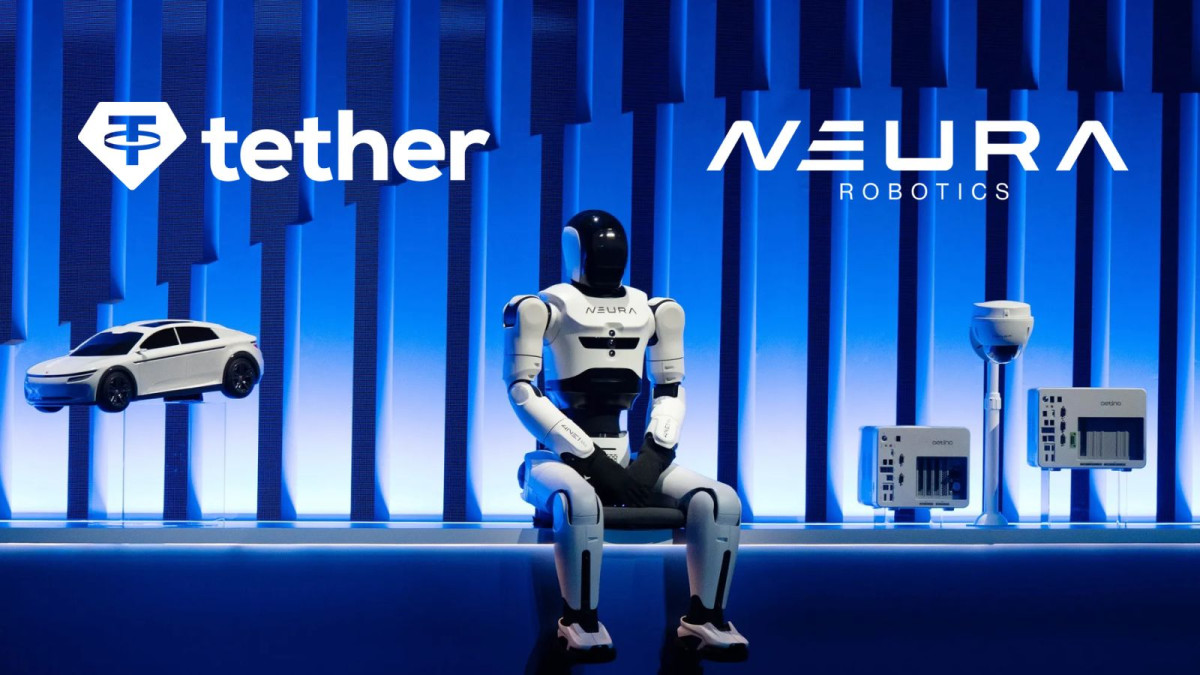
Tether Leads $1.4B Neura Robotics Funding Round

Stablecoin issuer Tether has announced its role as the lead investor in Neura Robotics’ recent Series C funding round. The funding round, which raised an estimated $1.4 billion, included Qualcomm, Amazon, and NVIDIA among other investors.

By investing in Neura Robotics, Tether is extending its influence beyond the digital asset industry, enabling it to deploy some of its core technologies into the humanoid robotics ecosystem. The partnership also enables the integration of Tether’s Wallet Development Kit and Tether’s self-custody wallets into the Neura Robotics system.
Through this integration, Tether provides a foundation that enables Neura Robotics to develop robotic systems that earn micropayments for tasks, transact with other robotic systems, and autonomously facilitate transactions and receive payments between machines without human intervention.
As part of its partnership, Neura Robotics will collaborate on testing, improving, and deploying Tether’s QuantumVerse Automatic Computer, known as QVAC, into its Neuraverse ecosystem. QVAC is Tether’s open-source, decentralized artificial intelligence platform that enables users to run and fine-tune large language models directly on their devices without relying on cloud servers.
“As robotics moves beyond scripted automation and into true autonomy, the infrastructure behind it must evolve as well,” said Paolo Ardoino, chief executive officer of Tether.
“Autonomous machines need the ability to process information locally, make decisions, and transact without relying on centralized intermediaries. QVAC brings that edge-first intelligence to the platform while WDK handles the secure financial layer. Together, they enable machines to execute tasks, account for outcomes, and operate independently. NEURA Robotics shares that vision, and this investment reflects our confidence in what autonomous robotics can become.”
About Neura Robotics
NEURA Robotics is a German-based high technology company that positions itself as a pioneer in cognitive robotics and Physical Artificial Intelligence. It develops artificially intelligent machines that can perceive (see, hear, feel), learn, adapt, and collaborate safely with humans.
So far, the company has developed some cognitive humanoid robots, including MAiRA, MiPA, and 4NE1. It has also developed Neuraverse, an open ecosystem and platform that enables robots to share skills, continuously learn, and expand their capabilities.
Tether Partners With Georgia to Launch GELT Stablecoin

Tether, the largest stablecoin issuer, has partnered with the Georgian government to launch GELT, a stablecoin representing the lari, the country’s official currency.

The partnership, announced on Monday, aims to create a financial ecosystem that supports cross-border commerce, fintech development, and broader access to programmable financial infrastructure across Georgia.
GELT will serve as a digital representation of the Georgian lari and will be designed to enable lower transaction costs, near instant settlement, programmable payments, and more efficient movement of value across digital financial systems.
“Together with visionary partners like Tether, Georgia is laying the foundations for a more connected, transparent, and digitally empowered financial world,” said Irakli Kobakhidze, Prime Minister of Georgia.
The launch of the GELT stablecoin is built on a regulatory framework created by the Georgian government and the National Bank of Georgia. In March this year, the National Bank of Georgia developed a framework governing the issuance of stablecoins.
The framework, officially known as “The Rule for the Initial Coin Offering of a Stable Virtual Asset by a Virtual Asset Service Provider,” sets out standards that must be met by all virtual asset service providers (VASPs) operating in the country, including requirements for 100 percent reserve backing, strong consumer protections, proper risk management, and full compliance with the country’s Anti Money Laundering (AML) standards.
“Stablecoins are no longer a niche financial instrument. They are becoming part of the infrastructure layer for global finance,” said Paolo Ardoino, CEO of Tether. “Georgia has moved early to create serious regulatory architecture for digital assets and stablecoins, and that clarity creates the foundation for real innovation and adoption.”
Georgia’s stablecoin framework is also designed to be compatible with other regulatory frameworks, including the Guiding and Establishing National Innovation for U.S. Stablecoins Act (GENIUS Act) and Markets in Crypto Assets (MiCA).
By partnering with Tether to launch the GELT stablecoin, Georgia becomes the first country to team up with a major stablecoin issuer to issue a government-supported stablecoin pegged to its national currency. The UAE has also launched a dirham-pegged stablecoin, but unlike Georgia’s GELT, that stablecoin was issued by local consortia rather than a major stablecoin issuer such as Tether.
The planned launch of the GELT stablecoin comes shortly after Tether launched its self-custodial wallet. In an effort to increase access to stablecoins, Qivalis recently expanded its consortium to include more banks, which are collectively working to launch a euro-pegged stablecoin.
Tether Using Drift Hack To Take On Circle
Tether has never been shy about playing offense. And in the wake of one of the worst hacks to hit Solana's DeFi ecosystem, the world's largest stablecoin issuer saw an opening, and took it.
On April 16, Tether announced a recovery package worth up to $127.5 million for Drift Protocol, the Solana-based perpetual futures exchange that was drained of roughly $285 million on April 1 in a sophisticated hack attributed to North Korean operatives. Combined with $20 million pledged by other partners, the total rescue fund comes to nearly $150 million. But the dollar figure is almost secondary to what Tether actually got in return.
The Real Prize: Kicking USDC Off Solana's Biggest Perp DEX
As part of the deal, Drift will swap out Circle's USDC for Tether's USDT as its core settlement asset. That means 128,000 users and more than 35 ecosystem teams, including Gauntlet, Neutral, and M1, all migrate to a USDT-based trading environment. On a network where USDC has historically dominated, this is huge play.
On Solana, Circle's USDC carries a market cap of around $8.1 billion, compared to Tether's $3.05 billion. That's a more than 2.6-to-1 advantage for Circle on the chain. In global terms, the picture is reversed: USDT's circulating supply tops $185 billion versus roughly $79 billion for USDC. Tether has always dominated the overall stablecoin market; it just hasn't had much luck on Solana. Until now, maybe.
Paolo Ardoino, Tether's CEO, framed the intervention in fairly lofty terms. "Tether's role in the digital assets ecosystem is to provide a platform for individuals and institutions alike that is ready to step forward to help the industry in the moment of darkness," he said in a statement.
That said, analysts aren't exactly reading this as pure altruism. As one observer put it, the Drift exploit was, for Tether, an "operational window" to buy market share at a moment of maximum vulnerability. The funding structure itself reinforces this reading: repayments to affected users are tied to future trading activity on the relaunched platform, meaning Tether's money goes further the more Drift succeeds as a USDT venue.
Circle Gets the Blame, Tether Gets the Spoils
Tether saw the opening and definitely took it. Circle finds itself under intense scrutiny in the days following the Drift hack, after attackers transferred more than $230 million in USDC from Solana to Ethereum using Circle's own cross-chain transfer protocol. Critics, including on-chain investigator ZachXBT, pointed out that Circle had a window of at least six hours to blacklist the relevant wallets and freeze the funds, and did nothing.
Circle CEO Jeremy Allaire later defended the company's position, saying that USDC wallets are only frozen when directed by law enforcement or courts, not unilaterally during active hacks. The argument tracks with Circle's broader regulatory strategy, which prioritizes institutional alignment and compliance above all else. Whether that's the right call is debatable. What's less debatable is that a class action lawsuit has reportedly been filed against Circle in the aftermath, alleging the firm knowingly allowed attackers linked to North Korea to offload stolen funds through its own infrastructure.
Tether, by contrast, has a long history of freezing funds tied to hacks and illicit activity quickly, often without waiting for court orders. That operational difference has real consequences for platforms that care about protecting users when things go wrong.
How Drift Gets Back on Its Feet
The April 1 attack was a serious one. Blockchain analytics firm Chainalysis estimates losses at approximately $285 million. According to Drift's own postmortem, the attackers used a combination of social engineering and a technical method known as "durable-nonce pre-signing" to obtain privileged administrative access, a scheme that reportedly began at least six months before the exploit was executed. From there, the attackers deposited worthless CVT tokens as fake collateral, then withdrew real USDC, SOL, and ETH.
Drift's TVL, which was above $550 million before the attack, has since fallen to around $242 million. The protocol's recovery framework targets $295.7 million in outstanding user losses, a figure that actually exceeds its current TVL. To bridge that gap, the plan leans on future trading fee revenue flowing into a dedicated recovery pool. Users will also receive a separate recovery token representing their claim on that pool, transferable and distinct from the DRIFT governance token.
The market responded well to the announcement: DRIFT token surged roughly 22%, climbing from $0.045 to $0.055 on the day, after having fallen as much as 30% in the immediate aftermath of the exploit.
A Stablecoin War Fought One Bailout at a Time
The Drift deal lands at a time when competition in the stablecoin market is genuinely heating up. USDC has made real headway in institutional and DeFi use cases over the past couple of years, partly by positioning itself as the "clean" option for regulated environments. Circle's IPO plans have only reinforced that narrative.
Tether still holds a commanding global lead, but the gap in on-chain activity has been narrowing. Coindesk data shows USDC transaction volumes outpaced USDT's in recent months, and Circle's market share has been expanding. This makes Solana, where USDC has been strongest, a particularly important front in what is increasingly looking like a full-scale stablecoin war.
Whether the Drift bailout actually converts into lasting USDT dominance on Solana remains to be seen. Relaunch is contingent on Drift completing two independent security audits, and rebuilding trust with users after a $285 million heist takes more than a well-funded recovery plan. But Tether, at least for now, holds a key piece of Solana's DeFi architecture. And it didn't exactly have to do much begging to get it.
Tether Launches Self-Custodial Wallet for USDT, Bitcoin, and Gold Tokens
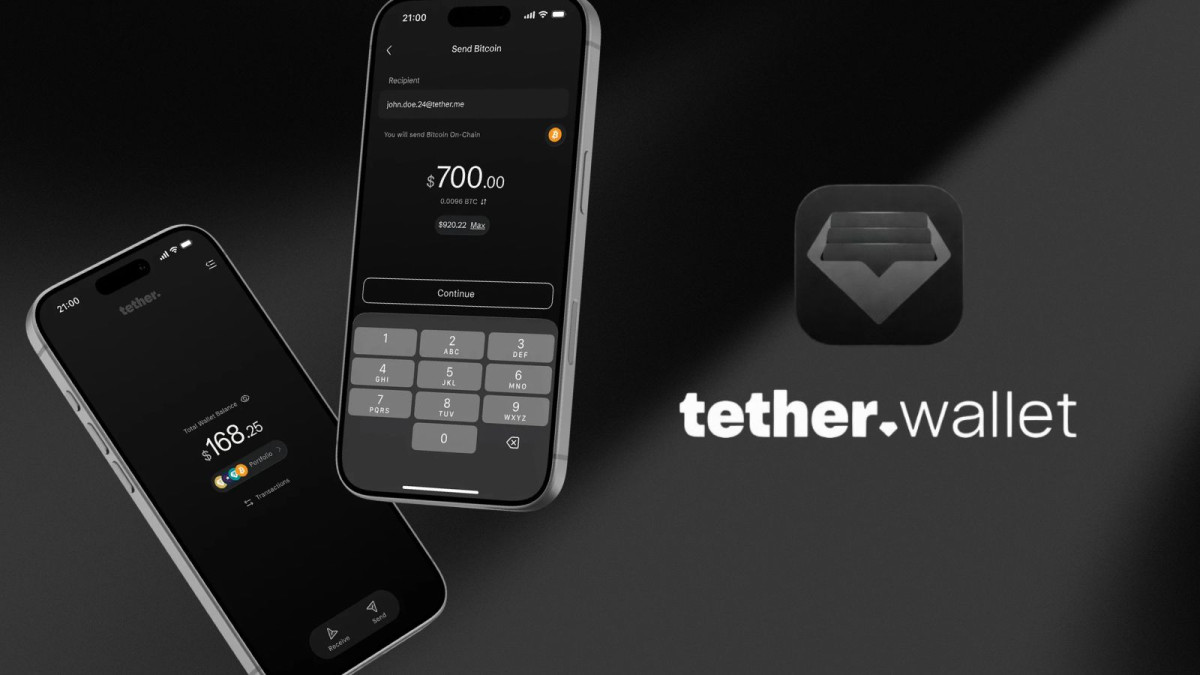
The world's largest stablecoin issuer is getting into the wallet game. Tether has officially launched tether.wallet, a self-custodial application that puts its payments infrastructure directly into the hands of end users for the first time.
For more than a decade, Tether's USDT stablecoin quietly powers hundreds of billions in daily trading volume, settlement, and cross-border payments across dozens of blockchains. But, most users never interact with Tether directly. That is about to change
The new app, simply called tether.wallet, supports four assets at launch: USDT, the company's U.S.-market stablecoin USAT, its gold-backed token XAUT, and Bitcoin, available both on-chain and through the Lightning Network. USDT and XAUT run on Ethereum, Polygon, Plasma, and Arbitrum at launch, while USAT is limited to Ethereum for now, with more networks reportedly in the pipeline.
No More Long Wallet Addresses
One of the more practical features is the use of human-readable identifiers, think something like [email protected], instead of the standard hexadecimal wallet strings that have caused users to accidentally send funds to the wrong address for years. Transactions also settle without requiring users to hold separate gas tokens; fees are paid directly in the asset being transferred. For anyone who has fumbled through a failed transaction because they did not have enough ETH to cover gas, that is a genuinely meaningful improvement.
Private keys remain fully under user control. All transactions are signed locally on the device, and Tether says it never holds user funds or keys at any point. It is a fully self-custodial model, which distinguishes it from the exchange-hosted wallets that have drawn scrutiny after a string of high-profile custodial failures in recent years.
570 Million Users, and Counting
Tether says its technology already reaches more than 570 million people across over 160 countries as of March 2026, with tens of millions of new wallets being added each quarter. The company is pitching tether.wallet as the next logical step in that growth, designed for mainstream users who have never touched a crypto wallet before, not just the crypto-native crowd who already know what a seed phrase is.
CEO Paolo Ardoino has been making the rounds with this one. He described the product as "the People's Wallet," framing it as a natural evolution of Tether's role from building the foundation of the digital asset economy to making it directly usable by anyone. His pitch goes further than stablecoins, though. Ardoino has long argued that AI agents will need native, self-custodial wallets for machine-to-machine payments, and the Wallet Development Kit (WDK) that underpins tether.wallet is designed with that kind of future in mind.
tether.wallet is built on Tether's open-source Wallet Development Kit, which the company has been quietly developing for a while now. The WDK had its first significant public deployment in January 2026, when video platform Rumble launched a non-custodial wallet built on the same infrastructure, enabling creator tipping in Bitcoin and USDT across Rumble's 80 million users. That earlier rollout effectively served as a real-world stress test before today's broader consumer launch.
The open source nature means third-party developers, businesses, and potentially AI systems can all build self-custodial wallet products on the same foundation. Tether is positioning this less as a single app and more as the beginning of a distribution layer.
Tether's Big Year...So Far
Tether has had a busy year on multiple fronts. In January, the company launched USAT, a GENIUS Act-compliant U.S.-regulated stablecoin issued through Anchorage Digital Bank, a direct challenge to Circle's USDC in the institutional and regulated segment of the market. In March, Tether engaged KPMG for what it described as the first-ever full financial audit of its $185 billion USDT reserves, a significant departure from the periodic attestations the company has historically relied on. PwC was also brought in to assist with internal systems preparation.
By moving into consumer-facing wallet infrastructure, Tether is entering territory already occupied by MetaMask, Phantom, Trust Wallet, and others. Those players have years of user experience, broad network support, and established reputations. Whether Tether's brand recognition among non-crypto users, combined with the built-in familiarity of USDT, translates into meaningful adoption is the real question. The stablecoin market itself crossed $315 billion in March 2026, an all-time high, and analysts expect this number to grow dramatically over the next few years.