#Layer 1 blockchain
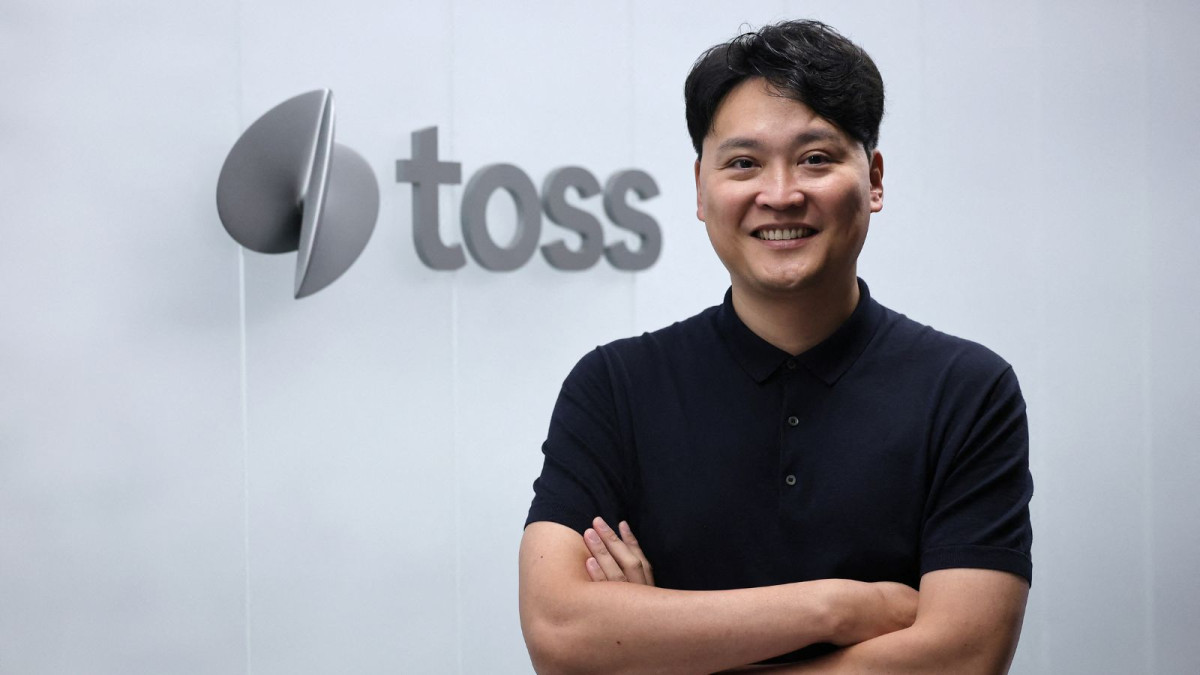
Toss Eyes Blockchain Network and Native Crypto Token

South Korean fintech and payment company Toss is reportedly considering the launch of its own blockchain network and a native cryptocurrency token for its payment and financial services.
While preparations had already begun, Blockmedia, one of South Korea’s leading cryptocurrency media outlets, reports that the firm has not yet decided whether to launch a Layer 1 or Layer 2 blockchain, as decision-making has been paused amid delays in some compliance discussions.
By launching its own blockchain, Toss would be building a solid infrastructure for its super app, enabling the integration of several blockchain features, including on-chain finance, scalability, and smart contracts, into its existing payment system.
Toss: A Crypto-Friendly Fintech Platform
Despite operating mostly in the traditional finance space and amassing over 30 million registered users, about 60 percent of the population of South Korea, Toss has long been taking several pro-blockchain and crypto-friendly steps.
In June 2025, Toss, through its Stablecoin Task Force led by Chief Business Officer Kyuha Kim, filed 24 stablecoin applications with the Korean Intellectual Property Office, the country’s trademark and patent authority, securing stablecoin names including TOSSKRW. During the same period, Toss Bank, its banking subsidiary, submitted 48 additional stablecoin-related applications.
These efforts were part of Toss’s broader strategy to establish a position in South Korea’s crypto sector as a potential issuer of Korean won-backed stablecoins. The company also began recruiting blockchain engineers to advance this initiative.
In March 2026, at the Seoul Blockchain Meetup Conference in Seoul, Toss unveiled its Money 3.0 vision, which it describes as the next era of money.
According to Toss, this vision leverages blockchain and stablecoins to build a digital money system that combines programmability, borderless transactions, and composability, extending beyond the physical cash era of Money 1.0 and the electronic fiat money era of Money 2.0.
At the same event, Toss publicly announced plans to issue and distribute its Korean won-backed stablecoin.
Despite recent regulatory pressure on non-compliant cryptocurrency exchanges in South Korea, several fintech companies and banking institutions in the country, including Toss, have continued to adopt and integrate blockchain technology into their systems.
KakaoPay, a major domestic fintech company, recently joined the Coinbase-led x402 Foundation, a move that suggests potential future integration of blockchain technology into its payment systems. In addition, around eight domestic banks formed a consortium last year to jointly explore issuing Korean won-backed stablecoins.

Flow Foundation Moves to Block FLOW Delisting in Korea

Flow Foundation is seeking a court order in Seoul to halt the planned delisting of the FLOW token on three South Korean exchanges following an exploit on the protocol in December.
The Flow Foundation and its parent company, Dapper Labs, filed a motion with the Seoul Central District Court on Monday to block the delisting of the FLOW token from three South Korean exchanges.
This move is coming months after the Layer 1 blockchain protocol suffered a security incident in December, which led to several exchanges temporarily stopping the trading of the FLOW token at the time. However, three major Korean exchanges; Upbit, Bithumb, and Coinone, have moved to permanently stop the trading of the token on their exchanges on March 16.
Flow’s Security Incident
On December 27, 2025, Flow suffered a protocol-level exploit that resulted in losses of about $3.9 million. The breach was caused by a flaw in the smart-contract runtime within Flow’s execution layer, which allowed the attacker to exploit vulnerabilities in Cadence.
Cadence is Flow’s smart contract runtime. By exploiting the flaw in Cadence, the attacker was able to duplicate Flow tokens instead of properly minting them.
After duplicating the tokens, the attacker attempted to bridge them out of the protocol using cross-chain bridges such as Celer, deBridge, Relay, and Stargate. However, this abnormal activity was detected by Flow’s validator network, which placed the blockchain in read-only mode, halting further asset transfers.
This incident led to a sharp decline in the price of the FLOW token. Prior to the breach, FLOW was trading at around $0.17, but it fell over 40% to roughly $0.097 within hours of the exploit being announced.

Image credit: Tradingview
The incident also affected the token’s market cap. Before the breach, FLOW had a market cap of around $280–284 million. After the breach, it fell to approximately $164–170 million. Although the breach directly resulted in a $3.9 million loss, the protocol’s total market value dropped by over $110 million.

Image credit: Coingecko
Following remediation efforts after the incident, the Flow Foundation claimed that every major global exchange has independently reviewed and restored FLOW token trading on their platforms.
According to the foundation, the FLOW token remains fully available and tradeable on major exchanges, including Binance, Coinbase, Kraken, OKX, Gate.io, HTX, and Bybit, with Korbit being the only Korean exchange still supporting the trading of FLOW.
Hyperliquid Begins Team Token Unlock With First HYPE Distribution

Hyperliquid has taken its first visible step in releasing tokens to its team, unstaking around 1.2 million HYPE ahead of a planned distribution in early January. While the move was always part of the project’s vesting plan, it is the first time those mechanics have shown up clearly on chain, which is why it caught the market’s attention.
The tokens were unstaked in late December and are expected to land with contributors on January 6. According to the team, this is not a one-off event. Future releases are set to follow a monthly rhythm, with additional tokens unlocking on the sixth day of each month as vesting milestones are reached.
On its own, the amount is relatively small. Still, in crypto, any unexpected token movement tends to raise questions, especially when it involves team allocations.
Why the Unstake Raised Eyebrows
The initial on-chain activity sparked speculation that Hyperliquid was preparing a much larger release. Some traders circulated figures suggesting that close to 10 million tokens could hit the market at once, a scenario that would have meaningfully increased circulating supply.
That interpretation turned out to be off the mark. The team later clarified that the unstake was simply a procedural step tied to an existing vesting schedule, not an acceleration or change in plans. Once that context became clearer, concerns eased, though the episode highlighted how quickly uncertainty can spread when token movements appear without explanation.
For now, the unstaked tokens remain part of the team allocation. They are scheduled to be distributed to individual contributors in early January rather than sold or transferred immediately.
What Hyperliquid Is Building
Hyperliquid is a trading-focused crypto project that has taken a different route than most decentralized platforms. Instead of launching a general-purpose blockchain and layering applications on top, the team built a high-speed perpetual futures exchange first, then designed a custom Layer-1 network around it. Hyperliquid remains the largest decentralized perps DEX by volume.
The exchange has been the main draw so far. It offers deep liquidity, advanced order types, and execution speeds that feel closer to centralized trading venues than what most on-chain platforms can deliver. That performance focus has helped Hyperliquid attract active traders, including professional market makers who typically avoid decentralized exchanges due to latency and reliability issues.
To make that possible, Hyperliquid runs its own blockchain rather than relying on shared infrastructure. The network is optimized specifically for financial activity, prioritizing throughput and consistency over broad flexibility. It is not trying to support every type of application, but it does aim to do trading extremely well. The model has worked. Hyperliquid has generated almost $1B in fees, with another $843B in total revenue in 2025.

How the Token Supply Is Structured
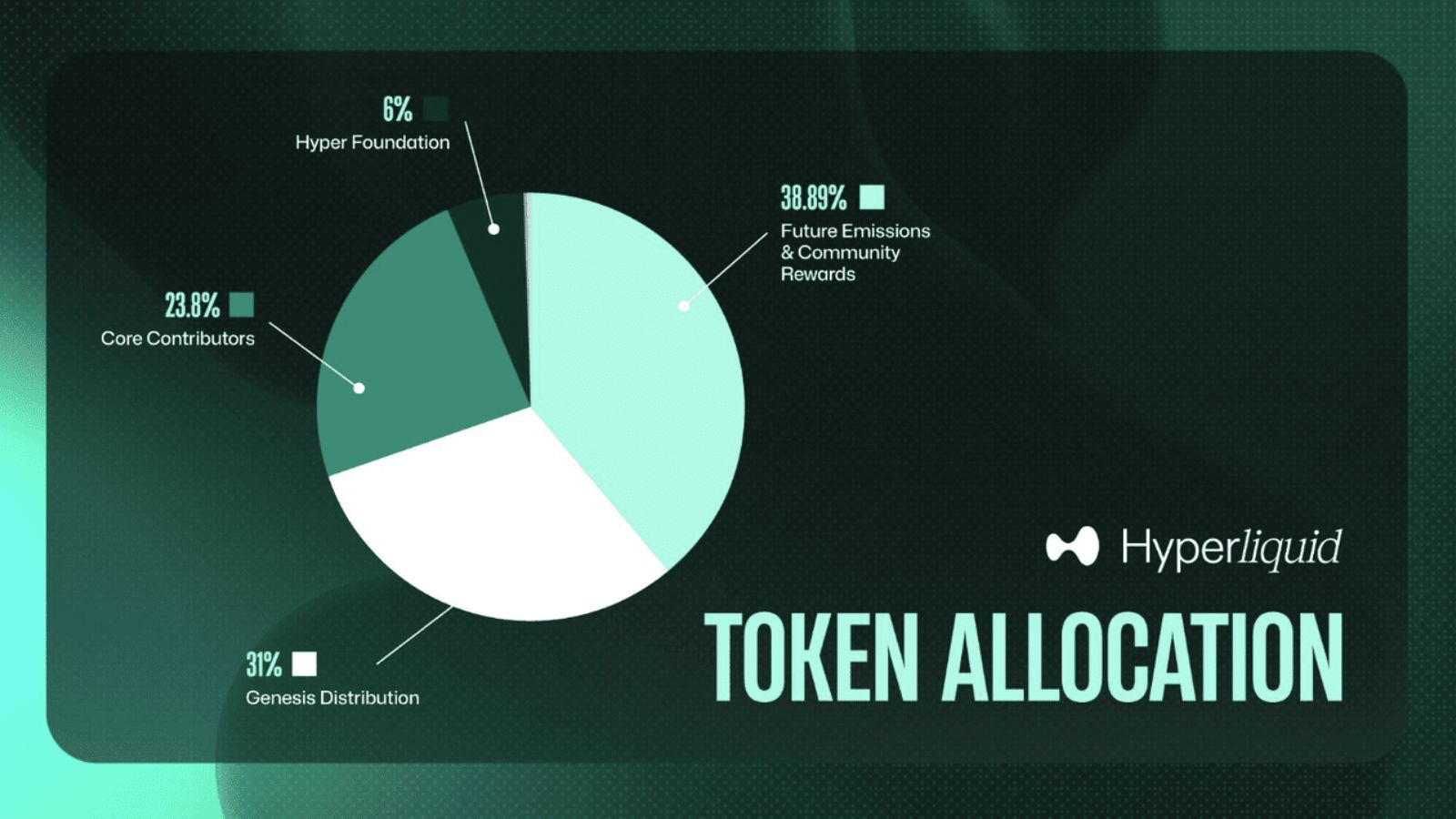
HYPE has a fixed supply of one billion tokens. The protocol did not raise money from traditional venture capital firms and instead distributed a large share of its token supply directly to users through a genesis airdrop. That decision helped build early loyalty, while leaving the team with a significant role in guiding the protocol as it grows
About 24 percent is allocated to core contributors, with the rest split between community rewards, the initial user airdrop, and funds set aside for ecosystem development and operations.
Team tokens were locked at launch and are subject to a multi-year vesting schedule. Earlier unlocks affecting developers and contributors began in late 2025, but the bulk of the allocation remains locked and will continue to enter circulation gradually over time.
The January distribution represents a small slice of the total team allocation. Even so, these releases are closely watched because they incrementally increase circulating supply, which can influence liquidity and price dynamics.
How the Market Has Responded
So far, the reaction has been relatively calm. HYPE has continued trading within a fairly tight range, suggesting that traders are treating the unlock as expected rather than disruptive.
Market observers often point out that predictable vesting schedules tend to be easier for investors to digest than irregular or poorly communicated releases. By committing to a consistent monthly timeline, Hyperliquid appears to be trying to set clearer expectations around future supply changes.
That does not mean future unlocks will be ignored. Larger tranches and shifts in broader market conditions could still shape sentiment as time goes on.
What to Watch Going Forward
As more team tokens vest in the months and years ahead, attention will likely shift toward how those tokens are handled. Whether contributors hold, stake, or sell their allocations will matter, particularly as Hyperliquid continues to expand its trading and blockchain infrastructure.
For now, the first team distribution serves as a reference point. It gives the market a clearer sense of how Hyperliquid plans to manage token releases while continuing to scale its platform. The longer-term test will be whether that transparency holds as the numbers grow and expectations rise.
Stay Connected
You can stay up to date on all News, Events, and Marketing of Rare Network, including Rare Evo: America’s Premier Blockchain Conference, happening July 28th-31st, 2026 at The ARIA Resort & Casino, by following our socials on X, LinkedIn, and YouTube.