#Hong Kong
OKX Restricts Hong Kong Staff From Using Anthropic Claude AI

Goldman has restricted its Hong Kong staff from using Anthropic’s Claude AI model, with the restriction reportedly rooted in geographic considerations.
OKX’s restriction on its staff using Claude AI came shortly after the exchange’s Claude account was suspended by Anthropic over noncompliance with its geographic access policies.
Although the suspension of the exchange’s Claude account lasted only a short period, an internal staff message said that OKX would not support the use of Virtual Private Network (VPN) access to Claude for employees visiting Hong Kong or China.
As part of its plans to continue allowing its Hong Kong staff to use AI in their daily workflows, OKX said it would direct its Hong Kong employees to other supported AI models. Meanwhile, Star Xu, OKX CEO, has said that the exchange spends between $6 million and $8 million on multiple large language model (LLM) providers and has even built Oli, an internal AI development platform.
OKX’s restriction on its Hong Kong staff comes shortly after Goldman Sachs imposed a similar restriction on its Hong Kong staff earlier this year. However, unlike OKX’s restriction, which was driven by an account suspension, Goldman Sachs’ restriction stemmed from a strict interpretation of its contract with Anthropic.
After reviewing its contract with Anthropic, Goldman Sachs concluded that the agreement did not permit the use of Anthropic or any of its products, including Claude AI, in Hong Kong, and thus restricted their use.
However, this did not mean that Goldman Sachs was restricting the use of Anthropic’s products or Claude AI overall. In fact, Goldman Sachs has partnered with Anthropic engineers to build AI agents for its trade accounting and client vetting.
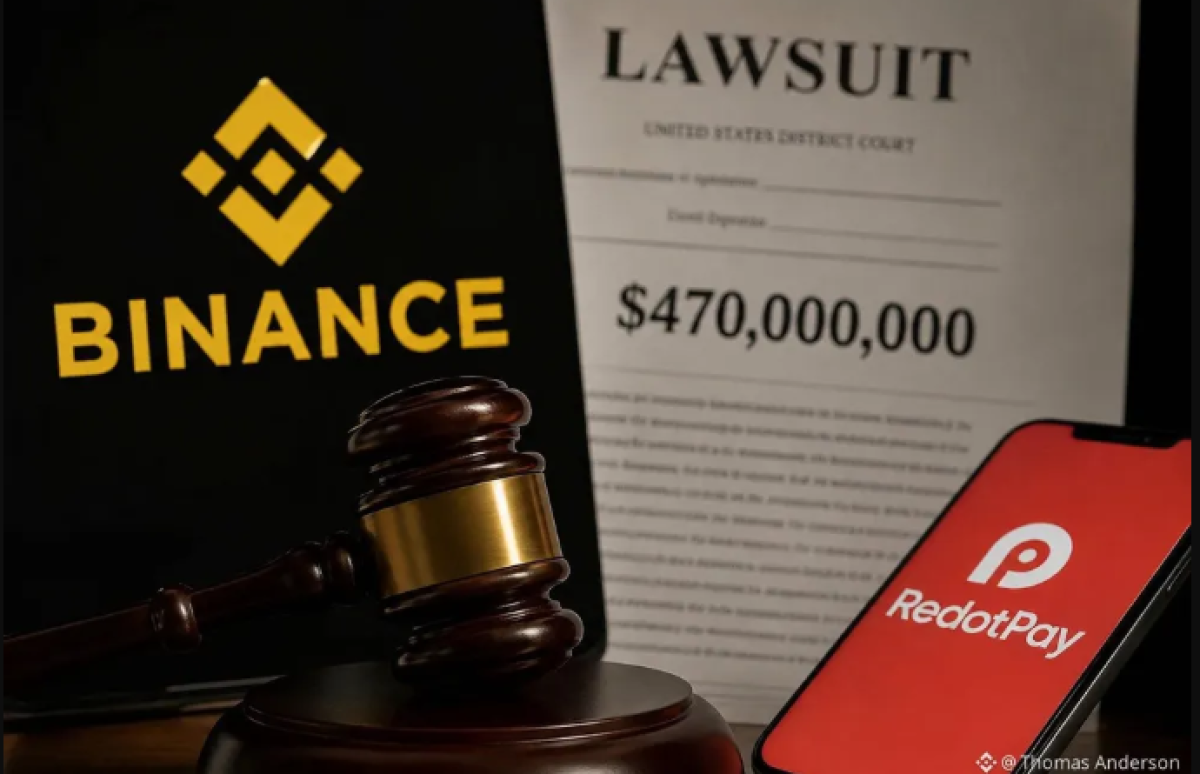
Binance Sues RedotPay for $473 Million Over Alleged Diversion of User Funds

Binance affiliates have filed a lawsuit against the founders of Hong Kong-based crypto payments firm RedotPay over the alleged diversion of hundreds of thousands of Binance customers and an alleged breach of contract.
In the lawsuit, Binance affiliates Nest Trading Ltd., Distributed Technologies Ltd., and Chaintecs Consulting Singapore Pte. accuse RedotPay cofounders Gao Zhangpeng, Chan Wa Choi, and Yao Chao of violating the terms of an agreement signed by both parties last year.
According to the filing, the two companies signed an agreement last year under which Binance said it received assurances that Binance Pay funds would be kept separate from RedotPay's own operations.
Under the agreement, Binance users could use RedotPay only for crypto-to-fiat conversions, in-app transfers, or the purchase of RedotPay branded products.
However, Binance now claims that RedotPay violated the agreement by allowing and encouraging Binance Pay funds to be used beyond the agreed terms, including to top up RedotPay cards. Binance alleges that this resulted in the diversion of more than 470,000 of its users to RedotPay's competing product, contributing to the company's increased valuation.
Estimating the lifetime value of each customer at $925, Binance is seeking about $472.8 million in damages for the more than 470,000 customers it alleges RedotPay diverted to its platform.
Responding to the lawsuit in a blog post published on its website, RedotPay said it was confident in its legal position and would vigorously defend itself against all claims.
The lawsuit comes at a time when RedotPay has witnessed significant growth and is considering an initial public offering that could value the company at $4 billion.
The company also claims to have grown its user base by more than 33% to over 8 million users in the last six months and to have generated more than $180 million in revenue from an annualised payment volume exceeding $14 billion.
Hong Kong Approves First Stablecoins, HSBC Set to Launch

The Hong Kong Monetary Authority (HKMA), Hong Kong’s primary banking regulator, has issued its first stablecoin issuer licenses to the Hongkong and Shanghai Banking Corporation (HSBC) and Anchorpoint Financial Limited, in line with the city’s new stablecoin framework.
The licenses, which were granted on April 10, represent the first batch issued under Hong Kong’s Stablecoins Ordinance framework. The process was competitive, involving 36 applicants, with selections based on several factors, including risk management, credible use cases, and compliance readiness.
With these licenses granted, HSBC, one of Hong Kong’s largest and oldest banks, and Anchorpoint Financial Limited, a joint financial venture led by Standard Chartered Bank, Hong Kong Telecommunications (HKT), and Animoca Brands, are now a step closer to achieving their stablecoin plans.
HSBC plans to launch a Hong Kong dollar-denominated stablecoin by the second half of 2026. The stablecoin will maintain a one-to-one peg with the Hong Kong dollar and will be backed by high-quality liquid assets held in segregated accounts. It will also be integrated into two of HSBC’s consumer applications, the PayMe app, which already has more than 3.3 million users, and the HSBC HK Mobile Banking app.
With this integration, HSBC users will be able to perform peer-to-peer transfers and peer-to-merchant payments using the Hong Kong dollar-backed stablecoin directly within HSBC applications.
Anchorpoint Financial Limited also plans to launch a Hong Kong dollar-pegged stablecoin, with its first rollout expected this quarter. While the stablecoin is intended to support the digital economy, including cross-border and local payments, Anchorpoint’s initial focus will be on institutional investors and business partners, with retail users to follow at a later stage.
With this first batch of stablecoin issuer licenses and additional approvals underway, the Hong Kong Monetary Authority aims to address financial challenges in Hong Kong and support the development of the city’s digital asset industry.
“The granting of stablecoin issuer licenses is an important milestone for the development of digital assets in Hong Kong. We look forward to the issuers launching their businesses according to their plans, exploring growth opportunities while properly managing risks,” said Eddie Yue, Chief Executive of the HKMA. “We hope their promotion of regulated stablecoins will address pain points in financial and economic activities, create value for both individuals and businesses, and support the healthy development of digital assets in Hong Kong.”
Hong Kong Stablecoin Ordinance
The Hong Kong Stablecoin Ordinance is a regulatory framework passed into law by Hong Kong's Legislative Council in August 2025. The framework establishes a comprehensive licensing and supervisory regime specifically for fiat-backed stablecoins.
Under this framework, the Hong Kong Monetary Authority sets standards for stablecoin issuers seeking licenses in the jurisdiction. These include requirements related to financial resources, reserve assets, risk management, and anti-money laundering and counter-financing of terrorism compliance, among others.
Although Hong Kong’s stablecoin regime is considered one of the strictest in the world, it is designed to promote trust and support the long term adoption of stablecoins rather than allow unregulated growth that could ultimately lead to systemic risks.
Hong Kong Approves Solana Spot ETF, Beating U.S. to the Milestone
Hong Kong Approves Solana Spot ETF, Beating U.S. to the Milestone
Hong Kong’s financial regulator has given the go-ahead to the region’s first spot exchange-traded fund (ETF) that directly holds Solana (SOL) tokens. This approval puts Hong Kong ahead of the U.S. in offering a spot Solana ETF and signals a major shift in crypto investment products in Asia.
Key Details of the Approval
The ETF is being launched by ChinaAMC (Hong Kong) (China Asset Management’s Hong Kong arm) and is expected to begin trading on the Hong Kong Stock Exchange (HKEX) around October 27, 2025. Each unit of the fund will consist of 100 shares and investors can enter with a minimum investment near US$100 (or the equivalent in HKD). The fund will trade in HKD, USD and RMB. It carries a total expense ratio of approximately 1.99 % per annum.
With this product, Solana becomes the third major crypto token — after Bitcoin and Ethereum — to obtain a regulated spot-ETF listing in Hong Kong.
Why This Matters
Regulatory Leadership & Timing
By approving this Solana spot product before a U.S. market listing, Hong Kong reinforces its ambition to be a leading global digital-asset hub. The approval comes in the context of Hong Kong already having launched spot Bitcoin and Ethereum ETFs and opening spot crypto trading for retail investors on licensed platforms.
Institutional Access to a Leading Blockchain
Solana stands out as a high-performance blockchain platform known for speed and scalability. The launch of a regulated fund tied to SOL gives institutional and retail investors a direct, regulated route into the ecosystem without holding tokens themselves. That improves accessibility and reduces custody risk.
Potential Market Impact
Analysts believe this listing could enhance liquidity and visibility for SOL. Some price-targets for SOL are being raised in light of improved capital-markets access. That said, some banks and analysts caution that the initial inflows may be modest compared with Bitcoin or Ethereum ETF products.
Pressure on U.S. Regulators
The move underscores a growing gap between Asia and the U.S. in crypto product innovation. While multiple firms in the U.S. have filed for spot Solana ETFs, the U.S. Securities and Exchange Commission has not yet approved one, according to regulatory filings.
What to Watch Going Forward
-
Listing performance: How the Solana ETF trades once it starts on HKEX, including premium/discount behaviour, liquidity and volume.
-
Inflow trends: Whether institutional capital engages meaningfully, and whether retail investors drive sustained demand.
-
Competitive launches: Spot Solana ETF applications in the U.S. and Europe may gain renewed momentum now that Hong Kong has led the way.
-
Ecosystem effects: Whether the listing accelerates Solana-based product launches (staking, DeFi, tokenization) or encourages institutional exposure to Solana infrastructure.
Final Thoughts
The approval of a spot Solana ETF in Hong Kong marks a landmark moment for crypto investment. For Solana, this legitimises the network’s role in the institutional-grade financial toolkit. For Hong Kong, it signals a clear intention to lead on digital-asset innovation in Asia.
While the real test will lie in how the market responds and how large institutional commitments become, the milestone itself sends a ripple across global crypto and capital markets. Solana’s new listing path suggests that the token is stepping firmly into mainstream finance.