#IndyCar
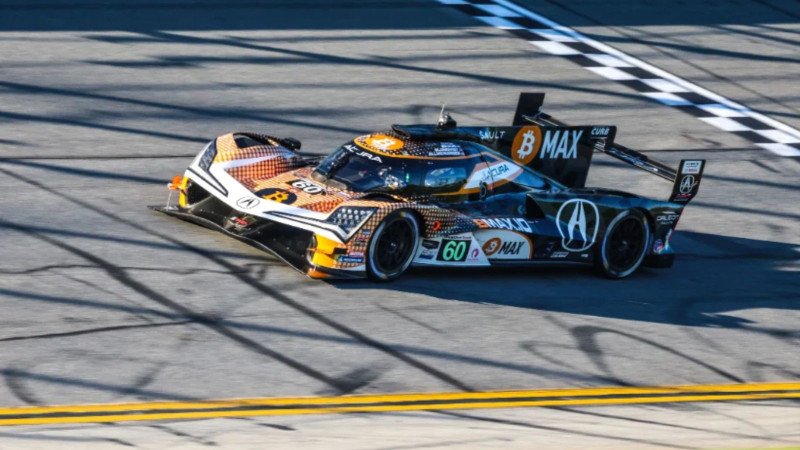
Bitcoin on the Track at the 24 Hours of Daytona

Bitcoin was back on the biggest screens in global sports as the 24 Hours of Daytona marked the unofficial start of the year’s major sponsorship season. From that point forward, weekend after weekend, major sporting events once again became prime real estate for high profile brand exposure.
With the Super Bowl, Pro Bowl, Daytona 500, and the Formula 1 season opener approaching in the following weeks, Bitcoin, crypto, exchanges, and NFT companies were once again looking to maximize their advertising dollars by attaching their brands to the world’s most watched events.
This cycle had become familiar. It started years earlier with Matt Damon, Tom Brady, a crypto exchange, and a Super Bowl commercial. Since then, at least one crypto project had aimed to make a major splash during big game advertising season every year.
Crypto and Racing, A Proven Match
Racing and crypto sponsorships had proven to be a natural fit. It was fast, loud, bright, and made for the big screen, exactly where crypto wanted to be.
Three years earlier, PolkaDot took a shot at the IndyCar Championship with Conor Daly driving for Dreyer Rheinbold Racing. Kraken and Pudgy Penguins appeared on the wings of the Williams Formula 1 cars. Ed Carpenter Racing ran a Bitcoin-branded car in the Indy 500.
In Formula 1, Red Bull secured season-long sponsorships with SUI and Bybit. McLaren landed a season-long deal with OKX and later minted NFTs on Tezos. The overlap between motorsport audiences and crypto culture continued to deepen.
BitcoinMAX and Meyer Shank Racing at Daytona
That weekend, Meyer Shank Racing set out to potentially make history by bringing Bitcoin to victory lane at the birthplace of speed. The team ran the Bitcoin MAX sponsored Acura LMDh Prototype in one of the most demanding races in the world.
Bitcoin Max was a community-driven, decentralized digital currency project. The partnership centered on the global launch of OnlyBulls, a finance super app, and the establishment of BitcoinMAX, a Swiss-based Bitcoin trust launching in January 2026. BitcoinMAX was designed to democratize the digital economy and allow people to participate in the Bitcoin economy through a secure, regulated trust.
The task was never going to be easy. The Daytona 24 Hours was notoriously one of the toughest tests of man and machine. It was twice around the clock on one of the world’s fastest tracks, against the best drivers on the planet.
Long Odds and a Stacked Field
Bitcoin supporters entered the weekend as long odds contenders, despite Meyer Shank Racing having taken victory in the race in 2022 and 2023 with Acura. The team was also looking to rebound after finishing second the previous year behind Porsche.
Porsche, however, had pulled factory support from endurance racing that season, leaving Penske and JDC Miller Motorsports to compete as privateers using modified versions of the previous year’s car. Acura’s continued factory backing of Meyer Shank Racing offered a potential advantage, though not against a strong Cadillac effort that entered the season with momentum as they prepared to run a Formula 1 team.
The field was stacked. Cadillac arrived hungry to start fast. Aston Martin debuted the highly anticipated Valkyrie prototype. BMW remained a factory threat. Victory was never guaranteed.
An Elite Driver Lineup
Meyer Shank Racing assembled one of the strongest driver lineups in the field. Tom Blomqvist, a veteran endurance champion. Colin Braun, a young endurance ace who had consistently delivered results since arriving on the scene. Scott Dixon, a former IndyCar champion. A.J. Allmendinger, the “Dinger,” a road course specialist with major wins across NASCAR, IndyCar, and prototype racing.
If that group could cross the line first after 24 hours, they would become the first team to bring a Bitcoin-sponsored car to victory lane, a surprising milestone that had not happened since Bitcoin’s creation.
Chaos, Fog, and a Fight to the Finish
Qualifying went the way of Porsche and Cadillac, leaving the Bitcoin MAX Acura starting fifth for the 24-hour race.
Midway through the night, heavy fog rolled over Daytona, forcing a yellow flag period that lasted a record six and a half hours. When the sun rose and the fog finally lifted, the Bitcoin Acura was still firmly in contention for the overall win.
At the restart, the car ran fourth and even held the lead with more than three hours remaining. In the end, the pace of Felipe Nasr in the Penske Porsche proved just too strong. Meyer Shank Racing eventually slipped back to a sixth-place finish after pitting early in hopes that a late caution might shuffle the order. That caution never came.
Once again, a Bitcoin-sponsored car narrowly missed victory lane.
Beyond The Checkered Flag
The good news was that Bitcoin MAX secured a full-season sponsorship with Meyer Shank Racing. The goal remained clear, to finally bring Bitcoin to victory on the biggest stage in motorsports.
The opportunity would come again. And when it did, Bitcoin would once more be right where it wanted to be, fast, loud, and on the world’s biggest screens.