#Bithumb
Korea Proposes Crypto Circuit Breakers After Bithumb Error

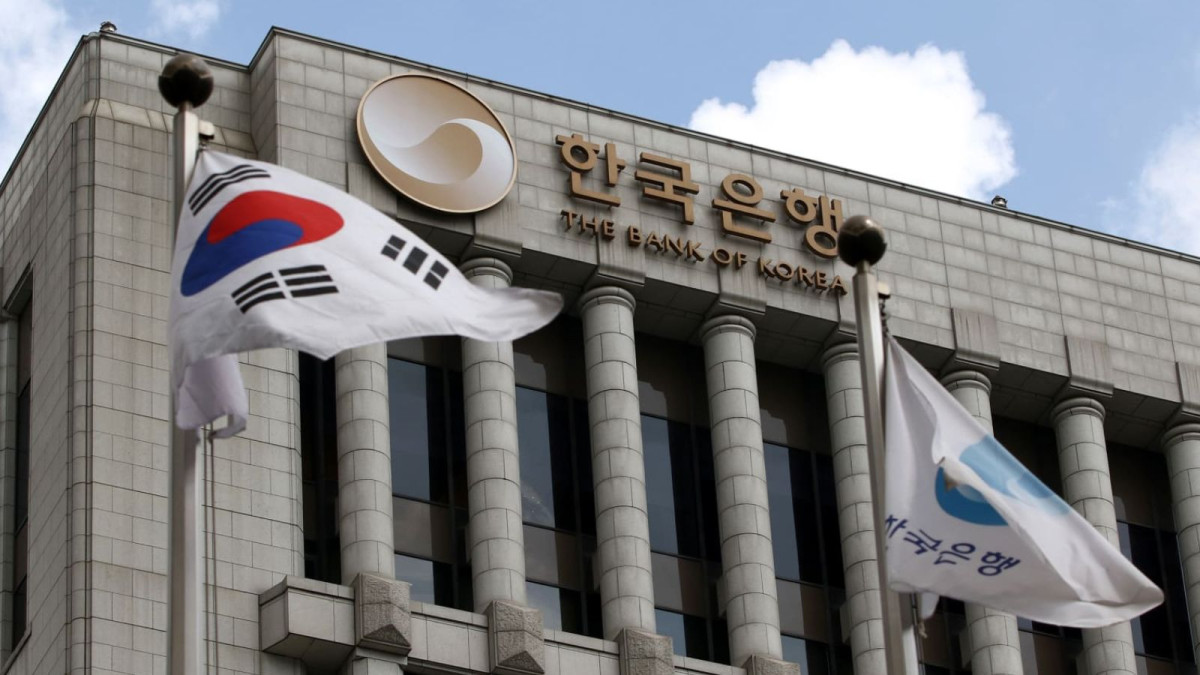
The Bank of Korea (BOK), South Korea’s central bank, has proposed the introduction of crypto circuit breakers for domestic cryptocurrency exchanges, months after the Bithumb Bitcoin blunder.
In its recently published 2025 Payment and Settlement Systems Report, the bank recommended introducing system-level safeguards similar to the Korea Exchange (KRX) stock market circuit breakers that would automatically halt trading on crypto exchanges, especially during sharp price swings or abnormal transactions caused by large volume or erroneous trades.
Referencing the massive payout mishap at Bithumb in February, the BOK argued that this feature would help prevent such incidents from repeating, citing the crypto market’s lack of sufficient safeguards compared to traditional finance. It also suggested including the proposal in South Korea’s pending Digital Asset Basic Act.
“The virtual asset industry has inadequate internal control systems and faces weaker regulatory oversight compared to traditional financial institutions,” the bank said.
“It is necessary to consider introducing systemic mechanisms such as the Korea Exchange’s circuit breaker, which can block abnormal trades such as large orders or halt trading in the event of sudden fluctuations in virtual asset prices.”
Bithumb February Bitcoin Blunder
On February 6, 2026, Bithumb, one of South Korea’s largest cryptocurrency exchanges, was running its routine “Random Box” promotional giveaway. The plan was to distribute small cash prizes totaling 620,000 Korean won (KRW), worth approximately 423 to 460 US dollars, to about 600 qualified users, with each user receiving between 2,000 and 50,000 KRW, or about 1.37 to 34 US dollars.
However, the situation escalated when an employee mistakenly entered “BTC” as the currency unit instead of “KRW.” As a result, the system instantly credited approximately 620,000 Bitcoin to users, with each user receiving roughly 2,000 Bitcoin.
Bithumb detected the error within minutes and promptly restricted trading and withdrawals on the affected accounts. The exchange was able to recover 99.7 percent of the distributed Bitcoin, while the remaining 1,788 Bitcoin that had already been sold by users were covered by the exchange’s corporate reserves.
While the introduction of stock-style circuit breakers for cryptocurrency exchanges appears to be motivated by a desire to protect markets, many experts argue that such measures run counter to the decentralized and borderless nature of cryptocurrency.
Some warn that these guardrails could amplify risks and create price discrepancies between domestic exchanges and global markets. This, in turn, could lead to arbitrage opportunities and confusion, particularly when South Korean exchanges halt trading while the rest of the world continues.

South Korea Fines Bithumb $24M for AML Violations

The Financial Intelligence Unit (FIU), a crime monitoring and prevention body under South Korea’s Financial Services Commission, fined cryptocurrency exchange Bithumb 36 billion won (about $24.5 million) for anti-money laundering (AML) violations.
The fine follows an on-site inspection of the exchange conducted by the regulator in March and April last year, which found that Bithumb had violated the Specific Financial Information Act 6.65 million times. The act requires exchanges to restrict transactions with unregistered virtual asset service providers, block suspicious transactions, and verify their customers.
Bithumb was also found to have violated the Act on Reporting and Use of Financial Information by facilitating 45,772 cryptocurrency transactions with 18 unregistered overseas virtual asset service providers and cryptocurrency firms. Despite repeated warnings from the regulator, Bithumb failed to take corrective action.
"We have continuously requested Bithumb to stop trading with undeclared overseas virtual asset service providers, but it failed to fulfill its legal compliance obligations and demonstrated a markedly insufficient willingness to comply with the law, such as failing to implement effective blocking measures over an extended period," the FIU explained.
In addition to the $24 million fine imposed by the regulator, Bithumb has been ordered to halt all external crypto transfers for new customers from March 27 to Sept. 26. The ban, however, does not affect existing customers trading on the exchange.
Despite facing the largest fine ever imposed on a South Korean exchange, Bithumb said it would address the issues highlighted. "We will resolve the issues identified in this inspection and do our best to create a safe trading environment and protect users," the company said.
South Korea Cracks Down on Compliance Violators
South Korea has been cracking down on compliance violators, particularly cryptocurrency exchanges that breach Anti-Money Laundering (AML) and Know Your Customer (KYC) regulations. In November 2025, the country fined its largest cryptocurrency exchange, Upbit, 35.2 billion won (approximately $25 million) and imposed a three-month partial suspension after the exchange failed to comply with AML and KYC rules.
On December 31, 2025, the FIU fined Korbit 2.73 billion won ($1.9 million) and issued a stern institutional warning to the exchange’s executives following a compliance audit that revealed weaknesses in its anti-money laundering (AML) and know-your-customer (KYC) procedures.
The FIU is currently conducting an on-site review of Coinone, which is expected to conclude later this year. Although there are unconfirmed reports that the agency has already flagged violations, no official report or penalties have been issued.

Flow Foundation Moves to Block FLOW Delisting in Korea

Flow Foundation is seeking a court order in Seoul to halt the planned delisting of the FLOW token on three South Korean exchanges following an exploit on the protocol in December.
The Flow Foundation and its parent company, Dapper Labs, filed a motion with the Seoul Central District Court on Monday to block the delisting of the FLOW token from three South Korean exchanges.
This move is coming months after the Layer 1 blockchain protocol suffered a security incident in December, which led to several exchanges temporarily stopping the trading of the FLOW token at the time. However, three major Korean exchanges; Upbit, Bithumb, and Coinone, have moved to permanently stop the trading of the token on their exchanges on March 16.
Flow’s Security Incident
On December 27, 2025, Flow suffered a protocol-level exploit that resulted in losses of about $3.9 million. The breach was caused by a flaw in the smart-contract runtime within Flow’s execution layer, which allowed the attacker to exploit vulnerabilities in Cadence.
Cadence is Flow’s smart contract runtime. By exploiting the flaw in Cadence, the attacker was able to duplicate Flow tokens instead of properly minting them.
After duplicating the tokens, the attacker attempted to bridge them out of the protocol using cross-chain bridges such as Celer, deBridge, Relay, and Stargate. However, this abnormal activity was detected by Flow’s validator network, which placed the blockchain in read-only mode, halting further asset transfers.
This incident led to a sharp decline in the price of the FLOW token. Prior to the breach, FLOW was trading at around $0.17, but it fell over 40% to roughly $0.097 within hours of the exploit being announced.

Image credit: Tradingview
The incident also affected the token’s market cap. Before the breach, FLOW had a market cap of around $280–284 million. After the breach, it fell to approximately $164–170 million. Although the breach directly resulted in a $3.9 million loss, the protocol’s total market value dropped by over $110 million.

Image credit: Coingecko
Following remediation efforts after the incident, the Flow Foundation claimed that every major global exchange has independently reviewed and restored FLOW token trading on their platforms.
According to the foundation, the FLOW token remains fully available and tradeable on major exchanges, including Binance, Coinbase, Kraken, OKX, Gate.io, HTX, and Bybit, with Korbit being the only Korean exchange still supporting the trading of FLOW.