#Anthropic
OKX Restricts Hong Kong Staff From Using Anthropic Claude AI

Goldman has restricted its Hong Kong staff from using Anthropic’s Claude AI model, with the restriction reportedly rooted in geographic considerations.
OKX’s restriction on its staff using Claude AI came shortly after the exchange’s Claude account was suspended by Anthropic over noncompliance with its geographic access policies.
Although the suspension of the exchange’s Claude account lasted only a short period, an internal staff message said that OKX would not support the use of Virtual Private Network (VPN) access to Claude for employees visiting Hong Kong or China.
As part of its plans to continue allowing its Hong Kong staff to use AI in their daily workflows, OKX said it would direct its Hong Kong employees to other supported AI models. Meanwhile, Star Xu, OKX CEO, has said that the exchange spends between $6 million and $8 million on multiple large language model (LLM) providers and has even built Oli, an internal AI development platform.
OKX’s restriction on its Hong Kong staff comes shortly after Goldman Sachs imposed a similar restriction on its Hong Kong staff earlier this year. However, unlike OKX’s restriction, which was driven by an account suspension, Goldman Sachs’ restriction stemmed from a strict interpretation of its contract with Anthropic.
After reviewing its contract with Anthropic, Goldman Sachs concluded that the agreement did not permit the use of Anthropic or any of its products, including Claude AI, in Hong Kong, and thus restricted their use.
However, this did not mean that Goldman Sachs was restricting the use of Anthropic’s products or Claude AI overall. In fact, Goldman Sachs has partnered with Anthropic engineers to build AI agents for its trade accounting and client vetting.
Anthropic Hits $965B Valuation, Tops OpenAI in $65B Raise

Anthropoic, the San Francisco-based AI lab announced Thursday it has closed a $65 billion Series H funding round at a post-money valuation of $965 billion, making it the most valuable AI startup in the world and, at least on paper, and nudging it right up to the edge of the trillion-dollar club.
The round was led by Altimeter Capital, Dragoneer, Greenoaks, and Sequoia Capital. Each of those lead investors put in more than $2 billion, according to people familiar with the matter. Co-leaders included Capital Group, Coatue, D1 Capital Partners, GIC, ICONIQ, and XN. A long tail of institutional names also joined, among them Baillie Gifford, Blackstone, Brookfield, DST Global, Fidelity Management and Research, General Catalyst, Insight Partners, Jane Street, Lightspeed Venture Partners, T. Rowe Price, and Temasek. Strategic infrastructure partners Micron, Samsung, and SK Hynix also came aboard.
Roughly $15 billion of the $65 billion total was made up of previously committed investments from hyperscalers, including a $5 billion tranche from Amazon.
Revenue Is the Real Story
Funding rounds at this scale always raise the question of what exactly is being bought. In Anthropic's case, the answer appears to be a business that is already moving fast. The company said its annualized run-rate revenue crossed $47 billion earlier this month, driven by enterprise deployments of its Claude models and a growing base of everyday users. That is an astonishing number, and it frames this raise less as a bet on future potential and more as a capital infusion into something that is already operating at scale.
For context, Anthropic was valued at $380 billion in February after its Series G, which brought in $30 billion. The Series H nearly triples that figure in a matter of months. The pace of that valuation expansion is something the financial world has not seen.
Brad Gerstner, founder and CEO of Altimeter Capital, framed the investment in pertty straightforward terms. The momentum Anthropic has built with enterprise customers, he said, positions the company to lead the next phase of AI development. Dragoneer managing partner Marc Stad pointed to intelligence becoming an increasingly critical ingredient in how businesses operate and deliver products.
Topping OpenAI, For Now
The benchmark everyone is measuring against is OpenAI, which disclosed a $852 billion valuation following a $122 billion funding round back in March. Anthropic's $965 billion post-money figure now tops that. Whether that gap holds, widens, or reverses is anyone's guess, since both companies are raising capital at a pace that makes any static comparison feel temporary. Still, the symbolic weight of Anthropic moving ahead of OpenAI in the private market valuation race is not nothing.
The funding also coincides with what TechCrunch and others have reported could be Anthropic's final private fundraise before an IPO. Both Anthropic and OpenAI are reportedly preparing for public market debuts, possibly as early as this year, partly to access the kind of sustained capital needed to keep building and running frontier models.
Compute Is the Constraint
A chunk of this capital is earmarked for the unsexy but mission-critical problem of compute. Anthropic has reportedly been bumping up against capacity limits in recent months, including imposing usage restrictions during peak hours and nudging users toward off-peak windows by offering more compute then. The company has been moving aggressively to address that. It signed agreements with Amazon for up to five gigawatts of new compute capacity, struck a separate deal with Google and Broadcom for five gigawatts of next-generation TPU capacity, and inked a deal with SpaceX for GPU access across the Colossus 1 and Colossus 2 facilities. Claude is available on AWS, Google Cloud, and Microsoft Azure, with Amazon remaining Anthropic's primary cloud and training partner.
CFO Krishna Rao stated that: the company is experiencing historic demand and the funding is there to serve it, keep Anthropic at the research frontier, and expand Claude into more of the places where work happens.
Political Friction Has Not Slowed the Checks
It is worth noting that all of this is happening while Anthropic remains in a fairly unusual position with the U.S. government. Earlier this year, the company refused a Pentagon demand to remove safeguards blocking Claude from being used for mass domestic surveillance or fully autonomous lethal weapons systems. That refusal resulted in Anthropic being blacklisted from military contracts, and a legal challenge to that blacklisting is still pending. The company holds a $200 million Defense Department contract that now sits in a complicated limbo.
On top of that, cybersecurity researchers have flagged concerns around Anthropic's Claude Mythos model, a specialized system that some experts worry could lower the barrier to advanced cyberattacks. Anthropic said Thursday that Mythos could be made publicly available within weeks as the company finalizes expanded safeguards around it.
None of it appears to have dampened investor enthusiasm. If anything, the sheer breadth of the investor list suggests that the private market has largely decided that Anthropic's safety-first positioning is a feature, not a liability, at least when it comes to enterprise adoption.
Thursday's announcement also landed on the same day the company released Claude Opus 4.8, the latest iteration of its flagship model. It was a very busy day for Anthropic.
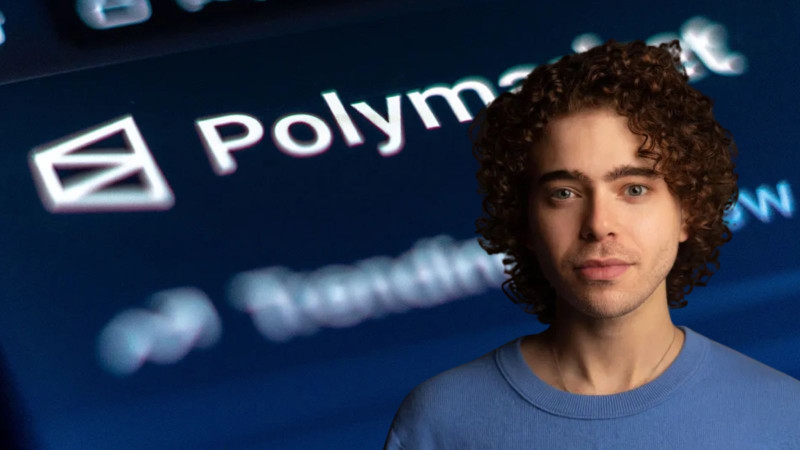
Polymarket and Nasdaq Launch Private Company Prediction Markets

Polymarket, the world’s largest prediction market company, has partnered with Nasdaq, the global financial technology company, to launch the first prediction markets that track the performance and milestones of private companies.

Prior to the launch of this new offering, only institutions and high-net-worth investors had exclusive access to invest in private, high-growth companies before they went public. However, with the launch of this new offering, individuals, including retail traders, can now access some of the most sought-after private companies before they go public.
The new offering also provides real-time signals to institutional investors on how private markets are unfolding, helping them make informed investment decisions and better manage their risks. Users can now access and monitor events in the high-growth company market, which currently comprises over 1,700 unicorns globally.
"Prediction markets are one of the most powerful tools we have for democratizing access to financial information and opportunity," said Shayne Coplan, Founder and CEO of Polymarket. "Today’s launch brings that power to one of the last frontiers of financial markets that retail participants have never been able to access. For the first time, anyone can engage with the outcomes driving value at the world's most consequential private companies."
And with the Nasdaq Private Market serving as the resolution data provider for private company markets, users can access private companies through the Polymarket platform. The “privates” section on Polymarket currently has about 20 active private markets, including SpaceX, OpenAI, Anthropic, Stripe, Anduril, and Canva.
Hence, users can now transparently engage with verifiable private company events, including taking positions in a company’s valuation milestones, Initial Public Offering (IPO), and other secondary market activity.
“Nasdaq Private Market has established itself as a trusted source of liquidity and investment infrastructure across the private market ecosystem,” said Tom Callahan, CEO of Nasdaq Private Market. “Polymarket has built a platform that can open access to a broader audience. We are proud to provide the data that ensures every market resolves accurately. When retail participants enter any market, high-integrity data matters.”
Anthropic’s Most Powerful AI May Not Be Released
Anthropic built an AI that's great at breaking into software, and doesn’t want to release it. Claude Mythos Preview exists specifically to find and exploit vulnerabilities, and access is locked to a small group of known partners through a program called Project Glasswing. Major companies like Microsoft, Apple, Google, Amazon, Nvidia, Cisco, CrowdStrike, Federal Reserve, and the Linux Foundation are involved in this project.
Scott Bessent and Jerome Powell pulled together some of the most powerful names in American banking at Treasury headquarters to talk about what Mythos and models like it mean for the financial system. Citigroup, Morgan Stanley, Bank of America, Wells Fargo, and Goldman were all in the room according to sources who spoke to Bloomberg and the Financial Times. Jamie Dimon was invited but couldn't make it.
Anthropic describes Mythos Preview as its most capable model to date, with a significant jump in coding and security performance over every prior Claude version. In internal and external evaluations, the model autonomously identified thousands of high severity vulnerabilities across every major operating system and browser Anthropic tested, including zero days that had been sitting undetected in production software for decades. To accompany the launch, Anthropic committed up to $100 million in usage credits and $4 million in direct funding through Project Glasswing, available specifically to open source security organizations so they can run Mythos against widely deployed software and close gaps before anyone with bad intentions finds them first.

In controlled cyber range tests, the model found vulnerabilities together with working exploits, completing full attack simulations that human red teams estimated would take many hours. It found flaws in places where existing automated scanners had run millions of passes and flagged nothing, including in Firefox's JavaScript engine and various multimedia libraries. Fewer than one percent of the vulnerabilities it identified have been fully patched at this point, which gives you a sense of how much ground the security community now has to cover.
Most of the infrastructure the crypto industry depends on sits on top of the same Linux and open source stacks that Mythos is now auditing like exchanges, custodians, node operators, rollup sequencers, DeFi backends. The software shared with banks, hospitals, and government systems, turns out to have been carrying serious vulnerabilities for years that nobody caught. A kernel level bug or a flaw in a widely used library isn't an enterprise problem when you're thinking about crypto, but it's a potential entry point into a hot wallet, a key management system, a bridge validator, or an indexing service. Mythos gives defenders a meaningful head start on finding and closing those gaps, but it also surfaces how much risk has been quietly unnoticed.
For banks, law firms, and any enterprise with sensitive data, the lesson from Mythos is that proprietary systems are not safe from this. Most critical applications and sensitive datasets run on top of operating systems and open source code, and that software now appears to have been carrying vulnerabilities for decades in some cases. The main risk on an institution's balance sheet might not be a counterparty but its own software stack, and models like Mythos are making this clear.
Anthropic framing Mythos as too dangerous to release publicly could just be a marketing stunt. But independent reporting on thousands of real vulnerabilities, bugs with decades of exposure time, and successful end to end attack simulations in controlled environments suggests it’s real. This could be an early version of something much larger, as security researchers broadly expect that within a few years both attackers and defenders will be operating fleets of AI agents 24/7 that test systems continuously, around the clock, at a scale no human team can come close to matching. Systems in both traditional finance and crypto will need AI driven monitoring and response as a baseline and stronger decentralized systems to prevent a single point of failure.