#Derivatives
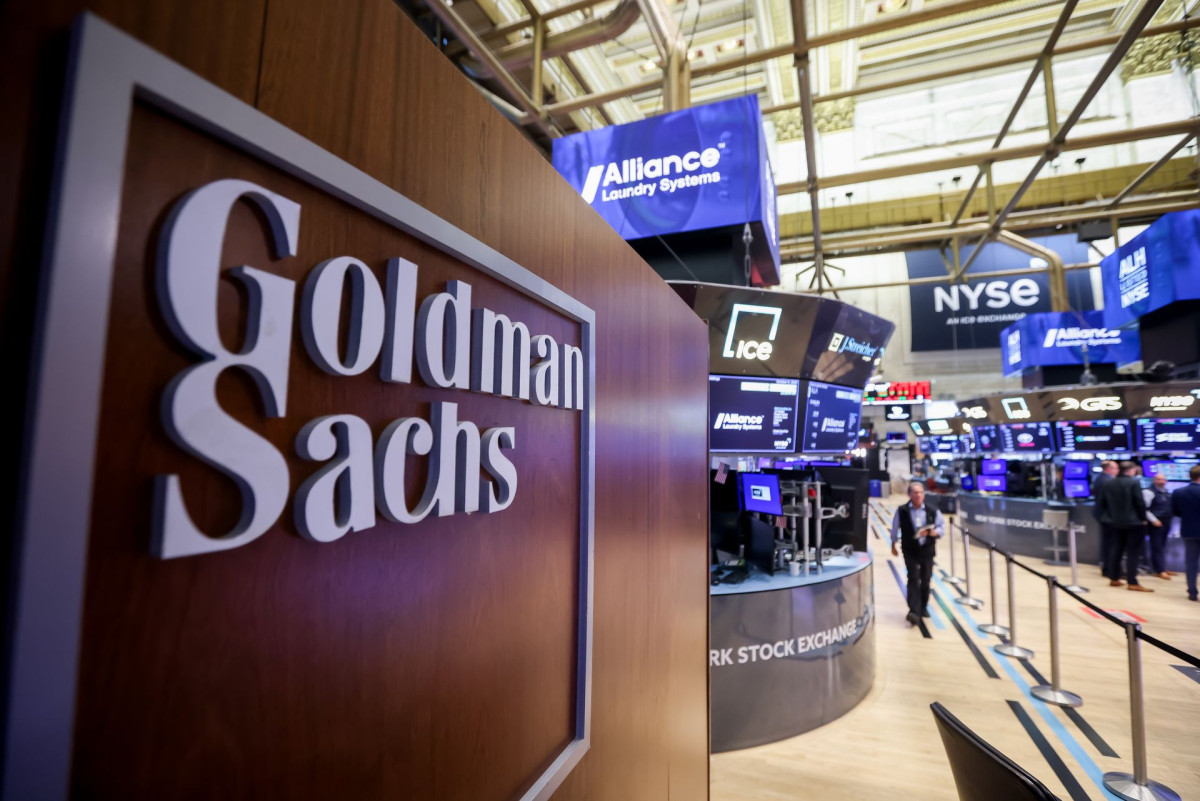
Goldman Sachs to Acquire ETF Manager NEOS for $2.25B

Goldman Sachs has agreed to acquire exchange-traded fund manager NEOS Investments in a deal that could reach $2.25 billion.

Announcing the acquisition plan, Goldman Sachs said in a press release that the move is aimed at expanding its offering of sophisticated, derivative-based ETFs to clients and investors.
“As investor demand for active ETFs grows, NEOS’ disciplined investment approach is highly complementary to our capabilities across buffer, managed outcome and income strategies. Together, we will give investors a diverse toolkit for different market environments,” said David Solomon, Chairman and CEO of Goldman Sachs.
With derivatives income ETFs being one of the fastest-growing categories in the ETF market, with approximately $180 billion in assets under management, financial research firm Morningstar projects that a combination of Goldman Sachs and NEOS could create the eighth-largest ETF manager in the world.
The acquisition is expected to be completed in the first quarter of 2027. Upon completion, NEOS co-founders Troy Cates and Garrett Paolella will join Goldman Sachs as managing partners. The full NEOS team, including its investment and client service teams, will also be absorbed into Goldman Sachs Asset Management.
About Goldman Sachs
Headquartered in New York, Goldman Sachs is one of the world’s leading investment firms, offering a range of services, including investment banking, securities trading, and asset management, to corporations, governments, and high-net-worth individuals.
The firm currently holds significant positions in Bitcoin and Ethereum ETFs and most recently filed for its Bitcoin-linked ETF in April, marking a shift from its previous skepticism toward the digital asset space to a more active engagement with the industry.

Kalshi Wins Approval for US Bitcoin Perpetual Futures

For years, perpetual futures have been crypto's most traded instrument and almost none of that volume has touched U.S.-regulated infrastructure. Until now. The Commodity Futures Trading Commission (CFTC) formally approved KalshiEX to list BTCPERP, a no-expiry Bitcoin perpetual futures contract tied to spot BTC prices. On the same day, the agency's Market Participants Division issued a staff-level interpretation clearing Coinbase Financial Markets to route U.S. customers to certain derivatives on Deribit, its offshore affiliate. Two very different regulatory moves, made on the same morning, pointed at the same underlying problem: American traders have been effectively locked out of the largest segment of global crypto markets.
CFTC Chairman Mike Selig framed the Kalshi order as delivery on a specific commitment to onshore crypto perpetuals, describing the move as a path for one of the most liquid segments of the crypto asset markets to exist inside the U.S. regulatory framework. Coinbase CEO Brian Armstrong put a number to the problem his company says it is solving: until now, U.S. users have been locked out of roughly 80% of global crypto markets, which includes perpetual futures and options. Coinbase cited Deribit's more than $185 billion in July 2025 trading volume and approximately $60 billion in open interest at the time of acquisition to illustrate the scale of what domestic traders could not legally access through regulated channels.
What the CFTC Actually Approved
BTCPERP is a cash-settled contract referencing the U.S. dollar spot price of one Bitcoin, as tracked by the CF Benchmarks Bitcoin Real Time Index. It trades in units of one ten-thousandth of a BTC, runs 24 hours a day, seven days a week, and has no fixed expiry date. Traditional futures converge toward their underlying asset at expiration because physical delivery or final cash settlement pulls the contract to spot. A perpetual has no such date, so the convergence mechanism operates continuously through periodic funding payments between long and short holders. If the contract trades above spot, longs pay shorts. If it trades below, shorts pay longs. The economic pressure keeps the perpetual price tracking Bitcoin in real time.
The CFTC's approval leans heavily on Bitcoin's specific market structure as its justification. The order notes Bitcoin's deep, active, and continuous spot trading across broadly distributed venues, with pricing observable around the clock. That depth is what makes the funding rate mechanism credible: arbitrageurs can act while the perpetual is live, since the underlying spot market never closes. The agency was explicit that this reasoning applies to Bitcoin and to similarly structured digital commodities with comparable market depth. Other assets will need to go through a separate review. Bitnomial had previously received certification for a product labeled a perpetual futures contract, but that contract carried a 25-year term limit and is considered a different structure. BTCPERP is the first true no-expiry perpetual to receive a Commission-level order.
Two Paths, Very Different Weight
The distinction between the Kalshi approval and the Coinbase staff letter matters more than it might look at first glance. Kalshi's BTCPERP is a Commission-issued order under Section 5c(c)(4) of the Commodity Exchange Act and Regulation 40.3. That is formal product approval, with binding legal weight and a clear compliance framework. Coinbase's route is different in kind. The Market Participants Division issued an interpretation and a no-action position in response to Coinbase Financial Markets. Staff confirmed that certain Deribit digital commodity derivatives may be categorized as foreign futures under Regulation 30.1, and said it would not recommend enforcement action under specified conditions tied to how customer digital assets and stablecoins are handled as margin through Coinbase affiliates.
Staff letters are conditional by design. The CFTC was clear: these positions represent the Market Participants Division only, are not binding on the Commission, and can be modified, suspended, or terminated. The Coinbase path is useful for reaching scale quickly because it connects U.S. clients directly to Deribit's existing liquidity pool, which is among the largest in global crypto derivatives. But it carries a thinner precedential footprint. Coinbase said institutional onboarding to Deribit options has already begun, with perpetual futures access and broader retail availability described as coming later, without a hard timeline. Retail access is expected to carry additional eligibility criteria and risk disclosure requirements.
The Liquidity Question Nobody Can Answer Yet
Regulatory clearance is the easy part. Getting traders to use a U.S. regulated perpetual when Binance, Bybit, and OKX offer the same exposure with deeper order books and, in most cases, higher leverage, is the actual test. Offshore exchanges process billions of dollars in Bitcoin perp volume on a slow day. The CFTC has been working toward this moment for over a year, issuing a formal request for comment in April 2025 on perpetual derivatives, their benefits, risks, market integrity implications, and customer protection questions. The approvals are, in that sense, the policy answer to the RFI. The market answer comes when Kalshi's BTCPERP goes live and traders decide whether regulated access at U.S. leverage limits is a compelling enough trade-off.
The CFTC's case-by-case stance on future perpetual approvals means the template is now set, but the runway is not yet cleared. Ethereum perps, Solana perps, and other digital assets with sufficient spot market depth could follow, but each application needs to clear the same review process independently. Kalshi separately indicated it plans to launch perpetual contracts on more than a dozen currencies pending additional regulatory reviews. CME's parallel push toward 24/7 crypto futures and options trading adds another dimension to the picture: traditional derivatives infrastructure is adapting to match crypto's always-on market structure, while crypto-native exchanges now have a formal path to operate inside U.S. regulatory boundaries. Whether the liquidity follows is a question of product quality, margin efficiency, and distribution reach, and none of that gets answered in an approval order.
The next signals are practical: Kalshi's launch terms and funding rate performance, Coinbase's timeline for rolling out perpetual futures through CFM, how retail access gets structured, and whether formal rulemaking eventually hardens the current agency posture into something more durable. For now, U.S.-regulated Bitcoin perps exist. Whether they can actually compete is the harder question, and the market will answer it faster than any regulator. It usually does.

Bitcoin Options Are Coming to NASDAQ

The SEC just greenlighted cash-settled Bitcoin iindex options on NASDAQ.
On May 22, the U.S. Securities and Exchange Commission published a 34-page order clearing Nasdaq PHLX to list cash-settled bitcoin index options under the ticker QBTC. The order hands everyday brokerage account holders a direct path to trade bitcoin volatility right alongside their Apple and Nvidia shares, no separate accounts, no crypto wallets, no extra steps.
The approval came on an accelerated basis under SEC Chairman Paul Atkins, and it is conditional. Before a single QBTC contract can trade, the Commodity Futures Trading Commission still needs to grant exemptive relief. Bitcoin is legally classified as a commodity in the U.S., so the CFTC gets a say. No timeline has been announced for that step. But the direction things are moving is pretty hard to misread at this point.
What QBTC Actually Is
QBTC options are European-style and cash-settled. There is no physical delivery of bitcoin at expiration. When a contract expires, the exchange credits or debits the dollar difference between the strike price and the final index value. No bitcoin wallet. No custody headaches. The contracts track the Nasdaq Bitcoin Index, which represents one one-hundredth of the CME CF Bitcoin Real Time Index, a benchmark pulling aggregated order book data from eight regulated venues roughly every 200 milliseconds.
Unlike options tied to individual spot bitcoin ETFs (say, BlackRock's IBIT), these contracts reference the broader bitcoin market directly. That gives institutional managers a cleaner hedge against general bitcoin price exposure without fund-specific tracking differences bleeding into their positions. It is a subtle but meaningful difference for anyone running a real book.
Size Is the Real Story Here
This is where retail traders should actually pay attention. Each QBTC contract delivers exposure equal to exactly one bitcoin, using a 1/100th index scaling factor with a standard $100 multiplier. CME's standard bitcoin options are sized at five bitcoin per contract. At current prices, one CME contract can represent several hundred thousand dollars in notional exposure. Fine for a large hedge fund, not so practical for smaller shops or individual investors trying to manage a position with any precision.
CME's bitcoin options also require a dedicated derivatives account, which is another layer of friction before anyone can even place a trade. QBTC options will sit on the same Nasdaq platform as the technology stocks most investors already own. Your existing brokerage account should work. That is a real accessibility improvement, not just a marketing claim.
For the record: the per-side position limit is set at 24,000 contracts, which the SEC noted works out to roughly 0.12% of bitcoin's outstanding supply. Minimum price increment is $0.01. The mechanics are deliberately designed to feel familiar to anyone who has ever traded index options.
The Regulatory Picture Is Messy, but Getting Better
The road to approval was not totally smooth. CME Group submitted a comment letter last October arguing these contracts fall under the CFTC's exclusive jurisdiction. The SEC pushed back, leaning on Section 717 of the Dodd-Frank Act to argue that shared jurisdiction is permissible when the CFTC provides exemptive relief. That jurisdictional tension is still technically unresolved, which is exactly why CFTC sign-off remains the final hurdle.
The SEC approval itself came nine months after Nasdaq PHLX originally filed back in September 2025, following multiple rounds of public commentary and extension periods. Nine months is actually fast by historical standards for a novel derivative product. The original spot bitcoin ETF approvals took something like four years from first filing to clearance, under the Gensler administration's much more skeptical posture toward crypto.
People following this space closely see QBTC as part of a broader shift that started taking shape in early 2025. The Atkins-led SEC has dropped numerous enforcement actions against crypto firms and moved toward more permissive regulatory frameworks. Add in the ongoing CLARITY Act discussions in Congress, and it feels less like a string of isolated approvals and more like a deliberate effort to build out the full institutional crypto stack inside traditional market infrastructure.
What Happens Next
A realistic launch window is probably the second half of 2026, assuming CFTC exemptive relief comes through on a normal timeline. Once trading begins, any U.S. options broker supporting index options should be able to facilitate QBTC trades without any special setup required on the user end.
The longer-term picture is worth thinking about. Crypto options volume has grown sharply over the past two years, driven by institutional demand for hedging tools and yield strategies. With QBTC in the mix, investors would have access to spot bitcoin ETFs, ETF-specific options, CME futures, and now broad index-linked options, all sitting within traditional exchange infrastructure. The institutional crypto derivatives stack is starting to look, piece by piece, a lot like what already exists for gold and oil.
How quickly the CFTC moves on exemptive relief will say a lot about whether the two agencies are genuinely coordinated on crypto or just moving in parallel. The market is watching that closely. And given everything that has happened over the past 18 months, it would be surprising if this one got stuck for long.

CFTC Works to Prevent Sports Prediction Market Abuse

The U.S. Commodity Futures Trading Commission has been making the rounds. CFTC Chairman Michael Selig confirmed this month that his agency is in active talks with all major professional sports leagues in the United States, as regulators scramble to get ahead of potential insider trading problems on prediction markets.
"We're talking to all the sports leagues because it's critical that they've got the best information as to what's manipulable in their markets and where the insider trading risks are," Selig said on the Faro Radio podcast. The comments come after months of escalating alarm in Washington over the explosion of prediction market trading tied to sports, politics, and military events.
A Market That Grew Too Fast
The numbers tell the story. Monthly trading volume on prediction markets has jumped from around $1.2 billion in early 2025 to over $20 billion by January 2026, according to blockchain research firm TRM Labs. Sports event contracts alone now make up nearly 90% of all bets placed on Kalshi over the past year, according to the Congressional Research Service. That kind of scale, combined with the potential for people with inside knowledge to profit on it, has made regulators nervous.
"The biggest issue that comes up is manipulation and insider trading in these markets," Selig told Front Office Sports. And the regulator isn't just talking. In March 2026, the CFTC and Major League Baseball entered into a first-of-its-kind memorandum of understanding, establishing a formal framework for confidential information-sharing between the federal agency and the league. It was a signal that more deals could be coming.
Leagues Are Moving, Too
The NHL, MLS, and MLB have all inked prediction market partnerships with Polymarket and Kalshi over the past several months. The NBA is reportedly in active talks with both platforms. The NFL has been the notable holdout, citing integrity concerns, and Selig declined to confirm whether those conversations are ongoing. What is clear is that the agency sees league cooperation as essential. The CFTC has told prediction markets it expects them to share information with leagues about which categories of individuals should be restricted from trading, including players, coaches, referees, trainers, and data partners.
The platforms themselves moved to tighten their own rules in March. Kalshi introduced new technological guardrails to block athletes from trading on contracts tied to their own leagues, and politicians from betting on their own races. Polymarket updated its rulebook the same day to prohibit trading on any information that would "violate a preexisting duty or obligation of trust," even when that information was obtained secondhand.
The urgency is partly driven by what has already happened in other markets. In April 2026, the CFTC filed its first-ever insider trading complaint involving event contracts, charging an active-duty U.S. Army soldier with using classified intelligence about a military operation in Venezuela to trade Polymarket contracts, generating more than $400,000 in profit. The DOJ has since signaled it will pursue criminal prosecutions for insider trading on prediction markets as well. Jay Clayton, the U.S. Attorney for the Southern District of New York, said in February that his office expects to bring fraud cases tied to prediction market trading.
Sports have precedent of their own. The NBA's lifetime ban of Jontay Porter and the federal charges hanging over former Miami Heat guard Terry Rozier both stem from sports betting misconduct. Prediction markets are a different product legally, but the underlying concern, that people with privileged access to information are using it to profit, is exactly the same.
Congress Is Watching
Capitol Hill is paying attention, too. A coalition of Democratic lawmakers sent a letter to the CFTC in late April urging the agency to issue a formal rule prohibiting certain types of event contracts and curbing insider trading. The letter, led by Sen. Jeff Merkley of Oregon, described the rapid growth of prediction markets as an "erosion of integrity" that demands regulatory action. Separate legislation has been introduced that would bar government officials from using prediction markets entirely and prohibit event contracts tied to elections, war, and sports.
The CFTC, for its part, published an Advanced Notice of Proposed Rulemaking in March seeking public comment on whether to amend regulations governing prediction market event contracts. Selig has framed the issue in stark terms, drawing comparisons to the offshore drift that plagued crypto markets before FTX. "I'm concerned we'll see the same with prediction markets if we keep pushing it offshore into the unregulated space," he said.
For now, the talks with sports leagues continue. Whether they translate into formal agreements on the scale of the MLB deal, and how quickly, may determine how effectively the CFTC can police the fastest-growing corner of the derivatives market before the next scandal breaks.

Nakamoto Taps Bitwise and Kraken for its Bitcoin Derivatives Program

Nakamoto, a Bitcoin treasury company listed on the Nasdaq, recently announced the details of its Bitcoin derivatives program, a program designed to generate recurring volatility income from a defined portion of Nakamoto’s Bitcoin holdings while hedging some portion of the company’s downside exposure to Bitcoin price risk.
While the Bitcoin derivatives program had already begun in the first quarter of the year, Nakamoto will be partnering with Bitwise Asset Management and the crypto exchange Kraken, with Bitwise running the derivatives strategy and Kraken offering its custody solution that will hold a portion of Nakamoto’s Bitcoin holdings that will be used for the derivatives program.
The derivatives program, according to Nakamoto, is aimed at achieving two main objectives: (1) monetizing Bitcoin volatility and (2) mitigating downside risk.
By systematically writing covered calls and call spreads against a portion of its Bitcoin holdings, Nakamoto’s Bitcoin derivatives program aims to convert the volatility in the Bitcoin options market into recurring income, which the company says can be reinvested into its Bitcoin treasury or used for its everyday operational costs.
The program also aims to mitigate downside risk due to a decline in the Bitcoin price by maintaining a defined allocation of Nakamoto’s Bitcoin holdings to protective puts and put spreads, supporting the stability of Nakamoto’s net asset value and reducing the risk of forced deleveraging, especially during stressed market conditions.
"Bitcoin's implied volatility is one of the most persistently mispriced assets in capital markets," said Tyler Evans, chief investment officer of Nakamoto and UTXO Management.
"Working with institutional grade partners like Bitwise and Kraken, we have built a disciplined framework to harvest that premium systematically, at scale, and convert that opportunity into long term value for shareholders. This program is just one component of a broader effort to identify and execute on opportunities to generate yield on our Bitcoin holdings."
Nakamoto as a Bitcoin Treasury Company
Nakamoto Inc is a publicly traded company that operates a Bitcoin treasury strategy as its core business. The company currently holds approximately 5,342 BTC on its balance sheet, valued at roughly $467.5 million.
It made its first major Bitcoin purchase in August 2025 when it purchased 5,743.91 BTC worth approximately $679 million through its subsidiary Nakamoto Holdings. However, it recently sold 284 BTC for $20 million last month, with the proceeds used to support its working capital and fund its business operations.

Bitnomial Launches First INJ Futures in US Market

Bitnomial, the Chicago based cryptocurrency exchange, has launched the first Injective (INJ) futures contracts in the United States, regulated by the Commodity Futures Trading Commission.
Although access is currently limited to institutional clients, with retail traders expected to gain access in the future, the newly launched INJ futures contracts allow users to gain exposure to the Injective Protocol underlying INJ token without directly holding it.

The futures contracts settle in INJ with monthly expiries. This means that while the INJ futures contracts are tradable on the Bitnomial exchange, each contract has an expiry date. When this date is reached each month, the contract expires and settles.
The INJ futures contracts can also be margined in crypto or United States dollars, which means traders can choose to deposit either United States dollars or other supported cryptocurrencies as collateral when they open and maintain leveraged positions on the Bitnomial platform.
The launch of the Injective INJ futures contracts is one of several futures contract launches by Bitnomial this year, with the exchange having launched XRP futures contracts last month and Tezos and Aptos futures contracts earlier in the year.
What the Injective Protocol is
The Injective protocol is a high performance layer 1 blockchain built for decentralized finance DeFi and other advanced financial applications. The Injective chain was built to support complex blockchain infrastructures such as decentralized exchanges DEXs, derivatives trading, perpetual futures, spot markets, prediction markets, lending, and real world assets RWAs.
Since its launch, several blockchain protocols have been built on the Injective chain, including Helix, a decentralized exchange, DojoSwap, an automated market maker, and Astroport.
Kraken in Deal to Acquire Bitnomial
In its latest acquisition move, Payward, the parent company of cryptocurrency exchange Kraken, has agreed to acquire Bitnomial for 550 million dollars in a deal expected to close before the end of the quarter.

Through this acquisition, Kraken aims to establish a fully vertically integrated United States crypto derivatives platform under full Commodity Futures Trading Commission regulation. The acquisition is intended to help Kraken accelerate the development of its derivatives business in the United States.
Bitnomial’s strong regulatory framework and compliance structure are among the factors influencing the deal. The company operates a Designated Contract Market, a Derivatives Clearing Organization, and a Futures Commission Merchant that supports its brokerage services.
Since Bitnomial already has these infrastructures in place, its acquisition is expected to be pivotal for Kraken in advancing its derivatives exchange objectives.

Hyperliquid Is Quietly Becoming the Future of Trading

Hyperliquid's RWA trading just hit a new all time high, with open interest crossing $2.3 billion on its blockchain which says a lot about how much liquidity is actually flowing into real world assets through a decentralized venue. The platform has quietly become a go-to spot for trading, building apps, and launching tokens all in one place, and the RWA growth is starting to grow rapidly. It’s fees are competing with top blockchains and stable coin companies within crypto.

On March 31, Cointelegraph reported that Ripple Prime expanded its Hyperliquid integration with HIP-3. That means institutions now get seamless on-chain perpetuals on traditional assets like gold, silver, oil, and even compute prices.
This is the kind of bridge that allows retail to hedge oil exposure at 3 a.m on a Sunday when traditional futures are closed. The same rails powering crypto perps now handle real-world commodities that move markets worldwide. It's infrastructure that pulls capital on-chain because the UX finally matches what people expect from a modern trading venue.
On the prime brokerage side, a traditional S&P futures trade runs through six different entities: prime broker, FCM, CME Clearing, and so on with multiple fee layers, T+1 settlement, financing charges, and all the custody overhead that comes with it. On HIP-3, connect your wallet, post USDC margin, trade the perp, and settle instantly on-chain. One fee, self-custody, the smart contract is the clearinghouse, and the blockchain handles custody. It's making large chunks of what they actually do look pretty unnecessary, once the regulatory picture clears up.
Hyperliquid's terms of service explicitly block US users, and enforce this with IP geoblocking, so if you're in the States you'll hit a wall at app.hyperliquid.xyz. The underlying protocol is fully permissionless since it's non-custodial and requires no KYC, but using it from the US still carries real regulatory risk given the CFTC's jurisdiction over leveraged perps. In February 2026 they launched a $29 million Policy Center in D.C. led by Jake Chervinsky, pushing for regulatory clarity around on-chain derivatives. Until something like the CLARITY Act or formal CFTC guidance moves things forward, the restriction is basically the protocol protecting itself while it keeps running 24/7 for the rest of the world. For US builders and investors, the play is watching that policy push closely because when the rails open, the infrastructure is already battle tested and ready to go.
Non-crypto assets on Hyperliquid with HIP-3 markets now cover licensed indices like the S&P 500 and Nasdaq 100, individual equities, commodities, and even compute perps tied to GPU rental rates for H100, H200, and A100 chips through projects like Global Compute Index and Hyperbolic. At peak moments these non-crypto pairs have accounted for up to 45% of total volume, with HIP-3 open interest recently sitting around $1.9 billion.
Late last year, Aster looked like it could replace Hyperliquid with BNB Chain speed, incentives, and early buzz that some called the “Hyperliquid killer.” Hyperliquid has pulled ahead in TVL, open interest, fees, and real value returned to holders. Aster remains solid, yet Hyperliquid’s dedicated L1 edge with tighter spreads, deeper books, and consistent performance has widened the gap.

@CosimoCapital posted a thread making a pretty compelling case for why a future proposal of HIP-4 prediction markets could be a serious unlock. The core problem with most prediction market platforms is thin liquidity and parlays that just don't work because every market is isolated from everything else. Hyperliquid flips that by letting prediction markets tap into the same infrastructure already handling massive perpetuals and commodities volume. "When prediction markets share a unified liquidity pool with perpetual markets," Cosimo wrote, "the parlay math transforms completely." One account, cross-margined across oil perps, equity moves, and event outcomes, all settling instantly. It's not just another betting app. It could end up being "the everything market for global event risk."

This opens up some genuinely interesting scenarios with macro hedges like "if CPI beats and the Fed holds and BTC closes green," or geopolitical risk desks chaining election outcomes to commodity moves, parametric insurance, treasury automation, you name it. Every multi-leg position multiplies fee events too, so five legs means five burns, which turns HIP-4 volume into structural HYPE supply reduction over time. Hyperliquid is pulling in roughly $700 million in annualized trading fees from its perpetuals and spot markets, and around 97 to 99% of it flows automatically into the Assistance Fund, which runs daily HYPE buybacks on a continuous basis. There's constant structural demand and deflationary pressure on circulating supply whether the market is up, down, or sideways.
And yet CEXs still dominate headlines, but Hyperliquid delivers the speed and depth traders love as everything is transparent, on-chain, and runs non-stop. For builders shipping interoperability tools, this is the tool that makes cross-border and cross-asset trading feel native.
Hyperliquid is quietly becoming a 24/7 venue where crypto-native capital meets macro and physical assets without intermediaries. The current restriction is more about protecting the protocol long term than anything else, and the policy push happening in DC is very much part of the plan. Once clarity comes, the floodgates will open and give a much needed update to trading.

Coinbase Enters Australia’s Derivatives Market With AFSL Win

Cryptocurrency exchange Coinbase has secured the Australian Financial Services License (AFSL) from the Australian Securities and Investments Commission (ASIC), Australia’s main financial regulator, expanding its services beyond cryptocurrencies.
With the AFSL license secured, Coinbase Australia Pty Ltd, the exchange’s Australian entity, will be the first cryptocurrency exchange in Australia to offer non-crypto retail derivatives.

According to John O'Loghlen, the regional managing director for APAC and Australia country director at Coinbase, the expansion will begin with Coinbase offering crypto and equity perpetuals to its Australian users, followed by future expansion into futures, options, and stock trading, all of which will be made available through the Coinbase Wallet app.
With this planned expansion, Coinbase will be competing directly with traditional finance companies already offering these non-crypto derivatives, including IG Markets, CMC Markets, and Pepperstone, which serve hundreds of thousands of users. Nevertheless, according to O'Loghlen, Coinbase will be leveraging the speed and execution advantages of crypto.
Review of Coinbase Activity in Australia
Since its entry into the Australian crypto market in 2016, Coinbase has performed fairly well, particularly given that Australia is known for high cryptocurrency adoption, with about 33 percent of Australians reportedly having been exposed to cryptocurrencies.
In 2022, Coinbase expanded from offering basic crypto services to establishing a local Australian entity, Coinbase Australia Pty Ltd, which was registered with the Australian Transaction Reports and Analysis Center, AUSTRAC, Australia’s anti-money laundering and counter terrorism financing regulator and financial intelligence agency.
Through its Australian entity, headed by John O’Loghlen, Coinbase began offering PayID support for fast Australian dollar transfers, advanced trading features, and round-the-clock local customer support for its Australian users.
Coinbase’s journey in the Australian crypto sector has also been relatively smooth from a regulatory perspective, as it has not faced any major legal or regulatory challenges from Australian regulators, despite the country’s strict crypto enforcement actions and penalties imposed on compliance violators.

Bitcoin Rally Builds Ahead of $14B Options Expiry

Bitcoin climbed back toward the $72,000 mark Wednesday as the derivatives market showed telltale signs of growing leverage, putting traders on alert for sharp moves in either direction. The world's largest cryptocurrency rose roughly 1.2% after midnight UTC, mirroring gains across U.S. equity futures, with the Nasdaq 100 up around 1% over the same window. BTC was last seen trading near $71,300, well within the choppy $69,000 to $76,000 band that has defined the market for much of March.
The session's gains carried a cautionary undertone. Futures open interest in bitcoin has climbed to a one-week high, driven in large part by short positioning rather than fresh bullish conviction. Traders who have seen BTC get turned away from $72,000 repeatedly appear to be leaning into those rejections rather than chasing a breakout. Funding rates and cumulative volume delta have stayed flat to muted, two readings that analysts typically cite when the OI build is defensive in nature rather than a signal of aggressive dip-buying.
$14 Billion Options Expiry Looms Large
The backdrop sharpens considerably when you factor in what is sitting on the calendar for Friday. Deribit, the dominant crypto options venue, is set to settle roughly $14.16 billion in bitcoin contracts at 08:00 UTC on March 27, a figure that accounts for nearly 40% of all open interest on the exchange. The quarterly event is the single largest derivatives settlement of Q1 2026, and it arrives with a specific price level commanding outsized attention.
That level is $75,000. According to Deribit, max pain for this Friday's expiry sits right there, meaning it is the price at which the highest number of contracts expire worthless and option writers, typically large funds and institutional players, would owe the least. Deribit Chief Commercial Officer Jean-David Pequignot described the dynamic as a gravitational pull, noting that delta-hedging activity by market makers historically nudges spot prices toward that pain threshold in the hours leading up to settlement.
The gap between where bitcoin is trading now and $75,000 is not trivial, a roughly 5% move from current levels. Whether max pain theory ultimately delivers on that gravitational pull remains a matter of debate even inside the industry. But with nearly 40% of Deribit's open interest scheduled to roll off in one session, the mechanical hedging flows alone are worth watching closely.
Altcoins Showing Stronger Positioning
While Bitcoin grinds sideways with mounting leverage, a more constructive picture is forming in parts of the altcoin market. Ethereum open interest has climbed to multi-month highs, and the positioning profile looks more directionally bullish than what is currently visible in BTC futures. DeFi-adjacent tokens and AI infrastructure projects are outperforming Bitcoin on a short-term basis, with the CoinDesk Computing Select Index, which tracks TAO, FET, and Chainlink, rising about 1.9% Wednesday to lead all major benchmarks.
Chainlink alone accounts for roughly 62% of that index and added 1.5% on the day, while TAO and FET posted gains of 4.9% and 2.9% respectively. The broader CoinDesk 20 benchmark gained around 0.9%, with the altcoin-heavy CoinDesk 80 generally outpacing the bitcoin-heavy CoinDesk 5. The pattern suggests that risk appetite has not evaporated, it is simply migrating toward names where there is clearer near-term narrative momentum.
A Market Trapped Between Catalysts
Zoom out and the picture gets harder to trade comfortably. Bitcoin is on pace to close March in the red, which would extend a losing or flat monthly streak to six consecutive months, the longest such run since the 2022 bear market. The final week of the month carries several potential catalysts, including the U.S. Personal Consumption Expenditures data on March 28, which could shift rate-cut expectations and send ripples through risk assets.
For now, the market appears to be threading a needle between a derivatives setup that could pull prices higher ahead of Friday and a macro backdrop that has not yet given bulls a clean reason to push through resistance with conviction. Rising open interest without corresponding spot demand and funding is historically the kind of configuration that resolves violently, though the direction is rarely obvious until it starts moving. With $14 billion in contracts settling in roughly 48 hours, the next few sessions aren't looking to be very quiet.

CME Group Considers CME Coin as Tokenization Push Grows

CME Group, the world’s largest derivatives exchange, is exploring the idea of issuing its own digital token, a move that signals how far traditional market infrastructure has come in its engagement with blockchain technology.
The idea, casually referred to as a “CME Coin,” was raised by CME Group CEO Terry Duffy during a recent earnings call. While still early and undefined, the concept centers on using a proprietary digital asset within CME’s own ecosystem, potentially for collateral, margin, or settlement purposes.
This is not about launching a new retail cryptocurrency or competing with bitcoin or ether. Instead, it is about modernizing the technology that supports global derivatives markets, a space where CME plays a critical role.
What CME Is Actually Exploring
Duffy described the initiative as part of an ongoing review into tokenization and digital asset infrastructure. He suggested that CME is evaluating whether issuing a token that operates on a decentralized network could improve how collateral moves between participants in cleared markets.
Details remain scarce. CME has not confirmed whether such a token would be structured as a stablecoin, a settlement asset, or a more limited utility token designed solely for institutional use. The company has also declined to share any timeline or technical framework.
Still, the fact that CME is openly discussing the idea is notable. As a systemically important market operator, CME tends to move cautiously, especially when it comes to new financial instruments that intersect with regulation.
Why Collateral Is the Real Story
The potential importance of a CME-issued token lies in collateral and margin, not payments or speculation.
Every day, CME clears massive volumes of derivatives tied to interest rates, foreign exchange, commodities, equities, and cryptocurrencies. These markets rely on collateral to manage risk, and moving that collateral efficiently is a constant operational challenge.
Today, most collateral still moves through traditional banking rails, with settlement delays, cut-off times, and operational friction baked in. Tokenized collateral could allow assets to move almost instantly, potentially on a 24-hour basis, while remaining within a regulated framework.
That makes a CME Coin fundamentally different from most stablecoins. Its value would not come from being widely traded or used for payments, but from being embedded directly into the risk management systems of institutional markets.
Some industry observers argue that a token used in this way could ultimately matter more to financial infrastructure than consumer-facing digital currencies, simply because of the scale and importance of the markets involved.
Tokenization Without Giving Up Control
Importantly, CME is not signaling any desire to decentralize its role as a central counterparty. The exchange’s interest in tokenization appears focused on efficiency, not ideology.
Any CME-issued token would almost certainly operate within a tightly controlled environment, designed to meet regulatory expectations and preserve CME’s oversight of clearing and settlement. In that sense, it reflects a broader trend among traditional financial institutions that are adopting blockchain technology while maintaining centralized governance.
The token discussion fits neatly into CME Group’s expanding crypto footprint.
CME already offers regulated futures and options on Bitcoin, Ethereum, Solana, and XRP. It has also announced plans to introduce futures tied to Cardano, Chainlink, and Stellar, pending regulatory approval.
These products have positioned CME as one of the main gateways for institutional crypto exposure in the U.S. market. Unlike offshore exchanges or crypto-native platforms, CME’s offerings are deeply embedded in traditional financial workflows, making them attractive to banks, hedge funds, and asset managers.
CME is also planning to expand trading hours for its bitcoin and ether futures to a 24/7 model, reflecting the always-on nature of crypto markets and growing demand from global participants.
Separate from the CME Coin idea, CME is working with Google Cloud on a tokenized cash initiative expected to roll out later this year. That project involves a depository bank and is focused on settlement and payments between institutional counterparties.
Taken together, these efforts suggest CME is methodically experimenting with how tokenized money and assets can fit into regulated financial infrastructure, rather than making a single, headline-grabbing bet.
A Familiar Pattern for CME
This is not CME’s first cautious step into crypto.
When the exchange launched bitcoin futures in 2017, it marked one of the first major points of contact between regulated derivatives markets and digital assets. That move helped legitimize bitcoin as a tradable asset class for institutions, even as skepticism remained high.
Today’s exploration of tokenization follows a similar pattern. CME is not chasing hype. It is watching where market structure could benefit from new technology and testing whether blockchain-based tools can solve real operational problems.
Regulatory Questions Still Loom
Any move toward issuing a proprietary token would inevitably draw scrutiny from regulators, including the Commodity Futures Trading Commission and potentially banking authorities depending on how the asset is structured.
Questions around custody, settlement finality, and classification would all need to be addressed before anything goes live. CME’s history suggests it will not move forward without regulatory clarity, even if that slows progress.
The Bottom Line
For now, the CME Coin remains an idea rather than a product. But the fact that it is being discussed at the CEO level underscores how seriously traditional market operators are taking tokenization.
If CME ultimately moves forward, it could reshape how collateral works in cleared markets and accelerate the adoption of blockchain technology at the core of global finance.
For an industry that once viewed crypto as a fringe experiment, this type of move is very telling.

Crypto.com Launches OG as Prediction Markets Grow

Crypto.com is leaning harder into prediction markets, and it is doing so with a clear message: this is no longer a side experiment.
The exchange has launched OG, a standalone prediction markets app that pulls event trading out of the main Crypto.com platform and gives it its own dedicated product. The move comes at a moment when prediction markets are not just growing, but accelerating, driven by sports, politics, and a broader appetite for trading real-world outcomes.
For Crypto.com, spinning prediction markets into their own app is a signal that this category is starting to matter in a way it did not before.
Why Crypto.com Is Breaking Prediction Markets Out on Their Own
OG focuses on event contracts that allow users to trade on the outcome of future events, starting with high-profile sports like the Super Bowl. Over time, the company says it plans to expand into financial events, politics, entertainment, and culture.
What sets OG apart from many crypto-native prediction platforms is its regulatory structure. The contracts are offered through Crypto.com’s U.S. derivatives arm, which operates under federal oversight. That positioning allows Crypto.com to frame prediction markets as regulated financial products rather than gambling, a distinction that has become increasingly important in the U.S.
There is also a product reason for the separation. Prediction markets behave differently than spot crypto trading. They move faster, they are driven by opinion and information flow, and they tend to be more social by nature. OG leans into that with features like leaderboards and community-style engagement, along with aggressive incentives aimed at onboarding early users.
Crypto.com has used that playbook before, and it is betting it works again here.
Prediction Markets Are Booming
Prediction markets are seeing record activity across the industry. Recent data shows combined monthly trading volume on leading platforms Kalshi and Polymarket has climbed for six straight months, rising from roughly $2 billion last August to nearly $17.5 billion in January.
That growth has been fueled by a mix of major sports events, political cycles, and growing interest in markets that reflect real-world probabilities rather than token price action. For many users, trading on whether something will happen feels more intuitive than trading whether a coin will go up or down.
Sports, in particular, have become an entry point. They are familiar, emotionally charged, and easy to understand. From there, users often branch into macroeconomic events, policy decisions, and cultural moments that attract attention well beyond crypto.
How Event Trading Actually Works
At its core, prediction markets allow users to buy and sell positions tied to whether an event happens or not. Prices move based on collective belief. A contract trading at 65 cents implies the market sees about a 65 percent chance of that outcome occurring.
As new information enters the market, whether it is an injury report, polling data, or an economic release, prices adjust in real time.
In regulated environments, these contracts are treated as derivatives. That classification is what allows companies like Crypto.com to operate nationally, rather than navigating a patchwork of state-level gambling rules. It is also what opens the door, at least in theory, to more advanced features like leverage and margin trading on event outcomes.
Crypto.com has signaled interest in going down that path, pending regulatory approval.
Regulation Is Becoming the Real Battleground
As prediction markets grow, regulation has become the defining line between platforms.
Some operate entirely outside the U.S. framework, relying on crypto-native liquidity and offshore structures. Others are betting that long-term scale depends on regulatory clarity, even if that means slower iteration and tighter constraints.
Crypto.com has clearly chosen the second route. By anchoring OG to a federally regulated derivatives entity, the company gains credibility with regulators and institutions, and potentially access to a much larger user base.
That does not eliminate risk. Legal interpretations continue to evolve, and prediction markets still sit in an uncomfortable gray area between finance and betting. But for now, regulation looks less like a constraint and more like a competitive advantage.
Kalshi and Polymarket have established themselves as leaders, particularly around political and macro events. Other major exchanges are watching closely, and in some cases preparing their own entries. Prediction markets offer something many crypto products struggle with: relevance to people who do not care about crypto prices.
Crypto.com’s advantage is distribution. The company already knows how to onboard millions of users through mobile-first products, and OG is clearly designed to plug into that existing funnel.
Whether that is enough to stand out in this crowded field remains an open question.
The Bottom Line
Prediction markets have moved out of the margins and into the center of the crypto conversation.
Crypto.com’s launch of OG reflects a broader shift in how exchanges are thinking about growth. Not everything needs to revolve around tokens. Not every product needs to look like a traditional exchange. The fact that Crypto.com has a huge user base as an traditional exchange definitely makes this latest move smart, and it is certainly following the trend of exchanges becoming more than just a place to buy and sell. They are beginning to offer a full suite of products for an ever-growing customer base.
By turning real-world events into tradable markets, prediction platforms tap directly into attention, opinion, and information flow. If OG succeeds, it could help push prediction markets...and Crypto.com even more in to the mainstream.
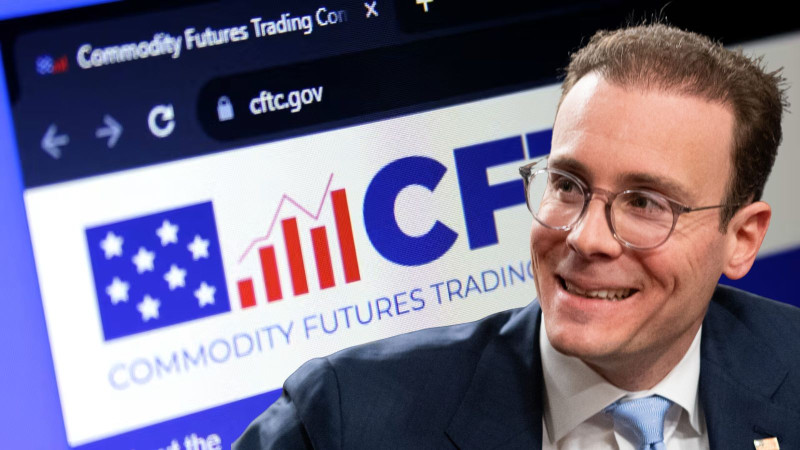
CFTC Launches Future-Proof Initiative, Signaling Shift in U.S. Crypto Regulation

When Michael Selig stepped into the role of CFTC chair late last year, the crypto industry was already expecting a change in tone. This week, it got confirmation.
On January 20, Selig announced the launch of the CFTC’s new “Future-Proof” initiative, a program designed to rethink how U.S. markets regulate crypto, digital assets, and other fast-moving financial technologies. The message was clear. The old approach is no longer enough.
Rather than relying on enforcement actions and retroactive interpretations of decades-old rules, the CFTC wants to build regulatory frameworks that actually reflect how these markets function today.
For an industry that has spent years navigating uncertainty, that alone is a notable shift.
A Chair With Deep Crypto Roots
Selig is not new to crypto regulation. Before taking the top job at the CFTC, he worked closely with digital asset policy at the SEC and spent time in private practice advising both traditional financial firms and crypto companies. He also previously clerked at the CFTC, giving him an unusually well-rounded view of how regulators and markets interact.
That background shows up in his public comments. Since taking office, Selig has repeatedly emphasized predictability, clarity, and rules that market participants can actually follow without guessing how an agency might interpret them years later.
The Future-Proof initiative is the clearest expression of that philosophy so far.
What “Future-Proof” Really Means
At its core, Future-Proof is about moving away from improvisation. The CFTC wants to stop forcing novel digital products into regulatory boxes built for traditional derivatives and commodities.
Instead, the agency plans to pursue purpose-built rules through formal notice-and-comment processes. That means more upfront guidance and fewer surprises delivered through enforcement actions.
Selig has described the goal as applying the minimum effective level of regulation. Enough oversight to protect markets and participants, but not so much that innovation is choked off before it has a chance to mature.
For crypto firms, that approach could offer something they have long asked for but rarely received, which is regulatory certainty.
Why the Industry Is Paying Attention
The timing matters. Crypto markets are more institutional than they were even a few years ago. Large asset managers, trading firms, and infrastructure providers want clearer rules before committing serious capital. Uncertainty around jurisdiction and compliance has been one of the biggest obstacles.
If the CFTC follows through, Future-Proof could help define how derivatives, spot markets, and emerging products like prediction markets are treated under U.S. law. That would make it easier for firms to build, invest, and operate without constantly second-guessing regulators.
At the same time, clarity cuts both ways. More defined rules could also raise the bar for compliance, especially for smaller startups and decentralized platforms that have operated in legal gray zones.

Tennessee Attempts to Block Prediction Markets
A Broader Political Shift
Selig’s initiative does not exist in isolation. It comes as lawmakers in Washington continue debating how to split crypto oversight between the CFTC and the SEC. Several proposed bills aim to draw clearer lines around digital commodities and spot market regulation, potentially expanding the CFTC’s role.
Future-Proof appears designed to fit neatly into that broader push. If Congress hands the agency more authority, the CFTC wants to be ready with frameworks that can scale.
Still, challenges remain. The commission currently lacks a full slate of confirmed commissioners, raising questions about how durable these policy shifts will be. Coordination with the SEC is another open issue, especially where token classifications blur the line between securities and commodities.
What Does The Future Hold?
For now, Future-Proof is more direction than destination. The real test will be how quickly the CFTC turns principles into actual rules, and whether those rules survive political change and legal scrutiny.
But the tone alone represents a meaningful break from the past. After years of regulation by enforcement and ambiguity, the agency is signaling that crypto markets are not a temporary problem to be contained, but a permanent part of the financial system that deserves thoughtful governance.
Whether that vision becomes reality will shape the next phase of U.S. crypto regulation, and potentially determine whether innovation stays onshore or continues looking elsewhere.
