#Defi
Bitget Hit by $387M Crypto Exploit

Crypto exchange Bitget has suffered a security breach that has reportedly drained over $380 million from the exchange and is on track to be the largest crypto exploit this year.
The exploit, which is said to have happened around 6:31 p.m. UTC on Sept. 24, involved transfers from some of the exchange’s hot wallets.

According to Gracy Chen, Bitget’s CEO, the hack occurred as a result of attackers compromising a critical backend system within the exchange’s wallet infrastructure, using this compromise to spoof transaction data and trigger the authorization process to move funds.
Although this hack now ranks as the largest crypto hack of the year, Bitget said that the incident fell within the coverage of its User Protection Fund, which currently holds more than $464 million, confirming that customers’ funds and deposits on the exchange were intact.
Bitget’s Response
Following the detection of the unauthorized withdrawals, the security team at the exchange swiftly activated an emergency response, temporarily suspending withdrawals while the team conducted a comprehensive security review of the incident.
The team also said it started working with third-party security experts Mandiant and SlowMist for a full investigation, while also providing updates about the incident, with the exchange’s CEO going on a live Q&A session on X about the incident.
Bitget also launched a bounty program, mobilizing exchanges and other security experts who can assist with freezing and recovering the stolen assets. So far, stablecoin issuers Tether and Circle have frozen roughly $318,000 worth of stablecoins in wallets said to be involved in the exploit, leaving a large majority of the funds still under the control of the attacker.
Bitget’s exploit is coming at a time when Evercrest Technologies, the company behind liquid staking protocol KelpDAO, is suing LayerZero for its alleged negligence that led to attackers exploiting the protocol for $292 million in April of this year.
According to a lawsuit filed against the protocol and its CEO, KelpDAO alleges that LayerZero reviewed and endorsed in writing its single verifier (1-of-1 DVN) cross-chain bridge infrastructure, which was eventually used by attackers to exploit the protocol.
ZetaChain to Shut Down Layer-1 Network, Migrate to Solana

ZetaChain will shut down its Layer 1 blockchain network and migrate to Solana after receiving almost unanimous approval in a governance vote.
The governance portal for the vote, which closed on Sunday at 14:58:18 UTC, recorded 99.4% of token holders voting in favour, while 0.3% each voted in opposition and abstained. Participation stood at 58%, exceeding the 40% quorum.

Stating the reasons for the ZetaChain to Solana migration, the team, in a recent blog post, gave a number of reasons, including the privacy features of the Solana blockchain and the infrastructure that Solana has been building for private AI.
According to the ZetaChain team, the subsecond and subcent finality features of the Solana blockchain, including its transaction confirmation time of 400 milliseconds and its one tenth of a cent fee, make it possible for AI agents to perform at scale.
In a test, the team claimed that the Solana blockchain handled more than 100,000 transactions per second, a result the team says is ideal for agents that are being built to execute transactions at machine speed.
Following the completion of a second governance proposal and the subsequent migration to the Solana network, the native ZETA token will be converted 1:1 to the Solana SPL ZETA, which will continue to be used to access Anuma, ZetaChain’s privacy AI platform.
About ZetaChain
Founded in 2021, ZetaChain is a Layer 1 blockchain network that was built to serve as an interoperability layer that connects blockchains without the need for traditional bridges.
Prior to its migration plans, the ZetaChain team had raised $27 million and processed hundreds of millions of transactions while onboarding millions of users and wallets.
However, the team made a strategic shift to AI this year with its first consumer multimodal AI app, which lets users carry one encrypted, user-controlled memory across dozens of AI models, including Claude, GPT, Gemini, and Grok.
With accessibility tied to the ZETA token, Anuma has grown to more than 300,000 users since its launch in February.
S&P Global to Acquire Blockchain Security Firm OpenZeppelin

S&P Global, the leading financial information services company, has agreed to acquire blockchain security company OpenZeppelin for an amount that has yet to be disclosed.
According to an S&P press release, the acquisition is aimed at complementing the company’s global risk assessment and ecosystem development capabilities in the digital asset market.
The deal will also enable S&P Global to create the next generation of on chain security assessments and benchmarks while delivering essential intelligence, especially as the capital market moves on chain.

"Our digital assets strategy centers on bringing trusted data, benchmarks and transparent risk assessment to markets as they move on chain," said Yann Le Pallec, President of S&P Global Ratings.
"As digital assets and tokenized markets continue to mature, OpenZeppelin's technology and expertise will complement our smart contract and on-chain technology risk assessment capabilities, giving traditional financial institutions and DeFi native companies alike the confidence to build and transact in this new environment."
Although the terms of the transaction have yet to be disclosed and the deal remains subject to closing conditions, OpenZeppelin will continue to operate under the OpenZeppelin name, with its CEO, Demian Brener, leading the company.
About OpenZeppelin
Founded in 2015, OpenZeppelin is a leading blockchain security firm that promotes secure development practices for teams aiming to build safely and securely on-chain.
Prior to this acquisition deal with S&P Global, OpenZeppelin had achieved several milestones, including launching OpenZeppelin Contracts, the first major open-source smart contracts library that eventually became the de facto industry standard for secure smart contracts.
The firm also pioneered professional smart contract security audits, which audited over $37 trillion in cumulative value, while also conducting over 900 security audits that identified more than 10,000 vulnerabilities.
OpenZeppelin powers 9 of the top 10 stablecoins, including Circle USDC, Ripple RLUSD, PayPal USD (PYUSD), Ethena USDe, BitGo USD1, and 10 of the top 10 tokenized funds, including BlackRock BUIDL, Centrifuge Anemoy JTRSY, Circle USYC, and Ondo OUSG and USDY.
Bitwise Launches Tokenized U.S. Stock Portfolios for Non-U.S. Investors

Bitwise Asset Management, the global crypto asset manager, has launched an automated token portfolio (ATP) that allows non U.S. investors to align their tokenized stock portfolios with Bitwise’s published model portfolios.
The portfolio, developed in partnership with Coinbase and Glider, allows investors to maintain full custody of their portfolio assets, eliminating the need to constantly transfer their assets to a pooled vehicle or place them in the hands of a fund sponsor.
"For over a century, getting a professional model meant handing your assets to a fund. ATPs mean you can keep the assets in your own wallet, and the model comes to you," said Matt Hougan, CIO of Bitwise. "ATPs unlock a new way for people to access thematic exposures more quickly and precisely than many traditional structures. We're just scratching the surface."
Since the stocks will remain in users’ wallets under their control, investors will be able to use them for other yield bearing opportunities, including lending or borrowing against them through DeFi protocols. However, investors will be responsible for any associated risks.
According to Bitwise, the tokenized portfolio will be rolled out in the coming weeks and will provide investors with broad exposure to a variety of stocks, which will be categorized into three distinct portfolios.
These include the Mag7X ATP, which provides exposure to the seven largest U.S. technology companies, and the Robotics and AI Leaders ATP, which will provide exposure to leading AI and robotics companies.
Bitwise’s launch of its automated tokenized portfolio comes at a time when crypto exchange Coinbase has also launched tokenized stocks of Nvidia, Apple, Meta, and Alphabet on Base. The tokenized stocks, which are supported by about 50 protocols, including Aave, Morpho, and Euler, will only be made available to eligible users outside the United States.
Zapper Shuts Down After 7 Years

Zapper, the popular DeFi dashboard and portfolio tracker, will wind down its operations after about seven years in the crypto industry.
"After close to seven years building Zapper, I regret to announce that Zapper will be winding down," said Seb Audet, co-founder and CEO. "We evaluated a number of different options, pursued some to the fullest extent possible, and came to the realization that an orderly wind down is the best course of action."
Before its decision to shut down, Zapper allowed users to track and visualize assets, liabilities, NFTs, and DeFi positions, including staking, liquidity pools, and loans, across multiple blockchains in real time. According to Audet, Zapper served more than 2 million monthly users and processed more than $13 billion in peak transaction volume.
Zapper's shutdown will be completed on August 3, with the team discontinuing all of its services, including zapper.xyz, its mobile apps, and its API services. The team also said it will send an email to existing API users to help with the transition.
Zapper's decision to shut down comes shortly after crypto exchange AscendEX wrapped up its operations, citing regulatory pressure and its failure to obtain authorization under the European Union's Markets in Crypto Assets, or MiCA, regulation, which fully took effect on July 1, 2026.
The AscendEX team also cited financial and operational challenges, stating that users will no longer be able to open accounts, deposit assets, trade, swap, stake, lend, or participate in referral or promotional campaigns. Account access will remain available only for limited offboarding purposes.
The shutdowns of Zapper and AscendEX come amid a broader wave of closures across the crypto industry. Since the start of the year, approximately 70 to 75 crypto projects and firms have either shut down or filed for bankruptcy.
Last month, blockchain protocol Radiant Capital shut down after failing to recover from an exploit it suffered months earlier. Tether also discontinued its Alloy platform, citing low user activity and weak market demand. Binance also shut down its NFT marketplace.
Summer Finance Hit by $6 Million Exploit

Summer Finance, a DeFi yield optimization protocol, was hit by an exploit that affected the protocol's USDC vaults, resulting in an estimated loss of roughly $6 million.
The exploit was confirmed by several blockchain security firms, including Blockaid, Cyvers, and CertiK. According to Cyvers, the attack appears to have been caused by the exploitation of a shared accounting vulnerability. The stolen funds were eventually swapped for the DAI stablecoin and transferred to the attacker's wallet.
Although all vaults across the Lazy Summer Protocol were immediately paused after the exploit was confirmed, the team later released a post-mortem report detailing how the attack occurred, its scope and impact, the response actions taken, and ongoing fund recovery efforts.

Image credit: x.com
According to the post-mortem report, the exploit targeted two Lazy Summer Protocol USDC vaults on the Ethereum mainnet. The attack, which is believed to have been planned over a period of about 3 months, was executed using a $65 million flash loan. Of that amount, approximately $64.8 million was deposited into Summer's vaults.
The attacker then deposited Varlamore USDC (vgUSDC) Growth tokens, which were essentially worthless, into the vulnerable Silo Ark vault, which had been partially shut down. Because the vault's accounting logic incorrectly treated the fake vgUSDC tokens as legitimate assets with real value, the attacker was able to withdraw genuine funds from the protocol.
In response, the Summer Finance team took several measures to contain the impact, including pausing vaults across the Ethereum, Base, Arbitrum, and Sonic networks. The team has also launched an investigation and begun tracing the stolen funds.
The Summer Finance exploit occurred around the same time that the BonkDAO treasury was drained of approximately $20 million. In that incident, the attacker reportedly purchased $4.4 million worth of BONK tokens, allowing them to meet the DAO's low quorum threshold. The attacker then passed a malicious governance proposal, BIP 76, which automatically transferred approximately $20 million from the treasury.
World Prediction Market Launches in Phantom Wallet

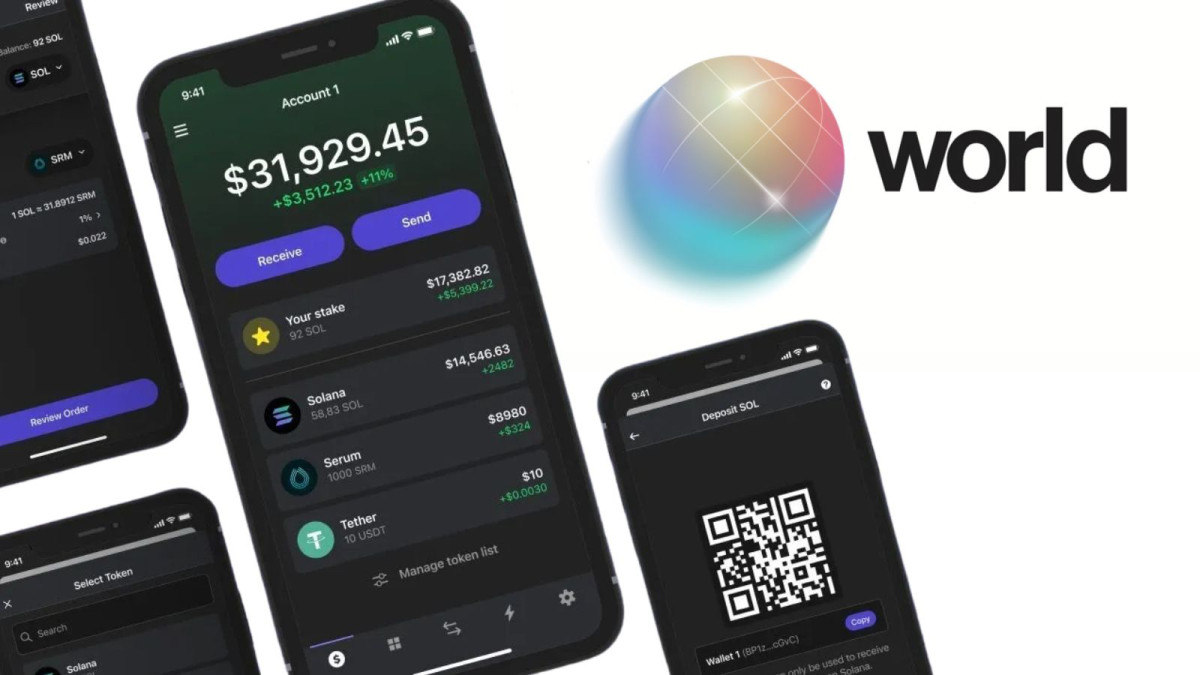
World, a fully on-chain, Solana native prediction market powered by Chainlink that aims to compete with Kalshi and Polymarket, has launched on Phantom Wallet.

Image credit: x.com
According to the team, the World prediction market will allow users to predict outcomes on crypto price movements and the ongoing 2026 FIFA Men's World Cup. Additional markets across sports, geopolitics, and macroeconomics will be added in the coming weeks.
"Prediction markets are one of the most powerful applications you can build on a high-performance blockchain," said Pedro Miranda, Head of Consumer at the Solana Foundation. "World is designed to show what Solana makes possible: real-time markets, on-chain settlement, and a user experience that meets people where they are."
Unlike most prediction markets that require users to interact with centralized infrastructure, World is designed to operate entirely on-chain. Every market, every position, and every settlement happens on-chain; as such, users do not have to move their funds to any custodial or centralized entity, as they can interact directly with Solana liquidity.
The platform uses $CASH as its settlement stablecoin. Since it’s launched directly within the Phantom Wallet, World will be available to more than 20 million Phantom Wallet users. It is also important to note that this World project is entirely different from Sam Altman's World. This World is a prediction market project, while Sam Altman's World is an identity project.
World's launch comes at a time when prediction markets are gaining significant traction, especially since the start of the 2026 FIFA Men's World Cup. Since early June, prediction market platforms, including Kalshi and Polymarket, have seen inflows of more than $3.8 billion.
Despite regulatory challenges in some jurisdictions, prediction market companies continue to grow and expand. Kalshi and Polymarket have both recently secured substantial funding from investors. Kalshi recently raised funding at a $22 billion valuation, while Polymarket raised $600 million at a $15 billion valuation and is reportedly in talks to raise an additional $400 million.
Robinhood Launches Mainnet Blockchain

Robinhood Chain, the mainnet blockchain of Robinhood Markets Inc., is now live after about 5 months of running its public testnet.
The mainnet chain, unveiled at the recent "Robinhood Presents: The World is Flat" event at the Old Royal Naval College in London, is built on the Arbitrum blockchain and aims to bridge the gap between traditional and decentralized finance.
“Decentralized finance unlocks possibilities beyond what traditional finance can offer, but historically, it has required technical expertise to navigate,” said Johann Kerbrat, SVP and General Manager of Crypto and International at Robinhood.
“We’re bringing the best of traditional finance and DeFi together, and in doing so, expanding financial ownership to every corner of the globe.”
According to the Robinhood team, Uniswap will serve as the chain's primary public liquidity protocol and will deploy a dedicated Automated Market Maker (AMM), while decentralized trading firm Pleiades will also deploy a proprietary AMM and serve as the chain's primary proprietary trading venue. The chain also features fast block times and a permissionless environment where builders can innovate seamlessly.
Other Product Launches
The Robinhood team also launched new stock tokens that allow eligible users in more than 120 countries to trade directly 24/7 on the Robinhood Chain. Users will be able to trade spot tokens through decentralized exchanges such as Uniswap, Lighter, and 1Inch. The first set of these stock tokens, known as Classic Stock Tokens, will be available to European users through the Robinhood app.
Robinhood Earn, a product that allows users to lend their Global Dollar (USDG) stablecoin at an estimated annual percentage yield (APY) of 7%, was also rolled out. This lending infrastructure is powered by Morpho Protocol.
The launch of the Robinhood Chain comes shortly after Robinhood trimmed its workforce by 10% last month, a move aimed at achieving greater impact with a leaner team. Following its recent entry into Canada and Singapore, Robinhood has also revealed plans to enter the UK market. Robinhood currently serves 28 million users across 38 countries and three continents.
Morpho Raises $175M to Expand DeFi Lending Network

Morpho, a leading decentralized finance lending protocol, has raised $175 million in a funding round led by Paradigm, a16z crypto, and Ribbit Capital. Other firms involved in the round include Apollo Funds, Circle Ventures, VanEck, Ledger Cathay, Variant, Wintermute Ventures, Prelude, IOSG, HashKey, Mirana, NJJ Capital, SBI Group, Bpifrance, and Bam Azizi.

With the funds raised, Morpho aims to further deepen its technical and commercial integrations with strategic partners and continue its mission of developing and strengthening the on-chain infrastructure businesses need to build programmable credit products.
“The true value of finance has always been held back by outdated infrastructure, fragmented systems, and extractive intermediaries,” says Paul Frambot, co-founder of Morpho. “We started Morpho to change that. We’re building the open credit network for the world, connecting those with excess capital to those who need financing globally.”
About Morpho
Morpho is a leading decentralized, permissionless lending protocol operating across Ethereum, Base, and other EVM-compatible blockchain networks. Launched in 2021, Morpho aims to efficiently connect lenders and borrowers globally through its decentralized credit network.
Morpho claims to have facilitated more than $11 billion in deposits since its launch. Its decentralized lending platform is currently used by several institutional clients, including Bitwise, Galaxy, Anchorage Digital, Ledger, Trezor, Bitpanda, Coinbase, Kraken, and Binance. In total, Morpho has raised more than $244 million, with a valuation of approximately $2 billion.
The State of DeFi Lending
On-chain lending remains one of the largest and most mature sectors in decentralized finance. According to data from DeFiLlama, the total value locked in DeFi lending across more than 600 protocols stands at approximately $35.5 billion to $35.8 billion, with Aave, Morpho, and SparkLend holding the largest market shares in the sector.
Institutional adoption in DeFi lending has also accelerated significantly, with blockchain protocols such as Morpho launching Morpho Blue and MetaMorpho vaults, which allow easier integration of the Morpho platform with other centralized finance and institutional platforms. SparkLend has also launched dedicated products targeting institutional clients.
Several other companies, including Gemini, Crypto.com, Fireblocks, Bitwise, J.P. Morgan, and VanEck, have also become involved in institutional DeFi lending through partnerships or the launch of DeFi lending products.
MetaMask Launches AI Agent Wallet for DeFi Trading

MetaMask, one of the major cryptocurrency wallets, has rolled out MetaMask Agent Wallet, a non-custodial wallet that enables AI agents to autonomously execute DeFi activities such as swaps, perpetuals trading, prediction markets, and liquidity provisioning.

According to the MetaMask team, the new wallet is designed for crypto native traders, automators, and builders who already understand on-chain workflows and want these tasks executed by agents. Because the wallet supports multiple agentic platforms, users are not required to adopt a single framework. Compatible platforms include OpenClaw, OpenAI Codex, Claude Code, Nous Research Hermes Agent, and Cursor.
"The next great expansion of the on-chain economy will not be driven by humans alone. Machine intelligences will increasingly transact, coordinate, and verify one another on crypto rails because crypto protocols are uniquely well designed for autonomous actors," Consensys co-founder Joseph Lubin said in a statement.
"Agents will manage real capital and make real financial decisions, and the infrastructure underneath has to be worthy of that. MetaMask Agent Wallet is the first agent wallet built with comprehensive full-stack security for that world, one where agents act with autonomy, security is mandatory, and the person behind the agent stays in control."
To maintain a high level of wallet security, MetaMask has implemented several security mechanisms, including a Trusted Execution Environment (TEE) that protects users' private keys.
The MetaMask team has also implemented Transaction Simulation, which allows users to preview the outcome of a transaction before it is sent on chain; Transaction Shield Threat Scanning, powered by Blockaid, which detects potential threats before execution; Smart Transactions MEV Protection, which scans transactions for potential Maximal Extractable Value (MEV) exploitation; and Transaction Protection Coverage, which provides coverage of up to $10,000 per month. These mechanisms are designed to ensure that AI agents operate within defined security constraints while maintaining a degree of autonomy.
The MetaMask Agent Wallet will initially be available to a limited group of traders and developers through an early access program. The program will provide access to two operating modes: Guard Mode, the default with stricter controls, and Beast Mode, with fewer restrictions.
The launch of the new self-custodial wallet comes shortly after MetaMask co-founder Dan Finlay announced his departure from the company, citing a desire to spend more time with his family. Consensys, MetaMask's parent company, also recently partnered with SG FORGE, a subsidiary of French banking group Société Générale, to integrate the USDCV stablecoin into the MetaMask wallet.
Solayer Launches Margin Trade Mainnet for Multi-Asset Perpetual Trading

Solayer, a hardware-accelerated Layer 1 blockchain and Solana’s first restaking platform, has launched the mainnet of Margin Trade, its new on-chain perpetual trading platform
Margin Trade is a Solana native, on-chain perpetuals trading platform that aims to bridge crypto native on chain trading with traditional finance (TradFi) instruments in a unified environment, making it possible for users to trade different asset classes, including cryptocurrencies, commodities such as silver and gold, and synthetic equity indices, all in one place.
By leveraging Solayer’s low-latency InfiniSVM infrastructure, Margin Trade delivers high-performance on-chain trading, enabling traders to benefit from real-time trade execution, high throughput, low fees, full transparency, and self-custody of their assets.
“Most perpetual futures trading infrastructure today remains siloed across separate markets and fragmented collateral account structures,” said Joshua Sum, Solayer’s Chief Product Officer.
“Margin Trade is designed to bring capital efficiency, real-time execution, and multi-asset exposure into a unified environment that feels closer to the vision of truly global financial markets than traditional trading platforms.”
Margin Trade is being developed by a team of professionals, including former traders from leading financial institutions and crypto exchanges such as Citadel and Kraken. The platform combines the speed and efficiency of centralized exchanges with the transparency, permissionless nature, and self-custody principles of decentralized finance (DeFi).
About Solayer
Solayer, also known as Solayer Labs, is a blockchain infrastructure company building a next-generation execution layer for real-time financial applications. Its goal is to create on-chain infrastructure that matches or exceeds the speed and performance of traditional financial systems.
Since its launch in 2023, the Solayer team has raised $12 million in funding. The company has also launched InfiniSVM, a hardware-accelerated Layer 1 blockchain built on the Solana Virtual Machine (SVM). According to the company, the network is capable of achieving up to 1,000,000 transactions per second and throughput exceeding 100 Gbps.
Margie Feng, Solayer’s Head of Marketing, is also scheduled to speak at the upcoming Rare Evo 2026 conference, which will be held from July 28 to July 31 this year.
Ethena Labs Partners with Anchorage for Institutional Lending

Decentralized finance protocol Ethena Labs has partnered with Anchorage Digital, a digital asset infrastructure provider, to expand its presence in institutional lending through Anchorage Digital's Atlas Collateral Management platform, which manages institutional-grade digital asset collateral.

As Ethena Labs seeks to deepen its involvement in institutional lending, the partnership will see Anchorage Digital act as collateral manager for Ethena's institutional lending activities. This arrangement allows Ethena to focus on deploying capital for loans, while Anchorage Digital manages and safeguards the associated collateral under its custody.
"Institutions want access to crypto native capital, but not at the cost of custody, controls, or operational rigor. Atlas Collateral Management lets protocols like Ethena Labs meet institutional borrowers where they are, combining the speed of DeFi with the standards institutions require," said Nathan McCauley, Co-Founder and CEO of Anchorage Digital.
Through the Atlas Collateral Management platform, Anchorage can monitor collateral and loan thresholds in real time, support margin processes, and execute rules-based actions when necessary. Because the collateral remains under Anchorage's custody and does not move on the chain, Ethena can access traditional institutional lending markets without requiring institutions to adopt blockchain native custody solutions or interact directly with DeFi smart contracts.
For borrowers, the collaboration provides access to crypto native credit while allowing them to maintain their existing custodial, compliance, and risk management frameworks. Atlas offers protocols a streamlined way to expand into institutional lending without building and maintaining their own collateral management, monitoring, and liquidation infrastructure.
The partnership between Ethena Labs and Anchorage Digital builds on an existing relationship. In July 2025, Ethena partnered with Anchorage Digital Bank, the first federally chartered crypto bank in the United States, to become the primary issuer of USDtb, Ethena Labs' institutional-grade stablecoin.
As part of its broader push into institutional lending, Ethena recently partnered with Solana-based DeFi platform Jupiter and Bitwise Asset Management to launch an institutional-grade USDe lending market on Jupiter's lending platform.
The partnership between Anchorage Digital and Ethena Labs comes at roughly the same time as Coinbase's investment in Ethena Labs, which included the purchase of an undisclosed amount of ENA tokens. Coinbase and Ethena are working together to launch on-chain savings and finance products for Coinbase's more than 100 million users.