#Robotics
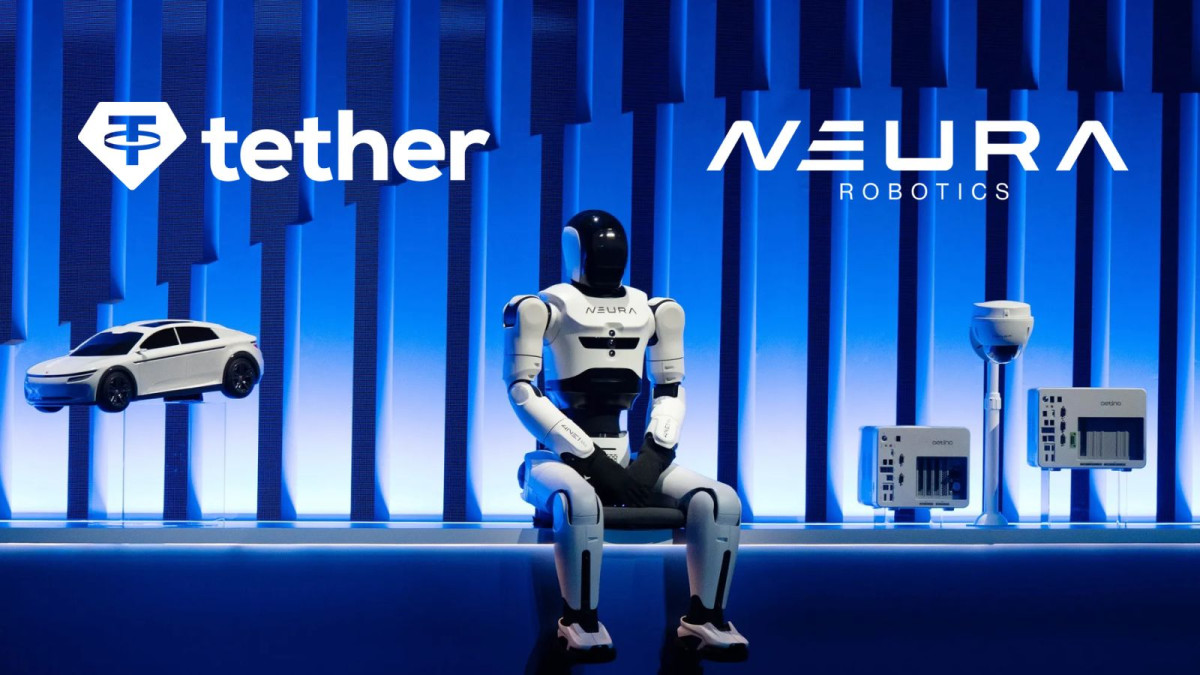
Tether Leads $1.4B Neura Robotics Funding Round

Stablecoin issuer Tether has announced its role as the lead investor in Neura Robotics’ recent Series C funding round. The funding round, which raised an estimated $1.4 billion, included Qualcomm, Amazon, and NVIDIA among other investors.

By investing in Neura Robotics, Tether is extending its influence beyond the digital asset industry, enabling it to deploy some of its core technologies into the humanoid robotics ecosystem. The partnership also enables the integration of Tether’s Wallet Development Kit and Tether’s self-custody wallets into the Neura Robotics system.
Through this integration, Tether provides a foundation that enables Neura Robotics to develop robotic systems that earn micropayments for tasks, transact with other robotic systems, and autonomously facilitate transactions and receive payments between machines without human intervention.
As part of its partnership, Neura Robotics will collaborate on testing, improving, and deploying Tether’s QuantumVerse Automatic Computer, known as QVAC, into its Neuraverse ecosystem. QVAC is Tether’s open-source, decentralized artificial intelligence platform that enables users to run and fine-tune large language models directly on their devices without relying on cloud servers.
“As robotics moves beyond scripted automation and into true autonomy, the infrastructure behind it must evolve as well,” said Paolo Ardoino, chief executive officer of Tether.
“Autonomous machines need the ability to process information locally, make decisions, and transact without relying on centralized intermediaries. QVAC brings that edge-first intelligence to the platform while WDK handles the secure financial layer. Together, they enable machines to execute tasks, account for outcomes, and operate independently. NEURA Robotics shares that vision, and this investment reflects our confidence in what autonomous robotics can become.”
About Neura Robotics
NEURA Robotics is a German-based high technology company that positions itself as a pioneer in cognitive robotics and Physical Artificial Intelligence. It develops artificially intelligent machines that can perceive (see, hear, feel), learn, adapt, and collaborate safely with humans.
So far, the company has developed some cognitive humanoid robots, including MAiRA, MiPA, and 4NE1. It has also developed Neuraverse, an open ecosystem and platform that enables robots to share skills, continuously learn, and expand their capabilities.
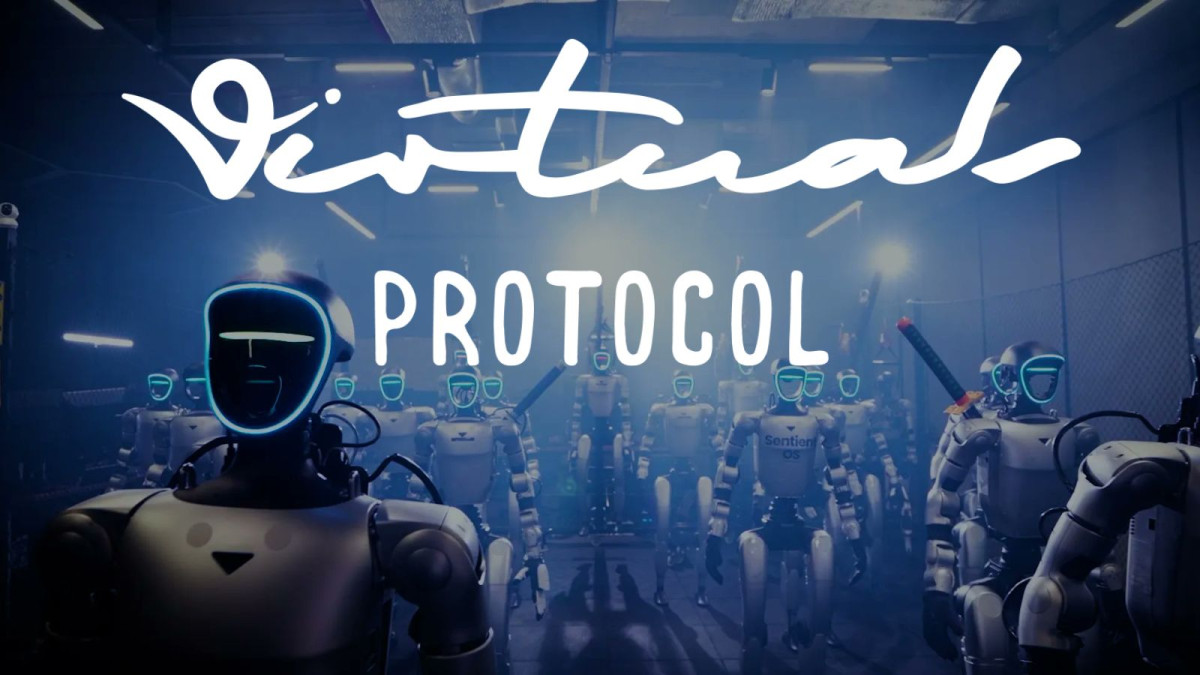
Virtuals Launches Eastworlds Robotics Platform

Virtuals Protocol just confirmed that Eastworlds is officially live as builders now get direct access to over 30 Unitree humanoids, low latency teleoperation systems, and pre-signed commercial pilots across retail, hospitality, and security. It's taking everything Virtuals already built for autonomous agents and pushing it into the physical world.
Back in February, Virtuals laid out Eastworld Labs as the physical counterpart to its ecosystem of over 18,000 tokenized agents. By early April the full picture came together, and now it's running as the co-founders were direct about what this means in practice: teams don't need to go raise a separate hardware round or sit around waiting on supply chains.
The three pillars of Eastworlds are to build fast, deploy fast, and learn fast. Build fast gives teams the funding, hardware, and talent needed to move from prototype to deployment. Deploy fast handles commercialization through a Robots-as-a-Service model, using teleoperation and hybrid systems to generate value in industries like retail, hospitality, and even entertainment. Learn fast is where their strategy is data compounding by collecting real-world data from every rollout to train more advanced models to eventually be autonomous.
Some examples of what they’re testing are HVAC technicians for system maintenance, hospital support staff, security guards, waste collection, hotel housekeeping, plumbing, and mechanical repairs.
Virtuals Protocol is the foundation by being permissionless and decentralized with $VIRTUAL as the base currency of the agentic economy, and Eastworlds sits under it with the team making its own calls on access, scheduling, and hardware allocation. The robotics launch connects the two layers as any team can create a token on the Virtuals launchpad with no review to signal a project, but on the facility side it's gated, with the Eastworlds team evaluating projects on use case, readiness, and slot availability, and teams need to have a $5 million FDV for seven consecutive days to be considered. Both sides are necessary because the protocol provides the economic layer and the facility provides the physical layer, and one without the other doesn't get you very far.
A humanoid robot 3D-printed an item, which was then collected by a rover robot and delivered without any human intervention in USDC on Base. Ant Group released its Anvita platform designed to empower AI agents to independently hold crypto assets, coordinate tasks, and execute real-time payments using stablecoins and x402.

None of this would be credible without the software foundation Virtuals spent years building. Its Agent Commerce Protocol, integrated with Coinbase's x402 standard on Base, already handles about 47.2% of all Base agentic transactions. Agents can’t access bank accounts so thousands of them are using these rails every day to pay for compute, APIs, and services without any human wallets or KYC friction involved.

The future of Virtuals is exciting because it is creating an agentic economy through a decentralized "society of AI agents" that doesn't just assist humans, but runs autonomously to generate real and measurable value with over 18,000 tokenized agents already deployed and Agentic GDP (aGDP) surpassing $479 million in early 2026. By connecting their agent framework to humanoid robots, it’s turning software-based agents into systems that can work alongside humans in factories and labs.