#Operation Economic Fury
U.S. Seizes $1B in Crypto From Iran

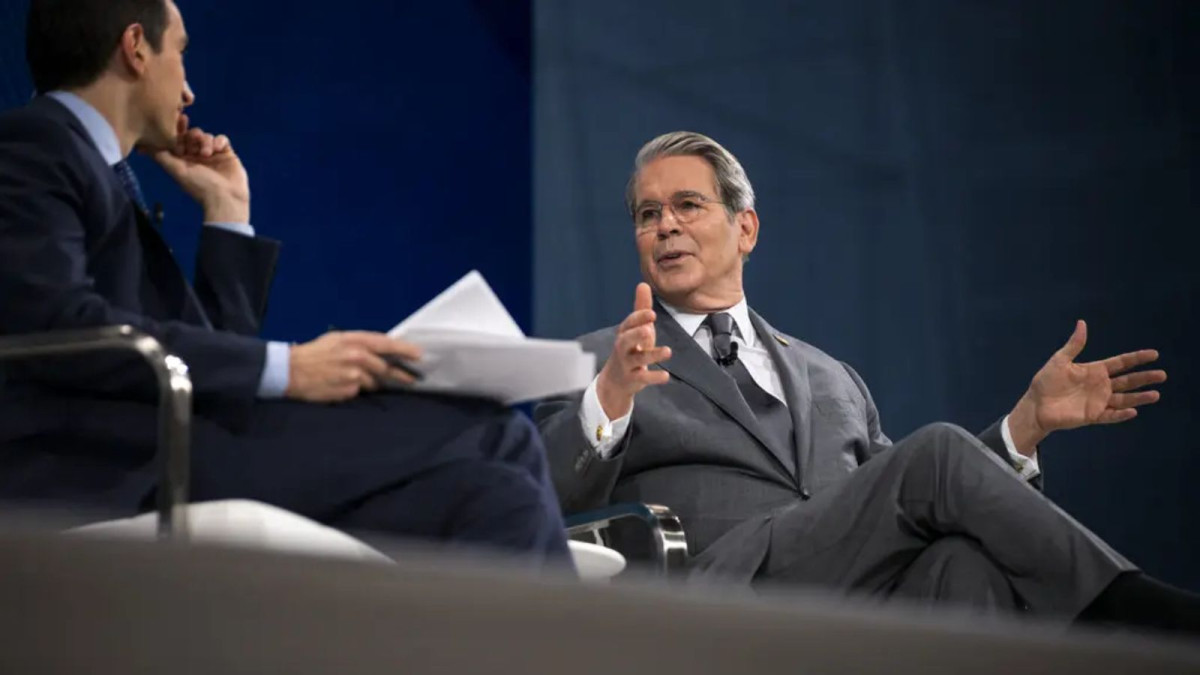
Speaking at the 2026 Reagan National Economic Forum in Simi Valley, California, Treasury Secretary Scott Bessent told Fox Business host Larry Kudlow that the United States has seized roughly $1 billion worth of cryptocurrency from entities linked to Iran's military since conflict broke out in February.
"We just outright grabbed the wallets," Bessent said. "Some of them may be typing in right now, and they might not have realized that their wallet had been grabbed."
Operation Economic Fury
The seizures Bessent referenced didn't happen overnight. They are the product of a campaign called Operation Economic Fury, a Treasury-led financial pressure initiative that kicked off around March 2025 under the Trump administration's direction. The goal, broadly, has been to cut off Iran's ability to move money internationally by targeting its revenue streams, weapons funding infrastructure, and sanctions evasion networks.
Before this campaign intensified, Iran had reportedly been routing $400 million to $500 million per month through crypto, primarily USDT on the Tron blockchain, to fund oil sales and Islamic Revolutionary Guard Corps operations. It's a shadow banking pipeline built on a stablecoin that, for various reasons, became the preferred dollar substitute in sanctioned economies around the world.
The Treasury's Office of Foreign Assets Control has since sanctioned more than 1,000 Iran-linked entities and wallet addresses. It has also gotten some notable help from the private sector.
Tether as a Sanctions Tool
On April 24, 2026, Tether froze $344 million in USDT across two Tron blockchain addresses tied to Iran's IRGC and the Central Bank of Iran. One wallet held approximately $213 million; the other, $131 million. Blockchain analytics firm Chainalysis had flagged the addresses based on on-chain patterns consistent with known Iranian military wallets, and the freeze was coordinated directly with U.S. law enforcement and updated OFAC designations published the same day.
USDT circulates heavily on Tron precisely because it became a preferred rail for cross-border transfers in regions where traditional dollar-based banking is unavailable or restricted. By working with Tether to freeze those wallets, the Treasury effectively turned the world's largest stablecoin into a live sanctions enforcement mechanism. That's a significant shift in how financial pressure campaigns work in the digital asset era.
The implications go beyond Iran. Tether's cooperation confirms, in practice, that USDT is not a neutral financial instrument. It is subject to the same policy levers as the dollar-based correspondent banking system it was often pitched as an alternative to.
Bitcoin, Hormuz, and the Limits of "Untraceable" Crypto
The IRGC's crypto ambitions have not been limited to stablecoins. In April, the Financial Times reported that Iran was planning to require oil tankers passing through the Strait of Hormuz to pay transit fees in Bitcoin. An Iranian official quoted at the time said the fees "can't be traced or confiscated due to sanctions." That quote aged poorly.
This month, Iran's state-affiliated Fars news agency reported that the IRGC promoted a Bitcoin-settled maritime insurance platform called Hormuz Safe. The scheme is a direct response to the ongoing blockade of the waterway, through which roughly 20% of the world's oil flows. With oil revenues choked and the regime under mounting financial pressure, digital assets have become one of the few remaining channels to keep funds moving.
Bessent did not directly link the $1 billion in seizures to the Bitcoin toll scheme. He also did not confirm whether Bitcoin itself was among the seized assets. Those details remain unspecified. What he did confirm is that the campaign is ongoing, that the seizures are substantial, and that some of those holding the funds may still be unaware.
Legal Fallout and Frozen Funds
The frozen Tether tranche is already the subject of a legal battle. A group of American terrorism victims, families connected to a 1997 Hamas bombing in Jerusalem, filed a motion in Manhattan federal court in mid-May seeking to have the $344 million transferred directly to their attorneys. Their unpaid court judgments against Iran total more than $2.4 billion across multiple terrorism-related cases. The plaintiffs served restraining notices on Tether just three days after the original freeze.
It is a legally complex situation. Tether froze the wallets by blacklisting the addresses at the smart contract level. Whether those funds can be redirected to private plaintiffs rather than held by the government is an open question, and one that federal courts will likely spend considerable time untangling.
Where This Leaves Iran, and Crypto
Bessent's comments Friday came as negotiations over a potential ceasefire deal were apparently inching forward. Reports citing Axios indicated that negotiators had reached a preliminary agreement pending Trump's approval. Whether that changes the pace of seizures is unclear.
What is clear is that Iran's crypto holdings are larger than the seized amount. Estimates put total Iranian digital asset holdings at roughly $7.7 billion, with about half attributed to the IRGC. The billion seized so far is meaningful pressure but not a knockout blow.
For the broader crypto market, the episode lands as a reminder that the "permissionless" framing of digital assets has always had limits. When the asset is a dollar-pegged stablecoin issued by a centralized company, and that company cooperates with the U.S. Treasury, the network rails may be decentralized but the kill switch is not. That reality is going to shape how governments, firms, and bad actors all think about crypto infrastructure for years to come.