#Bitcoin Debate
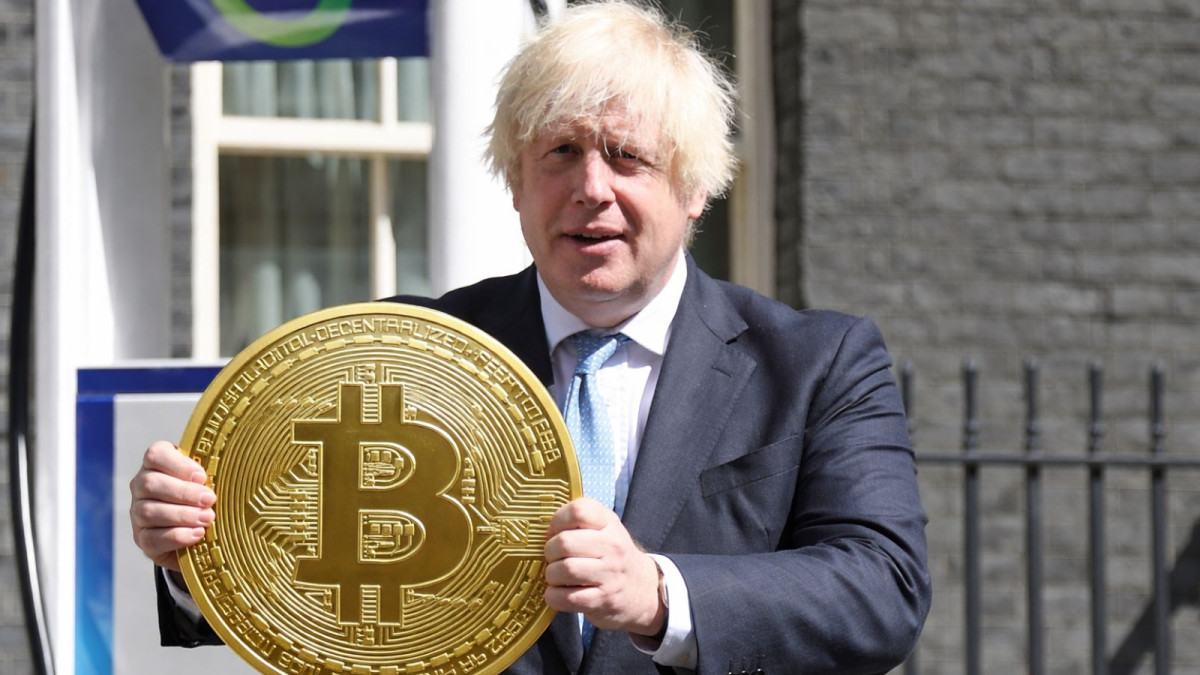
Former UK PM Boris Johnson Calls Bitcoin a Ponzi Scheme

Former U.K. Prime Minister Boris Johnson has called Bitcoin a Ponzi scheme, claiming it has far less value than gold and even Pokémon cards, which he said are more widely recognized.

In a recent Daily Mail article, former UK Prime Minister Boris Johnson called Bitcoin a Ponzi scheme with no real value, saying it relied on a “supply of new and credulous investors.” He also shared the story of a friend who lost about $26,000 in a crypto investment scam.
Johnson shared a story about a retired man from a village in Oxfordshire who initially handed over £500 (about $661) to someone who promised to double the money through Bitcoin investments. Johnson said the man went on to invest £20,000 (around $26,450) over three and a half years but ultimately received nothing in return.
The former prime minister also questioned the credibility of Bitcoin, calling it “a string of numbers stored in a series of computers.” “Who can we turn to if someone decrypts the crypto?” Johnson asked. “There’s no one except Nakamoto, who might be nothing more than Pikachu or Charmander.”
Since the pseudonymous creator of Bitcoin, Satoshi Nakamoto, lacked institutional backing, Johnson questioned Bitcoin’s credibility as a tradable asset. According to Johnson, Pokémon cards, which fascinated children thirty years ago and still do today, are a more tradable asset than Bitcoin.
“These curious little Japanese cartoon beasties hold the same fascination for five-year-olds as they did 30 years ago. The kids are obsessed with them. They boast and squabble about them,” Boris said.
“Even if you remain pretty impervious to the charm of Pikachu, you can just about see why a decades-old Pikachu card is still a tradeable asset,” he added.
The Crypto Community Responded
While many social media users have ridiculed Boris’ understanding of cryptocurrency, some have offered clearer explanations of why Bitcoin cannot be called a Ponzi scheme.
Michael Saylor, founder of MicroStrategy, also sought to clarify the issue.
“Bitcoin is not a Ponzi scheme. A Ponzi requires a central operator promising returns and paying early investors with funds from later ones,” Saylor wrote on X.
“Bitcoin has no issuer, no promoter, and no guaranteed return—just an open, decentralized monetary network driven by code and market demand,” he added.