#Derivatives trading
BitMEX Unlocks Safer Trading With Zodia Custody Deal

BitMEX, a derivatives-focused cryptocurrency exchange, has partnered with Zodia Custody, an institutional-first digital assets custody firm, to enable off-exchange trading and secure asset custody for BitMEX’s clients.
The partnership, announced this week, will see the integration of Zodia Custody’s Interchange platform into BitMEX. Interchange is an off-venue settlement solution that allows institutional and professional clients to trade directly on BitMEX while keeping their digital assets securely held off-exchange with Zodia Custody.

This partnership, according to Stephan Lutz, BitMEX CEO, draws on lessons learned from past market failures, especially the collapse of the FTX cryptocurrency exchange and the 1.4 billion dollar Bybit hack. These events, Lutz said, exposed the risks associated with unsegregated or compromised exchange-held funds and are key examples of how custody failures or security threats can put client funds at risk.
Through this partnership and the integration of the Interchange platform, BitMEX clients, especially institutional clients that often trade with large amounts of money, do not have to worry about the safety of their funds on the exchange in the event of a hack, as their digital assets are secured in Zodia Custody’s cold, segregated storage wallets.
The partnership also serves to bridge the gap between institutional-grade security and crypto-native liquidity, allowing BitMEX’s professional and institutional clients to access BitMEX’s deep crypto derivatives liquidity while eliminating the need to pre-fund the exchange before trading.
The Growing Need for Security on Crypto Exchanges
Security has been one of the major challenges faced by cryptocurrency platforms over the years. In 2025, over $4 billion was stolen from crypto platforms. This represents a 34 percent increase compared with 2024, when losses stood at $2.2 billion. Unfortunately, the recovery rate of stolen crypto funds remains very low, at less than 8 percent. This is even worse for centralized exchanges, which are often high value targets.
By integrating Zodia Custody’s interchange platform into its crypto infrastructure and allowing clients’ digital assets to be stored in Zodia Custody’s segregated vaults, BitMEX eliminates the trade offs institutional clients face when choosing between derivatives trading access and the safety of their assets. Since Zodia handles the custody of clients’ assets, BitMEX faces minimal damage in the event of a security breach or hack.

CFTC and DOJ Sue States Over Prediction Market Rules

The Commodity Futures Trading Commission (CFTC) and the U.S. Department of Justice (DOJ) have filed parallel federal lawsuits against the states of Illinois, Connecticut, and Arizona, as well as their gaming regulators, over the federal government’s right to regulate prediction markets.
The filings, which were made on Thursday, aim to prevent these states from restricting prediction market companies and enforcing state-level rules on them. The CFTC claims that it possesses exclusive regulatory authority over prediction markets and says it will defend participants from what it describes as overzealous state regulators.
With this move, the CFTC seeks to halt strict regulatory actions taken by these states’ authorities, including several cease-and-desist letters issued to prediction market companies such as Kalshi and Polymarket.
What These States Did
Earlier this year, the Arizona Attorney General filed criminal charges against KalshiEx LLC and Kalshi Trading LLC, accusing them of operating an illegal gambling business without a state license and violating state election wagering laws.
In December 2025, the Connecticut Department of Consumer Protection (DCP) issued cease-and-desist orders to multiple prediction market platforms, including Kalshi, Crypto.com, and Robinhood, accusing them of offering illegal sports event contracts and operating unlicensed online gambling operations within the state.
In April 2025, the Illinois Gaming Board (IGB) issued cease-and-desist letters to Kalshi, Polymarket, and Crypto.com, asserting that the sports event contracts offered by these platforms constituted illegal wagering under Illinois gambling law.
In the court filing against Illinois Governor JB Pritzker, Attorney General Kwame Raoul, and the Illinois Gaming Board, the U.S. commodities regulator argues that event contracts traded on approved exchanges qualify as “swaps” under federal law, not gambling. The regulator also contends that Congress granted it exclusive jurisdiction and that Illinois’s insistence on licensing requirements amounts to an attempt to block federally regulated exchanges from operating.

Image credit: courtlistener
CFTC Acting Chair Michael Selig reiterated in a post on X that the CFTC has exclusive authority to regulate prediction market activity in the United States, and confirmed that the lawsuit was jointly filed by his agency and the U.S. Department of Justice.

Crackdown on Prediction Market Intensifies
Prediction market companies have faced intense crackdowns and regulatory restrictions in the U.S. in recent times. There are currently over 20 nationwide lawsuits filed against prediction market companies by regulators from several states, including New York, Washington, Nevada, and Massachusetts.
Outside the U.S., there have also been several strict regulatory actions by authorities in multiple countries, with many regulators accusing prediction market companies, especially Polymarket and Kalshi, of operating unregistered gambling activities and offering illegal sports event contracts in their jurisdictions.
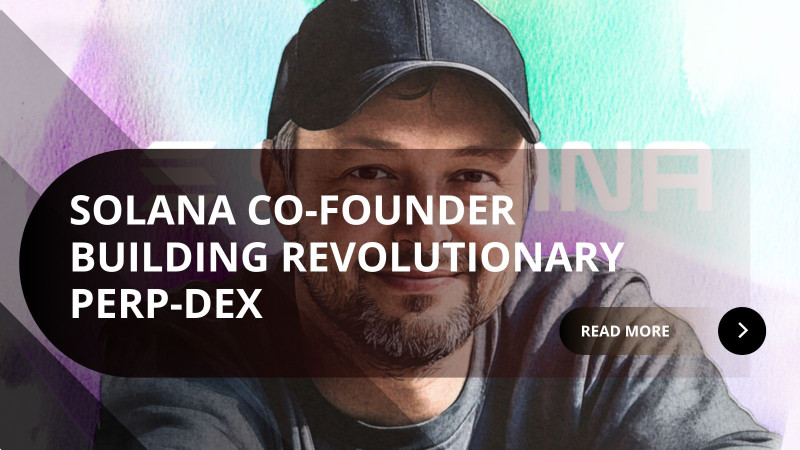
Solana Co-Founder Anatoly Yakovenko Reveals Percolator, a New Perp DEX Design
Anatoly Yakovenko, co-founder of Solana, has introduced a blueprint for a decentralized perpetual futures exchange called Percolator. The design was released publicly and is positioned as a potential Solana-native alternative to established platforms such as Hyperliquid and Aster.
A Solana-Native Exchange Concept
Percolator is described as an “implementation-ready” framework for a perpetual futures DEX that runs directly on Solana. Unlike centralized exchanges, it would rely on a sharded architecture to distribute trading activity across multiple “slabs.” Each slab acts as an independent engine, handling its own set of markets in parallel.
A router layer would manage collateral, portfolio margining, and the routing of trades between slabs. The goal is to achieve low-latency execution at scale, reduce congestion during high demand, and allow users to retain custody of their assets while trading.
Yakovenko has suggested that this design could enable centralized-exchange-level speeds within a fully decentralized structure. If implemented, it would represent a step forward in marrying the performance advantages of Solana with the growing demand for decentralized derivatives.
Addressing a Market Gap
Perpetual futures have become one of the most active areas of crypto trading, often accounting for a large share of overall derivatives volume. Platforms such as Hyperliquid and Aster have attracted significant activity, but Solana has not yet established a dominant native alternative in this space.
Percolator is seen as a way to change that. By offering a blueprint for a scalable and efficient perp DEX, the design could strengthen Solana’s DeFi ecosystem and attract more sophisticated traders. It would also broaden the network’s use cases beyond its reputation for high-speed transactions and meme coin speculation.
Open Development Approach
One notable feature of Yakovenko’s announcement was the decision to publish the design openly on GitHub. Rather than launching Percolator as a closed project, he invited developers to experiment, adapt, and build upon the code.
This open-source approach aligns with Solana’s broader strategy of encouraging community-driven innovation. It positions Percolator not just as a single potential product, but as a framework that could inspire multiple teams and projects across the ecosystem.
Challenges and Risks
Despite the enthusiasm, there are several challenges. Yakovenko himself has downplayed expectations, noting that the release was experimental and not necessarily a commitment to launching a production-ready DEX.
Regulatory pressure is another factor. Perpetual futures are leveraged products that have drawn scrutiny from regulators worldwide. Operating such markets in a decentralized structure could bring legal uncertainty, especially if they attract high volumes.
Technical risks also remain. Building and maintaining a sharded DEX with multiple trading engines introduces complexity, and it is unclear how the design would perform under sustained high-volume trading. Competition is also fierce, with other perp DEXs already establishing liquidity and user bases.
The Outlook for Solana
Even with these risks, Percolator underscores Solana’s ambition to expand into more advanced financial infrastructure. The release highlights the network’s strengths in throughput and efficiency, while showing a willingness to experiment in areas that are becoming increasingly important to crypto markets.
If the concept develops into a working platform, it could elevate Solana’s role in decentralized finance and attract a new wave of derivatives traders. Even if it does not, the blueprint has already sparked discussion about what is possible when high-performance blockchains are combined with open-source collaboration.
Conclusion
Percolator is not yet a product, but it is a statement of intent. It reflects Yakovenko’s ongoing focus on technical experimentation and Solana’s drive to compete at the highest levels of decentralized finance. Whether it emerges as a functioning exchange or remains a reference design, it signals a move toward more complex, scalable infrastructure that could shape the future of on-chain derivatives.