#Event Contracts
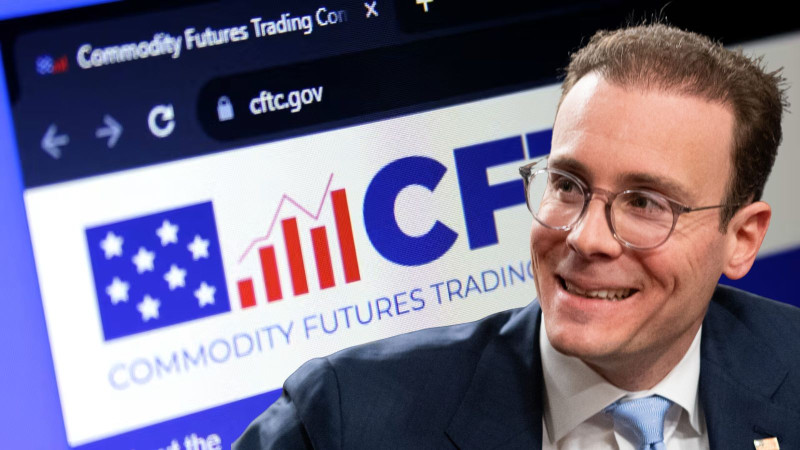
CFTC and DOJ Sue States Over Prediction Market Rules

The Commodity Futures Trading Commission (CFTC) and the U.S. Department of Justice (DOJ) have filed parallel federal lawsuits against the states of Illinois, Connecticut, and Arizona, as well as their gaming regulators, over the federal government’s right to regulate prediction markets.
The filings, which were made on Thursday, aim to prevent these states from restricting prediction market companies and enforcing state-level rules on them. The CFTC claims that it possesses exclusive regulatory authority over prediction markets and says it will defend participants from what it describes as overzealous state regulators.
With this move, the CFTC seeks to halt strict regulatory actions taken by these states’ authorities, including several cease-and-desist letters issued to prediction market companies such as Kalshi and Polymarket.
What These States Did
Earlier this year, the Arizona Attorney General filed criminal charges against KalshiEx LLC and Kalshi Trading LLC, accusing them of operating an illegal gambling business without a state license and violating state election wagering laws.
In December 2025, the Connecticut Department of Consumer Protection (DCP) issued cease-and-desist orders to multiple prediction market platforms, including Kalshi, Crypto.com, and Robinhood, accusing them of offering illegal sports event contracts and operating unlicensed online gambling operations within the state.
In April 2025, the Illinois Gaming Board (IGB) issued cease-and-desist letters to Kalshi, Polymarket, and Crypto.com, asserting that the sports event contracts offered by these platforms constituted illegal wagering under Illinois gambling law.
In the court filing against Illinois Governor JB Pritzker, Attorney General Kwame Raoul, and the Illinois Gaming Board, the U.S. commodities regulator argues that event contracts traded on approved exchanges qualify as “swaps” under federal law, not gambling. The regulator also contends that Congress granted it exclusive jurisdiction and that Illinois’s insistence on licensing requirements amounts to an attempt to block federally regulated exchanges from operating.

Image credit: courtlistener
CFTC Acting Chair Michael Selig reiterated in a post on X that the CFTC has exclusive authority to regulate prediction market activity in the United States, and confirmed that the lawsuit was jointly filed by his agency and the U.S. Department of Justice.

Crackdown on Prediction Market Intensifies
Prediction market companies have faced intense crackdowns and regulatory restrictions in the U.S. in recent times. There are currently over 20 nationwide lawsuits filed against prediction market companies by regulators from several states, including New York, Washington, Nevada, and Massachusetts.
Outside the U.S., there have also been several strict regulatory actions by authorities in multiple countries, with many regulators accusing prediction market companies, especially Polymarket and Kalshi, of operating unregistered gambling activities and offering illegal sports event contracts in their jurisdictions.