
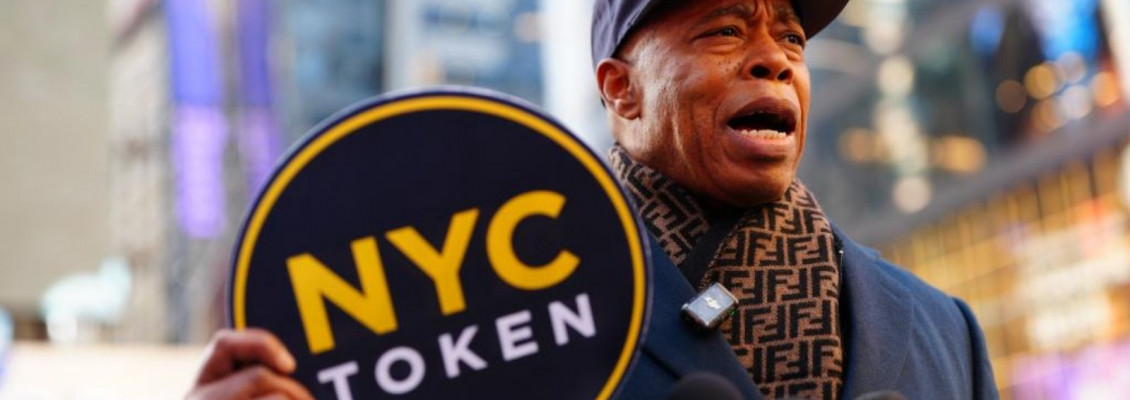
Eric Adams NYC Token Crash Fuels Rugging Claims
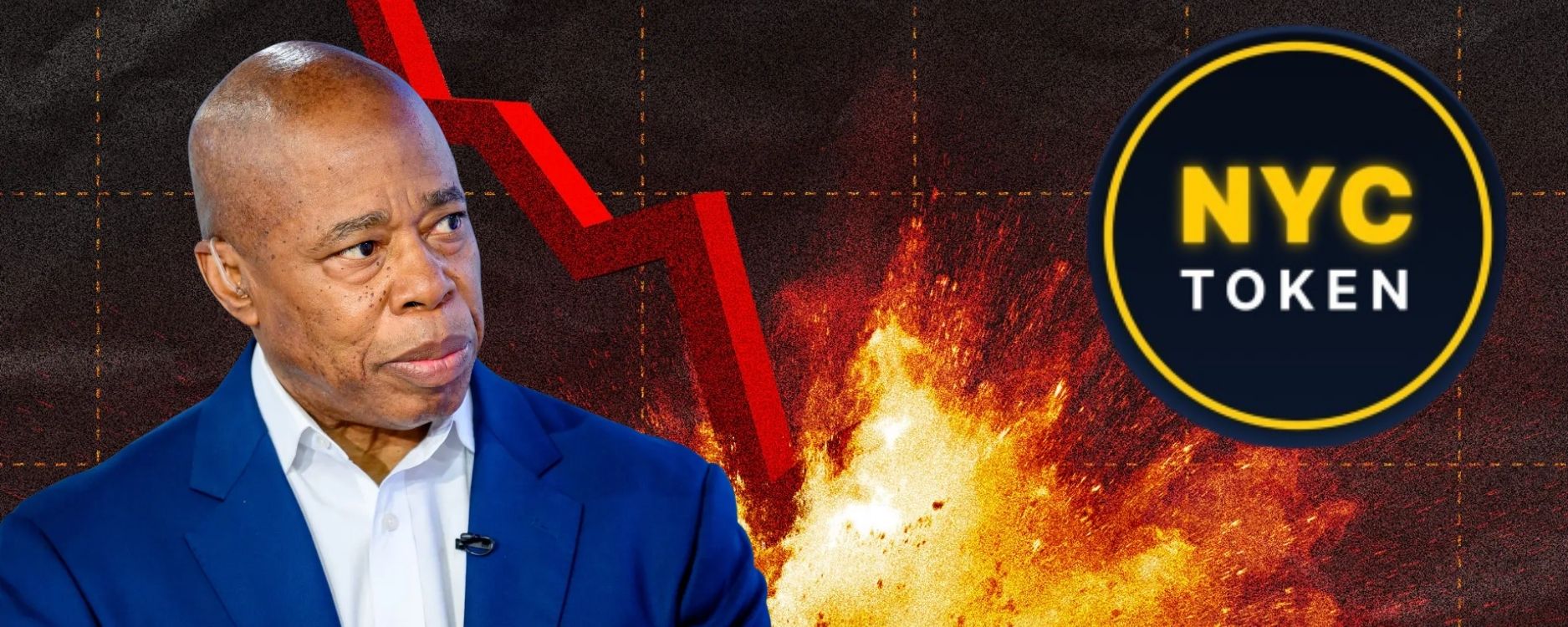
For a brief window, Eric Adams’ “NYC Token” looked like it might be the next Solana rocket. The price ripped higher almost immediately after launch, pushing the token to a paper valuation north of half a billion dollars.
Then it collapsed. Fast.
Within roughly 30 minutes of peaking, the token had lost more than 80 percent of its value. What looked like a breakout turned into a straight-down chart, and by the time most traders realized what was happening, liquidity was already disappearing.
This was not just volatility. The on-chain data tells a much messier story.
The Numbers Behind the Crash
At its peak, NYC Token briefly reached an estimated market capitalization of around $540 million. That number didn’t last long. As selling pressure hit, the price unraveled almost immediately, wiping out roughly $500 million in value in under an hour.
The speed matters. This was not a slow bleed or a multi-day unwind. It was a vertical move up followed by an even faster move down.
And the data shows why.
The Liquidity Move That Changed Everything
According to on-chain analysis highlighted in the original report, a wallet linked to the token’s deployer pulled roughly $2.5 million worth of USDC liquidity from the main trading pool right around the price peak.
That single action dramatically reduced the pool’s depth.
When liquidity is pulled like that, every sell becomes more painful. Slippage increases, prices gap lower, and panic compounds itself. That’s exactly what happened next.
Later, about $1.5 million in USDC was added back into the pool. But that still leaves roughly $900,000 that was never returned, at least not publicly accounted for.
To traders watching in real time, that sequence looked brutal. Liquidity out near the top, partial liquidity back after the damage was done, and silence on where the rest went.

The Supply Was Never Really Free
Then there’s the ownership data.
This was not a broadly distributed token. The top five wallets controlled roughly 92 percent of the total supply. The top ten held close to 99 percent. One wallet alone reportedly held about 70 percent.
Put simply, almost no one outside a very small group actually controlled meaningful supply.
That means price discovery was never organic. It also means that liquidity removal hit a market that was already artificially thin. Retail traders weren’t trading against thousands of independent holders. They were trading inside a structure dominated by a handful of wallets.
Once those wallets moved, the market had no choice but to follow.
Retail Traders Paid the Price
The data includes some ugly examples.
One wallet tracked on Solana bought the token five separate times, spending a total of about $745,000. Less than 20 minutes later, that same wallet sold everything for roughly $272,000.
That’s a loss of nearly $475,000 in minutes.
That pattern wasn’t unique. Many late buyers entered during the final leg of the pump, assuming liquidity would hold and momentum would continue. Instead, they became exit liquidity as soon as the pool thinned out.
This is how these collapses always look after the fact. Clean on-chain evidence, messy human behavior.
The Narrative Problem
Eric Adams positioned NYC Token as something more than a meme. The messaging leaned heavily on civic themes, education, and fighting antisemitism. It sounded closer to a mission than a gamble.
But the mechanics told a different story.
No clear public breakdown of wallet ownership. No transparent explanation of liquidity controls before launch. No smart-contract enforced locks that traders could independently verify in real time.
When the crash happened, explanations focused on market dynamics and demand rather than addressing the core issue. Liquidity was moved. Concentration was extreme. Retail traders were exposed.
In crypto, narratives don’t survive contact with block explorers.
Was It Rugged?
That depends on definitions, but the structure is hard to defend.
A token that crashes more than 80 percent within 30 minutes, after millions in liquidity are removed by a deployer-linked wallet, while one address holds the majority of supply, is going to be viewed as a rug pool by the market. Fair or not, that perception sticks.
You don’t need a hidden backdoor or malicious code. Control alone is enough.
The Bigger Takeaway
NYC Token will probably be forgotten in a few weeks. The losses won’t be.
This episode is another reminder that in crypto, structure matters more than slogans. Liquidity locks matter. Distribution matters. Transparency matters.
When those things are missing, hype fills the gap. And hype is fragile.
The data here wasn’t subtle. It was loud, fast, and unforgiving. Traders who ignored it paid the price. And the next memecoin with a famous name attached will almost certainly test the same limits again.
Because in this market, the charts always tell the truth eventually.
Stay Connected
You can stay up to date on all News, Events, and Marketing of Rare Network, including Rare Evo: America’s Premier Blockchain Conference, happening July 28th-31st, 2026 at The ARIA Resort & Casino, by following our socials on X, LinkedIn, and YouTube.