
An XRP Identity Shift, This New Path Matters More Than Most Investors Realize
For most of its life, XRP lived in the same category as every other altcoin. It was bought, sold, hyped, criticized, and tossed around inside speculative market cycles. Most retail traders treated it like a token that might pump if the right catalyst appeared.
But something interesting has been happening recently. A growing number of industry analysts are talking about XRP in a very different way. They are not framing it as a speculative crypto asset anymore. They are framing it as financial plumbing, the behind the scenes infrastructure that moves value quietly, efficiently, and at scale.
This shift is subtle, and because it is subtle, most retail investors are not noticing it. Yet it completely changes how XRP might be valued in the future.
Let’s walk through what is going on, what is driving this shift, the challenges that still stand in the way, and then wrap up with three clear scenarios for XRP’s future.
The Core Idea, XRP as “Plumbing” Instead of a Speculative Asset
When people talk about XRP as plumbing, they mean this. XRP is starting to be viewed less like a crypto that sits in your portfolio, and more like a tool that helps value move through global financial pipes.
Instead of asking, “What price will XRP reach if hype returns”, the question becomes, “How important could XRP become inside institutional money movement, tokenized asset markets, and regulated digital finance”.
That is a very different lens. Speculation focuses on supply and demand among traders. Plumbing focuses on efficiency, liquidity depth, regulatory clarity, and integration with financial institutions.
A New Path is Unfolding
A major driver behind XRP’s shifting narrative is the increasing regulatory clarity surrounding stablecoins. Stronger rules are giving properly backed, transparent, and compliant stablecoins a legitimate path into institutional finance. Ripple’s own USD stablecoin, RLUSD, fits neatly into that environment, and when it works alongside XRP as a liquidity bridge, it creates a practical two asset system. One provides stability, the other enables frictionless movement, and together they make the plumbing use case far more realistic.
At the same time, Ripple has been building out a full institutional infrastructure behind the scenes. This includes custody solutions, prime brokerage functions, compliance frameworks, settlement services, and liquidity routing technology. These are not the features retail investors typically pay attention to, but they are exactly the elements banks, funds, and corporate treasuries evaluate when assessing new financial rails.
Access is also expanding on the investment side. As XRP becomes available through regulated financial products and channels that institutions are allowed to use, it enters a different category entirely. Professional investors do not care about hype cycles. They care about liquidity depth, regulatory confidence, reliable execution, and scalable settlement infrastructure. XRP now aligns with more of those requirements than it did in previous cycles.
The broader movement toward tokenization is accelerating across the financial world. Tokenized money, tokenized treasuries, tokenized securities, and tokenized real world assets all require efficient liquidity pathways. Something has to connect the value moving between these systems, and XRP was designed to play that bridging role. While adoption is not guaranteed, the increasing focus on tokenization makes XRP relevant in a way that aligns directly with its original purpose.
The Roadblocks That Still Matter
Nothing here is guaranteed, and the plumbing thesis still comes with meaningful challenges that could slow or limit XRP’s role in global settlement. One major concern is that regulated stablecoins may eventually dominate digital settlement on their own. If the market consolidates around a few widely trusted stablecoins, liquidity could flow directly between them without needing a bridge asset, which would reduce the need for XRP entirely.
Institutional adoption is another hurdle. Ripple’s partnerships generate headlines, but what really matters is settlement volume, and banks do not update core systems quickly. Compliance teams move cautiously, legacy infrastructure is slow to change, and most institutions remain in testing phases rather than scaling real usage.
Token concentration also remains a sensitive topic. Ripple still holds a significant amount of XRP, and even though those holdings are managed responsibly, institutions pay attention to concentration risk. It introduces concerns about governance, supply dynamics, and long term stability.
On top of that, some analysts question the depth of XRP’s real world utility. Critics argue that internal liquidity mechanisms, even if efficient, may not significantly influence open market behavior. This skepticism exists whether it is justified or not, and it shapes how institutions evaluate XRP’s long term role.
Finally, timing matters. Even strong, well structured narratives can take years to unfold. The plumbing thesis represents a potential future, not a fully realized one, and market adoption may move slower than advocates hope.
What This Means for Valuation
A speculative token gets valued one way. A piece of financial infrastructure gets valued another way entirely.
If XRP becomes an institutional liquidity tool, then the important metrics shift to things like:
- Settlement volume and frequency
- Liquidity depth across corridors
- Institutional usage rates
- Role inside tokenized markets
- Interoperability with regulated stablecoins
This flips the model. Instead of XRP being valued for potential hype, it is valued for the amount of value that flows through it.
That could have very different implications for future pricing.
What Could This Mean For XRP Moving Forward?
1. The Base Case, Slow but Steady Infrastructure Adoption
In this outcome, XRP grows gradually.
Banks adopt tokenized settlement at a slow, practical pace. Ripple expands its partnerships in a methodical way, focusing on compliance, stablecoin integration, and regional corridors.
XRP’s price does not explode, but it does become more stable over time. Instead of hype cycles, it behaves more like an infrastructure asset, rising as volumes rise.
This is the most reasonable and likely path.
2. The Bull Case, XRP Becomes a Core Liquidity Layer for Tokenized Finance
This is the scenario where everything aligns.
Stablecoin regulation matures globally. Tokenized assets grow into a multi trillion dollar market. Banks begin shifting actual settlement activity, not just messaging, onto digital ledgers. Ripple’s infrastructure becomes a go to option for instant liquidity and cross border flow routing.
In this world, XRP volume surges, liquidity deepens, and the asset becomes foundational infrastructure rather than an investment bet. Price appreciation would be driven by real usage, not hype.
This is the dream scenario many XRP holders talk about. It is possible, but it requires several major shifts across finance to happen in the right order.
3. The Bear Case, Stablecoins Dominate and XRP’s Role Shrinks
In the bear scenario, regulated stablecoins become the default for nearly all digital settlement. Banks rely on tokenized fiat and tokenized treasuries, but bridge assets like XRP fail to gain traction. Liquidity routes directly between stablecoins, not through XRP.
Ripple still exists, still builds, and still offers services. But XRP’s role becomes smaller, and its market relevance relies mostly on niche corridors and internal Ripple usage.
Price remains range bound, and the narrative weakens over time.
The most important thing to know is this. XRP is undergoing an identity shift that most casual investors are not paying attention to.
It is moving from being treated like a speculative token to being viewed as a real piece of global financial infrastructure. That does not guarantee massive price action. It does not guarantee institutional adoption. But it does give XRP a much clearer and more mature path than it had a few years ago.
Whether this path becomes reality depends on regulation, stablecoin evolution, institutional behavior, and the growth of tokenized markets. But the narrative is stronger and more coherent than it has ever been.
Stay Connected
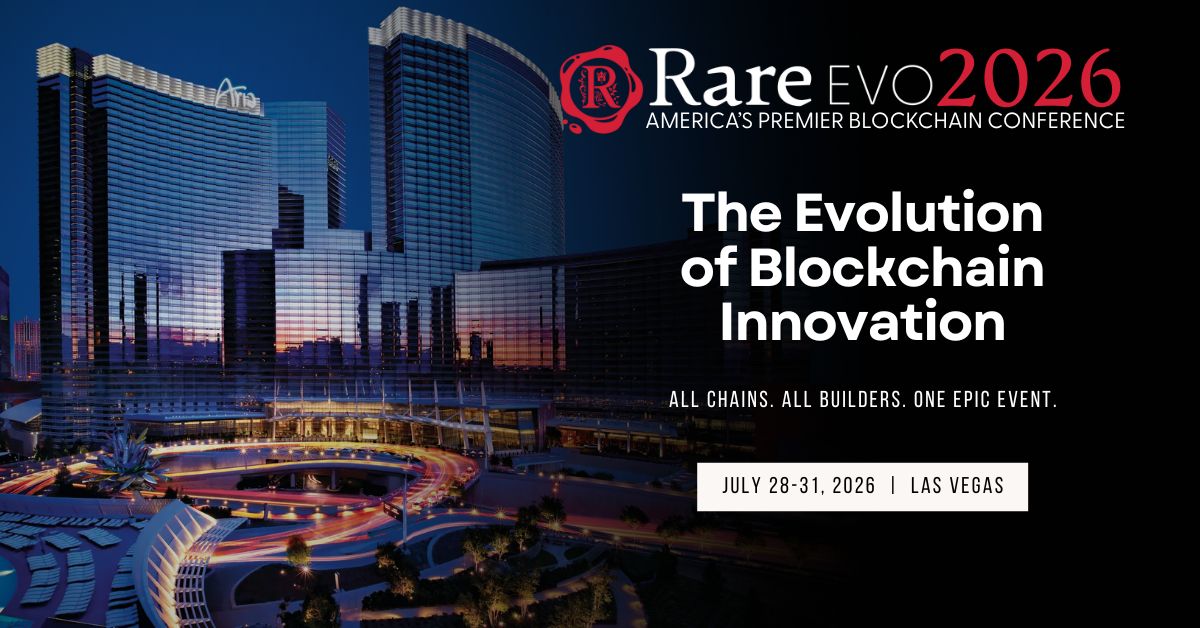
You can stay up to date on all News, Events, and Marketing of Rare Network, including Rare Evo: America’s Premier Blockchain Conference, happening July 28th-31st, 2026 at The ARIA Resort & Casino, by following our socials on X, LinkedIn, and YouTube.