#Aleo
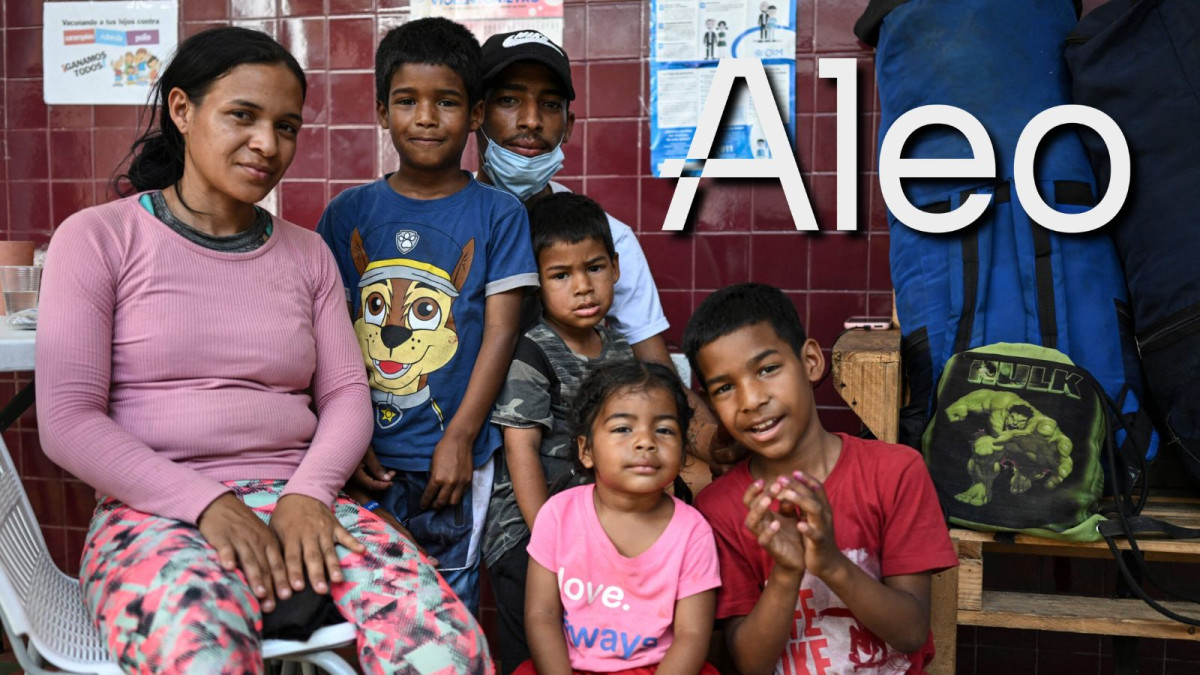
Aleo Pilots Zero-Knowledge Crypto Aid in Colombia

Aleo is revolutionizing zero-knowledge technology use-cases well beyond the whitepaper and it could help benefit millions. The privacy-focused Layer-1 blockchain announced this week that it has launched a pilot program in Colombia designed to deliver stablecoin aid to displaced communities without ever exposing their personal data. It is, by most measures, one of the more ambitious real-world tests of privacy-preserving blockchain technology to date.
The project was developed alongside Mercy Corps, market-making firm GSR and its affiliated Foundation GSR, and implementation partner Humanity Link. Together, they have built a system that runs on Aleo's programmable blockchain and distributes funds using USDCx, a privacy-enabled version of USDC developed in collaboration with Circle. The stablecoin launched on mainnet in January 2026, following a testnet rollout in late 2025.
Why Colombia, and Why Now
Colombia is not a random choice. Mercy Corps has delivered humanitarian assistance to more than 514,000 people in the country since 2019, focusing on Venezuelan refugees, Colombian returnees, and host communities stretched thin by years of conflict and economic strain. Over 30 percent of Colombia's population lacks sufficient income to cover basic needs like food and housing. In that context, the friction involved in traditional aid pipelines, identity registration, exposure of personal data, and the risk of retaliation that can follow, is not just inefficient. It can be dangerous.
That is the problem Aleo's system is designed to solve. Using zero-knowledge proofs, the network can verify whether someone is eligible to receive aid without revealing who they are. Beneficiaries register through WhatsApp and collect funds using a QR code. There is no crypto wallet setup, no public transaction history, and no permanent record of their identity tied to a blockchain ledger. For populations already navigating difficult circumstances, that distinction matters.
The Role of USDCx
Central to the Colombia pilot is USDCx, which Circle and Aleo positioned from the start as a stablecoin built for real-world institutional use. Unlike privacy coins such as Zcash or Monero, which offer anonymity but carry significant volatility and regulatory risk, USDCx is pegged to the US dollar and includes what Circle calls a configurable compliance layer. That means every transaction carries a compliance record accessible to Circle in response to legitimate law enforcement requests, while remaining opaque to outside observers.
Aleo co-founder Howard Wu described the broader design logic plainly: transparent blockchains force users to leak financial data every time they transact. USDCx is meant to offer a middle path, the settlement speed and global reach of blockchain infrastructure, with the confidentiality that institutions and vulnerable populations alike tend to require.
Pilots Expanding Beyond Colombia
The Colombia rollout is not moving along by itself. A separate pilot is already underway with the Danish Refugee Council, and a second deployment is expected shortly through GOAL Global, an international humanitarian response agency. Both expand the geographic and organizational footprint of what Aleo and its partners are positioning as a scalable, privacy-first model for humanitarian cash transfers.
This is a big moment for the aid sector. Blockchain-based cash transfer programs have been discussed for years, but uptake has remained slow, partly because public ledgers create their own transparency problems. Donor organizations and beneficiaries both have legitimate reasons to want transaction data shielded. Aleo's argument is that zero-knowledge infrastructure finally makes that possible without sacrificing auditability or regulatory compliance.
ZK Tech Moves Off the Whitepaper
Aleo is a Layer-1 blockchain built with privacy as a native feature rather than a bolt-on. Its architecture separates off-chain computation, where zero-knowledge proofs are generated, from on-chain verification, where validators confirm correctness without seeing the underlying data. The network's native programming language, Leo, is designed to abstract away the cryptographic complexity for developers building privacy-preserving applications.
The project raised a $200 million Series B in 2022 at a $1.45 billion valuation, backed by SoftBank's Vision Fund 2, Andreessen Horowitz, and others. It launched its mainnet in September 2024. The Colombia pilot represents something of a maturation moment: a transition from infrastructure buildout toward use cases that can be pointed to in the real world.
Whether this particular deployment scales is an open question. But the architecture being tested here, private stablecoin transfers routed through a zero-knowledge network, accessed via smartphone messaging apps, targeted at populations with no existing crypto infrastructure, is an unusual combination. If it holds up in Colombia, the implications stretch well beyond the country's borders and could successfully benefit under-represented communities across the globe.