#Singapore
Singapore Commits $173 Million to Boost Fintech Innovation Over Next Three Years

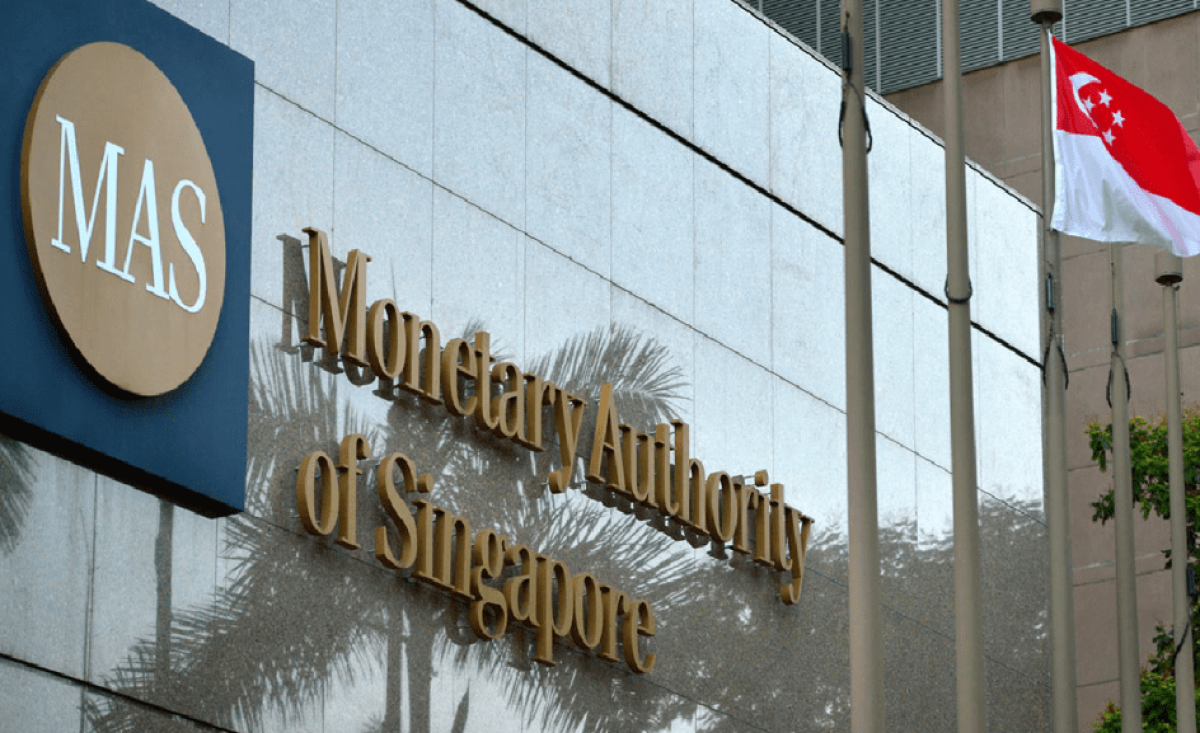
The Monetary Authority of Singapore (MAS) has announced a S$220 million, roughly $173 million, fund aimed at supporting the country’s fintech ecosystem.
The fund, which is part of Singapore’s renewed Financial Sector Technology and Innovation Scheme (FSTI 4.0), aims to strengthen the country’s fintech sector and accelerate innovation and technology adoption across its financial sector.
According to MAS, FSTI 4.0 is designed around four main goals: scaling innovation across Singapore, accelerating financial technology adoption, developing technology infrastructure to support innovation, and supporting talent development.
To support the implementation of FSTI 4.0, MAS said the scheme will be implemented across six tracks covering different areas, including institutional innovation, artificial intelligence adoption, platforms, and talent development.
Singapore has consistently ranked among the leading global fintech hubs. With more than 1,800 fintech companies, the country recorded approximately $2.3 billion in fintech investment in 2025.
Elsewhere in Southeast Asia, Vietnam’s new crypto penalty rules, officially known as Decree No. 284/2026/ND-CP, will take effect on September 1. The decree establishes administrative fines for violations of the country’s crypto asset regulations.
Some of the key provisions include fines of up to VND 200 million, roughly $7,700, for organizations and VND 100 million, roughly $3,800, for individuals who violate the country’s digital asset rules.
Providing crypto asset services or advertising such services without approval from Vietnam’s Ministry of Finance may attract a fine of up to VND 180 million to VND 200 million, roughly $7,000. Meanwhile, domestic investors who trade outside licensed platforms may face fines of VND 30 million to VND 50 million, roughly $1,100 to $1,900.

SBI Holdings Acquires Majority Stake in Coinhako

SBI Holdings, one of Japan's largest financial conglomerates, has completed the acquisition of a majority stake in Singapore-based crypto platform Coinhako, following approval from the Monetary Authority of Singapore (MAS).

Image credit: x.com
According to an SBI press statement, the acquisition of Coinhako represents a significant step in advancing its global digital asset strategy. Through the acquisition, SBI Holdings aims to leverage Coinhako's customer base, expertise, and regional network alongside its own financial services, technology, and global network.
"Our group aims to create a global corridor for digital assets by connecting exchanges around the world, enabling investors worldwide to make optimal investments without being hindered by national borders or currency barriers," said Yoshitaka Kitao, Chairman and President of SBI Holdings, Inc.
"Singapore, where regulations related to digital assets are ahead of the curve, is a crucial region in this regard, and we are very pleased that Coinhako, with its solid customer base and business know-how, has joined the SBI Group."
SBI Holdings' acquisition of a majority stake in Coinhako comes shortly after the company partnered with the Solana Foundation to launch Japan's first on-chain financial market, which it said is intended to seamlessly connect Japan with Southeast Asia.
About Coinhako
Launched in 2014, Coinhako is a Singapore-based cryptocurrency exchange often described as one of the longest-standing in the Asia-Pacific region. Its founders, Yusho Liu and Gerry Eng, built it with a simple goal: to make it easy for Asians, especially Singaporeans, to buy Bitcoin and other cryptocurrencies with local fiat currencies.
Since its launch, Coinhako has grown into one of the largest cryptocurrency exchanges in Singapore, serving nearly 400,000 users and processing more than $10 billion in crypto transactions over the past two years. Its assets under custody are reported to total around $1 billion to $1.1 billion, while its workforce has grown from a small team to several dozen employees.

Nium Partners With Coinbase to Enable Global USDC Payments

Singapore-based fintech company Nium has partnered with cryptocurrency exchange Coinbase to integrate the USDC stablecoin into its global payment network.
The integration, announced this week, leverages Coinbase’s custody, liquidity, and wallet infrastructure, allowing Nium’s clients and users to perform cross-border payments in USDC and settle transactions in either stablecoins or local currencies.

As Coinbase will provide the wallet infrastructure, Nium clients will be able to fund accounts in USDC within a Coinbase wallet embedded in the Nium platform. The USDC can then be converted to fiat currency by Coinbase and paid out through Nium, all within a single workflow on the platform.
Through this partnership, Nium will enable end-to-end stablecoin-to-fiat payment flows that allow users to send, receive, and convert stablecoins into fiat across more than 190 countries within a single platform.
Speaking about the partnership, Prajit Nanu, CEO of Nium, said it is aimed at providing clients with a more efficient way to move and manage money globally. He added that the collaboration improves capital efficiency while supporting a future in which stablecoins play a central role in Nium’s payment stack.
About Nium
Based in Singapore, Nium is a cross-border payments company that allows users, including retail and institutional clients, to perform cross-border remittances and transactions.
Apart from being a core traditional finance company, Nium has in the past made several pro-crypto moves, especially in the stablecoin space.
In March of this year, it launched a stablecoin card issuance platform that allows companies holding stablecoins to issue spending cards on both the Visa and Mastercard networks through a single API integration on its platform. To enable USDC settlements on its platform, Nium last year participated in Visa’s stablecoin settlement pilot, which eventually made it possible for the company to settle cross-border transactions using stablecoins across different supported blockchain networks.
Like Nium, several other Singapore-based traditional finance companies have taken pro-crypto steps in recent times, integrating blockchain technology and crypto support into their platforms. Notable among them is DBS Bank, Singapore’s largest bank, which launched the DBS Digital Exchange, a platform for asset tokenization, crypto trading, and custody.
Cryptocurrency exchanges, including Kraken, OKX, Binance, and Bybit, have also partnered with traditional finance institutions to help bridge the gap between traditional finance and decentralized finance.