#Series A

OpenFX Raises $94M to Scale Stablecoin FX Payments

OpenFX, a fintech infrastructure startup founded by Prabhakar Reddy, co-founder of crypto brokerage company FalconX, has raised $94 million to expand its stablecoin-based cross-border foreign exchange (FX) payment rails.
The Series A round, which took place in March, was led by Accel and Atomico, with other investors including Lightspeed Faction, M13, Northzone, and Pantera participating.

The $94 million raised is aimed at expanding OpenFX’s presence in Latin America. Despite the region being a challenging market to enter, OpenFX reported strong success during a test deployment in Mexico, Brazil, and Argentina.
“Within six weeks, LATAM became our highest-volume region. We had succeeded at scale where so many other players were still struggling with proof of concepts,” the company said.
The team attributes its success in the region to its ability to deliver liquidity globally, quickly, and reliably, as well as its deep understanding of what payment service providers (PSPs) and remittance providers require.
OpenFX also plans to expand into Southeast Asia. Despite the region having some of the world’s more developed payment systems, cross-border payments remain slow and fragmented. By building a deep liquidity infrastructure, OpenFX aims to address this issue and has said it will be launching in Singapore, Hong Kong, and the Philippines.
With these expansion plans underway, OpenFX will extend its presence beyond the United States, United Kingdom, the United Arab Emirates, and India, where it currently operates.
The Team’s Progress So Far
Since its launch in 2024, the OpenFx cross-border infrastructure has processed billions of dollars, with an annualized processing volume of $45 billion.
In its first month of operation, the team says it processed $500,000. Eight weeks later, that figure had grown to $500,000 per week. Three months after launch, it was processing $500,000 per day, and today it processes approximately $500,000 per minute, with 98% of transactions settling in under 60 minutes.
The team also says it has onboarded more than 100 global institutional clients to its platform, including fintechs, neobanks, remittance platforms, and payroll processors.
OpenFx has now raised a total of $117 million, including $23 million in 2025 in a funding round led by Accel.
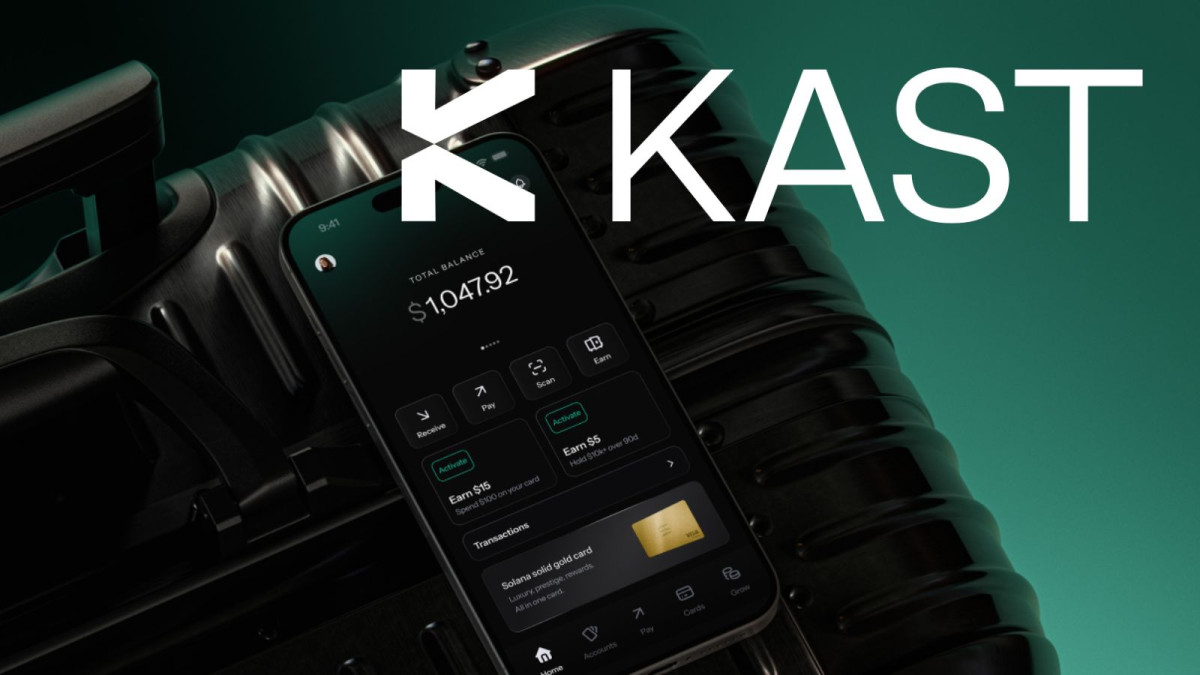
Stablecoin Payment Firm Kast Raises $80M in Funding Round

Kast, a stablecoin payments company, has raised $80 million in a Series A funding round co-led by QED Investors and Left Lane Capital, bringing its valuation to $600 million.
According to the team, the funding will be used to accelerate Kast’s global expansion across North America, Latin America, and the Middle East, as well as to expand the company’s workforce, licensing, and product development efforts.
What Kast is Building
Kast is a stablecoin-powered neobank founded in 2024 by Daniel Bertoli, an ex-partner at Quona Capital, and Raagulan Pathy, a former executive at Circle Internet Financial, the company behind the USD Coin (USDC) stablecoin.
To reduce the delays and high costs often associated with international remittances through traditional banking systems, Kast is building a blockchain-based platform that uses stablecoins as its settlement layer.
According to the team, “Our end game is clear: to become the leading neobank for the stablecoin economy, serving both users and businesses.”
To ensure that users and businesses of all sizes are catered to, Kast has built a platform that allows users to create digital dollar accounts. These accounts enable users to store dollars digitally, send money globally, and receive international payments. As a result, users do not need a U.S. bank account to hold dollars digitally.
Since its launch in 2024, Kast has achieved a number of impressive milestones, including:
- Reaching over 1 million users on its platform.
- Processing about $5 billion in transaction volume to date.
- Enabling users to send money to more than 190 countries.
This funding marks Kast’s second fundraising round, months after the company raised $10 million in December 2024 in a round led by HongShan Capital Group and Peak XV Partners.
The Surge of Stablecoins in Institutional Remittances
With a market cap of over $300 billion, stablecoins have seen a remarkable increase in institutional use for cross-border payments.
According to a stablecoin report, enterprise cross-border stablecoin transaction volume grew threefold year over year in 2025, with 25% of corporates now using stablecoins for supply-chain payments, particularly for trade settlement, treasury transfers, and gig-economy payouts.
This increased adoption is due to the very fast settlement times of stablecoins, usually less than 24 hours, a sharp contrast from traditional banking systems, which often take days.
Based on current adoption trends, stablecoins are projected to capture 10 to 15% of global cross-border payments by 2030, with their annual settlements reaching approximately $5 trillion by the end of this year.