#beginners guide
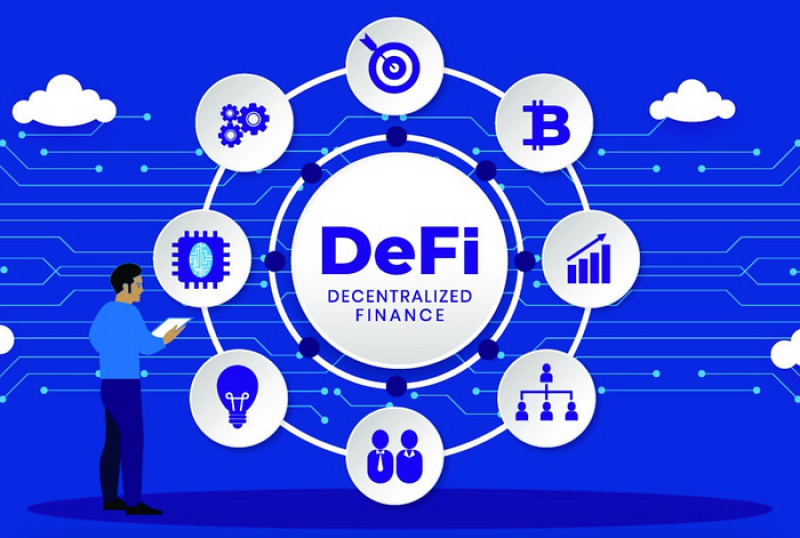
Decoding DeFi: A Comprehensive Beginner’s Guide to Digital Finance
Decentralized finance (DeFi) is revolutionizing the financial industry by eliminating intermediaries and providing innovative financial products and services.
This article offers an in-depth look at DeFi: its components, use cases, and associated risks.
With examples, cited sources, and analogies for complex concepts given along the way, I hope this provides an engaging, educational, and informative introduction to DeFi.
What is Decentralized Finance (DeFi)?
DeFi refers to financial services built on blockchain technology that operate without a central authority.

DeFi platforms leverage smart contracts, which are self-executing contracts with the terms of the agreement directly coded onto the blockchain, to facilitate various financial transactions.
One well-known example of a DeFi platform is Compound Finance, a lending protocol that enables users to earn interest on their cryptocurrency holdings or borrow against them.
DeFi Components
DeFi comprises several components, each playing a crucial role in the ecosystem.
We’ll explore these components in detail below:
Decentralized Exchanges (DEXs)
Decentralized exchanges facilitate the trading of digital assets without requiring users to relinquish control of their funds to a centralized entity.

Uniswap, an Ethereum-based DEX, is one prominent example. DEXs like Uniswap use automated market makers (AMMs) and liquidity pools to enable trading without an order book, making the process more efficient and trustless.
Think of DEXs like a farmers’ market, where people can directly buy and sell goods from one another without a centralized authority overseeing the transactions.
Aggregators and Wallets
Aggregators act as decentralized asset management platforms, moving users’ crypto assets between various yield-farming platforms to generate the highest returns. An example of an aggregator is Yearn Finance, which optimizes yield farming strategies for its users.
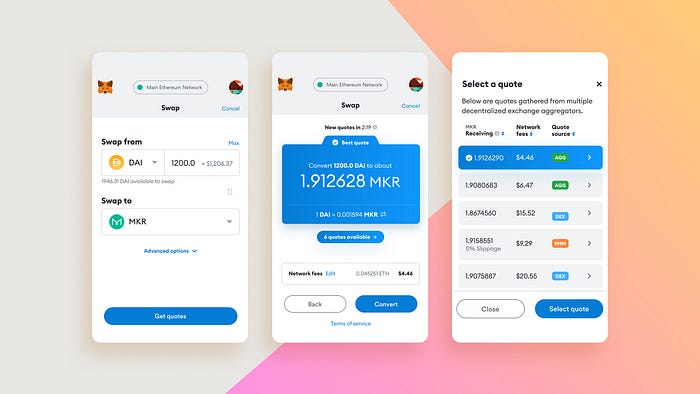
Wallets, on the other hand, are like digital bank accounts for storing and transacting digital assets.
Self-hosted wallets, such as MetaMask, allow users to retain control of their private keys and interact with various DeFi platforms.
Decentralized Marketplaces
Decentralized marketplaces allow users to transact with one another without an intermediary.
Ethereum is the leading blockchain for decentralized marketplaces, but other blockchains, like Binance Smart Chain, also support such platforms.
A popular use case for decentralized marketplaces is trading non-fungible tokens (NFTs), as seen on platforms like OpenSea.
Oracles and Prediction Markets
Oracles provide off-chain data to blockchains through third-party providers, enabling DeFi platforms to access real-world information.
Prediction markets, such as Augur, leverage oracles to facilitate bets on the outcomes of various events.
Layer-1 Solutions
Layer-1 refers to the underlying blockchain on which DeFi applications are built.
Ethereum is the predominant layer-1 solution, but other blockchains like Solana, Polkadot, and Cosmos are gaining traction.
DeFi Use Cases
DeFi offers a plethora of use cases, including lending and borrowing, margin and leverage trading, liquidity pools, and yield farming.
Platforms like Aave and MakerDAO have gained popularity for their lending and borrowing solutions, while Balancer and Curve Finance are known for their innovative liquidity pool designs.
Payments and Stablecoins
Stablecoins play a vital role in DeFi by providing a stable unit of account for transactions and contracts.
Pegged to fiat currencies like the US dollar, stablecoins offer reduced volatility compared to other cryptocurrencies, making them ideal for commerce and trading. Tether (USDT) and USD Coin (USDC) are two popular examples of stablecoins.
Margin and Leverage Trading
DeFi platforms like dYdX and Synthetix offer margin and leverage trading, allowing users to borrow cryptocurrencies using their existing holdings as collateral.
These platforms use smart contracts to incorporate leverage, potentially increasing returns for users while also raising their risk exposure.
DeFi-native Activities: Liquidity Pools and Yield Farming
Liquidity pools are essential for many DEXs, providing trading liquidity for buyers and sellers.
Users can deposit funds into a liquidity pool, earning fees from traders who interact with the pool. In exchange, they receive pool tokens, which can be redeemed for their deposited funds.
Yield farming, also known as liquidity mining, involves participating in liquidity pools to earn passive income through interest or additional tokens.
DeFi platforms like SushiSwap and PancakeSwap have popularized yield farming, attracting users seeking to maximize their returns on investment.
DeFi Risks
Despite its potential, DeFi is not without risks.
This nascent market still faces challenges related to scalability, regulatory uncertainty, and adoption. Slow transactions and high fees on some platforms may hamper user adoption, while regulatory ambiguity may pose challenges for DeFi’s integration into mainstream finance.
Investing in DeFi protocols can be risky, especially for smaller market cap tokens. Before investing, consider factors such as a protocol’s operational history, total value locked (TVL), and risk mitigation strategies.
Keep in mind that no DeFi protocol is entirely risk-free.
Making Money with DeFi
To earn passive income through DeFi, users can deposit their cryptocurrencies onto platforms that offer annual percentage yields (APYs).
Staking, or locking tokens in a smart contract in exchange for more tokens, is one such method. Yield farming, as previously discussed, is another popular way to earn income through DeFi.
To get started, users typically need to purchase cryptocurrencies, such as Ethereum or stablecoins, using fiat currency on an exchange or other on-ramp service before submitting them to the contract(s) of their choice.
DeFi is the Future
DeFi is a groundbreaking financial movement offering innovative solutions to traditional financial services.
With components like DEXs, aggregators, specialized wallets, and layer-1 solutions, DeFi platforms enable users to lend, borrow, trade, stake, and participate in liquidity pools and yield farming.
However, DeFi is not without risks, and users should carefully assess their investments and remain mindful of potential regulatory changes.
By staying informed and cautious, users can harness the power of DeFi to achieve financial autonomy and potentially earn passive income.
About The Rare Network
The Rare Network is a dynamic and growing organization that bridges the gap between traditional industry and emerging blockchain technology.
Our flagship event, Rare Evo, is the premier blockchain conference that brings together multi-chain projects, industry leaders, investors, and enthusiasts.
Rare Evo isn’t just a convention. It’s an immersive experience set in Denver, Colorado. We’ve got everything from educational sessions and networking opportunities to interactive experiences and live entertainment.
Hosted at the stunning Gaylord Rockies Resort, our luxurious and family-friendly venue ensures there’s something for everyone.
Don’t miss out on this game-changing event!
Buy your tickets, book your hotel room, and join the Web3 revolution.
Remember to stay connected with us on Twitter, YouTube, and Discord for the latest updates.